
If you’ve ever tried to get into a restaurant chain’s supply system, you’ll notice something quickly: they don’t evaluate suppliers the way smaller businesses do.
It’s not really about who has the nicest sample or the lowest quote. Most of the time, they’re trying to answer a much simpler—but harder—question: will this supplier cause problems later?
That question alone filters out a large number of options, including many technically “qualified” ones.
Stability Comes Before Everything Else
When a chain reviews a custom ramen bowl manufacturer, they’re not thinking about packaging as a product. They’re thinking about it as part of store operations.
If a bowl fails, it doesn’t stay isolated. It shows up in customer complaints, delivery issues, refund requests, and sometimes even online reviews. And once it spreads across multiple stores, it’s no longer a small issue.
That’s why stability tends to come before innovation, and definitely before pricing.
Some suppliers lead with features. Buyers, on the other hand, are quietly checking whether anything might go wrong at scale.
Samples Are Easy. Consistency Isn’t.
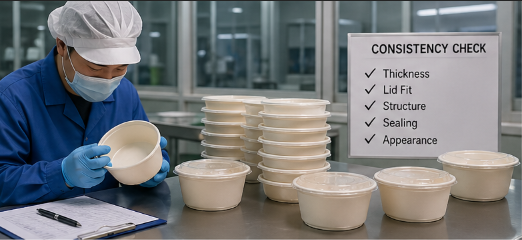
Almost any ramen bowl supplier for restaurant chains can deliver a solid-looking sample. Smooth edges, decent sealing, good presentation—it’s not difficult in small runs.
But buyers know this.
What they care about is whether the same result can be repeated, batch after batch, without variation creeping in. Slight differences in thickness, lid fit, or structure may not show up immediately, but they will surface once volume increases.
And when they do, fixing them is much harder than preventing them.
So instead of asking “is this sample good,” experienced buyers are really asking: can you keep this exactly the same six months from now?
Structure Solves More Problems Than Material
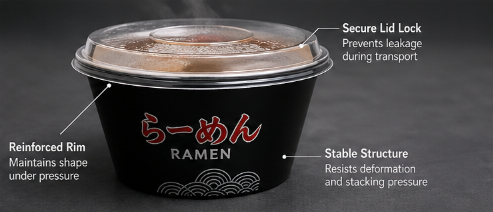
There’s a common tendency in the market to emphasize materials—especially anything labeled eco-friendly. But in actual use, structure tends to decide whether a bowl performs or fails.
A capable oem ramen bowl factory for food service brands doesn’t just talk about materials. They understand how the bowl behaves in real conditions: hot broth, oil, movement during delivery, stacking in bags.
Chains will often test this in ways that don’t show up in spec sheets. They’ll stack filled bowls, simulate transport, and observe what happens over time.
In many cases, it’s small structural details—like how the lid locks or how the rim holds shape—that make the difference.
Pricing Is Looked At Differently Than You Think
From the outside, it might seem like procurement teams are comparing unit prices. Internally, that’s rarely the full picture.
A serious ramen bowl manufacturer for bulk distribution is evaluated based on how their product affects the entire operation. That includes things like damage rates, packing efficiency, and even how often customers complain.
If a slightly more expensive bowl reduces leakage or improves stacking, it can easily offset the price difference.
So when a supplier leads with “we’re cheaper,” it doesn’t always land the way they expect.
Customization Is About Adapting, Not Decorating
Logo printing is often the most visible part of customization, but it’s not what matters most to chains.
As brands expand, they adjust menus, portion sizes, and packaging formats. A rigid supplier becomes a limitation very quickly.
An experienced odm ramen bowl supplier for multi location brands is expected to adapt—sometimes with small changes, sometimes with structural adjustments—without slowing things down.
At the same time, consistency across locations still has to be maintained. Color variation, print inconsistency, or slight design shifts can create problems for brand perception.
Balancing flexibility and consistency is where many suppliers struggle.
Delivery Performance Gets More Attention Than You’d Expect
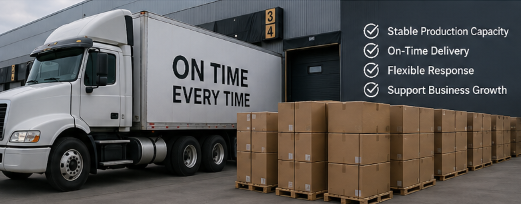
Production is one thing. Getting the product where it needs to be, on time, is another.
A reliable ramen bowl factory for high volume orders is usually judged just as much on delivery as on manufacturing. Delays don’t just affect inventory—they can delay store openings or disrupt ongoing operations.
Buyers will often try to understand how suppliers handle fluctuations. What happens during peak seasons? Can they respond to sudden increases in demand?
It’s not always about having the biggest capacity. It’s about how that capacity is managed.
Compliance Is Checked Quickly—and Then Set Aside
Any custom printed ramen bowl manufacturer for global markets is expected to meet basic regulatory requirements. Buyers typically verify this early, and if something doesn’t check out, the conversation ends there.
But once compliance is confirmed, it doesn’t become a deciding factor anymore. It’s simply assumed.
What matters more is whether the supplier can handle these requirements smoothly, especially when dealing with different regions or changing regulations.
The Way You Handle Problems Is Part of the Evaluation
No supplier operates without issues. Buyers know this.
What they pay attention to is how those issues are handled when they appear.
A responsive ramen bowl supplier for fast growing chains doesn’t disappear when something goes wrong. They respond quickly, communicate clearly, and take ownership where needed.
Interestingly, this stage often becomes the real test. Some suppliers actually strengthen relationships by handling problems well. Others lose the client entirely—not because of the issue itself, but because of how they reacted to it.
Scaling Together Is the Real Goal
At the end of the process, most decisions point in the same direction.
A strong ramen bowl manufacturer for chain restaurant expansion is not just solving current needs. They’re positioned to support future growth without forcing the client to switch suppliers midway.
That includes maintaining consistency across larger volumes, adapting to new requirements, and continuing to deliver without disruption.
For chains, changing suppliers is expensive and risky. So they tend to choose carefully—and stick with those who prove reliable.
What Buyers Are Really Looking For
If you step back, the evaluation logic is actually quite straightforward.
Buyers are not trying to find the most advanced product or the cheapest option. They’re trying to avoid uncertainty.
The supplier that demonstrates consistency, responsiveness, and the ability to operate under real-world conditions stands out almost immediately.
Everything else—features, materials, even pricing—comes after that.
And in most cases, that’s what ultimately decides who gets the order.