
A restaurant owner in Kuala Lumpur once described his packaging upgrade as “the most expensive cheap decision” his company had made that year.
The brand had recently replaced its old takeaway containers with a new eco-friendly packaging line after growing pressure from delivery platforms and environmentally conscious consumers. The new packaging looked modern, carried sustainability claims, and initially reduced plastic usage across several stores.
Three weeks later, customer complaints increased by almost 20%.
Fried chicken arrived damp. Burger boxes softened during long-distance delivery. Sauce containers leaked inside rider bags. During peak dinner hours, employees needed extra time just to assemble the new packaging correctly. What looked like a sustainability improvement on a supplier presentation slowly became an operational problem inside real stores.
That situation is becoming increasingly common across the fast food industry.
For many restaurant brands, sustainable packaging is no longer optional. Governments are tightening plastic regulations, consumers are paying more attention to waste, and major delivery platforms are encouraging greener operations. But the real challenge is not simply replacing plastic with another material.
The real challenge is keeping delivery performance, food quality, operational speed, and packaging cost under control at the same time.
This is exactly why more restaurant groups are no longer searching for the “greenest” packaging. Instead, they are looking for packaging systems that can survive real-world delivery environments without damaging profit margins.
That shift is changing how buyers evaluate packaging suppliers, especially when working with custom Fast Food Packaging manufacturer partners that serve high-volume restaurant operations.
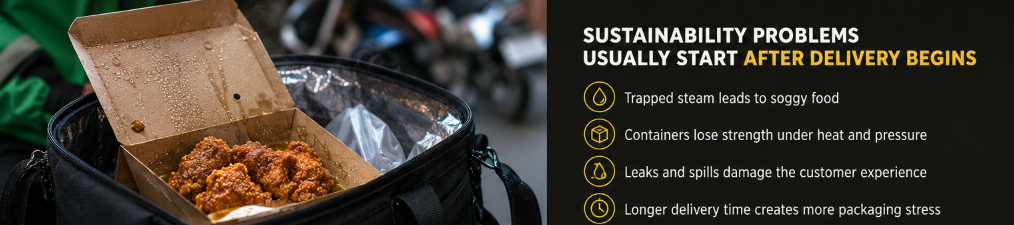
Sustainability Problems Usually Start After Delivery Begins

One of the biggest misconceptions in the industry is that packaging performance can be judged inside a meeting room.
In reality, fast food packaging only reveals its weaknesses once it enters the delivery chain.
A burger box may appear strong when freshly packed, but after sitting inside a rider bag filled with hot food for thirty minutes, trapped steam begins changing the structure of the packaging. Fried foods create condensation. Sauces increase moisture exposure. Multiple stacked orders apply downward pressure during transportation. Every minute of delivery creates new stress on the container.
This is where many sustainability-focused packaging projects fail.
Some restaurant brands prioritize biodegradable claims before evaluating delivery durability. Others choose packaging based only on material trends without studying how their actual menu behaves during transport.
A rice bowl with curry creates very different packaging pressure compared to fried chicken or loaded fries. Yet many businesses still attempt to standardize packaging without considering the behavior of the food itself.
Experienced procurement teams now spend far more time testing packaging under realistic delivery conditions. Instead of asking whether packaging is “eco-friendly,” they ask questions like:
Will this container still hold structure after forty minutes in a humid delivery bag?
Can the lid remain stable after multiple stacking layers?
Will the food quality still match customer expectations after transportation?
Those questions are driving more businesses toward long-term partnerships with OEM Fast Food Packaging supplier companies that understand operational food delivery environments rather than simply selling materials.
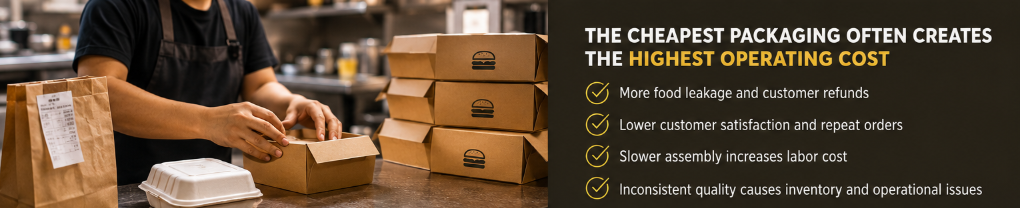
The Cheapest Packaging Often Creates the Highest Operating Cost
Many restaurant operators still evaluate packaging using unit pricing alone.
A difference of two or three cents per container may appear significant during procurement negotiations, especially for chains operating thousands of daily orders. But experienced fast food brands increasingly understand that packaging cost cannot be measured only by purchase price.
Operational cost matters far more.
A weak takeaway box may increase food leakage refunds. Poor insulation may reduce customer satisfaction scores. Difficult folding structures may slow down employees during rush hours. Inconsistent packaging quality may create inventory problems across multiple locations.
Over time, these hidden costs often exceed the original savings from low-cost packaging.
This is why some fast-growing chains are moving away from short-term purchasing strategies and working directly with Fast Food Packaging factory for restaurant chains operations capable of providing consistent production quality across large order volumes.
Consistency has quietly become one of the most valuable parts of sustainable packaging.
Because sustainability means very little if restaurants must constantly replace damaged containers, overuse secondary packaging, or deal with excessive food waste caused by delivery failures.
Why Fast Food Delivery Changed Packaging Requirements Completely
Ten years ago, most fast food packaging only needed to survive several minutes between the counter and the customer table.
Today, delivery apps have completely changed the packaging environment.
Food now spends longer periods inside enclosed rider bags where heat and moisture accumulate continuously. Orders are stacked vertically during transportation. Riders travel through traffic, rain, humidity, and uneven road conditions. In many Asian cities, high temperatures make moisture management even more difficult.
As delivery volumes increased, packaging effectively became part of the transportation system.
That shift forced many restaurants to rethink their entire packaging strategy.
Some brands discovered that highly sealed containers trapped too much steam. Others realized vented packaging improved fried food texture but reduced heat retention. Certain biodegradable materials performed well for dry foods but struggled with oily menu items.
These operational discoveries are why more buyers now collaborate with ODM Fast Food Packaging factory partners capable of adjusting structural details instead of simply supplying standard catalog products.
Packaging today is no longer just about holding food.
It directly influences customer reviews, repeat orders, delivery ratings, and brand reputation.
The Most Successful Sustainable Packaging Strategies Are Usually Gradual
One mistake many businesses make is attempting a full packaging replacement too quickly.
In reality, successful restaurant groups often introduce sustainability in stages.
Instead of changing every SKU immediately, they begin with products that face lower transportation pressure. Some chains separate dine-in packaging from delivery packaging. Others test new materials regionally before national rollout. Certain brands reduce material thickness first before shifting toward entirely different packaging structures.
These gradual adjustments help operators reduce risk while maintaining operational stability.
Interestingly, many successful sustainability improvements are not visually dramatic.
Some involve subtle structural redesigns that reduce material consumption while improving stacking strength. Others focus on improving steam release inside the container to preserve food texture during delivery. In some cases, packaging weight is reduced without sacrificing rigidity through smarter engineering rather than material substitution.
This practical approach is becoming increasingly common among buyers sourcing from compostable Fast Food Packaging manufacturer companies serving modern QSR operations.
Because restaurant operators no longer want sustainability projects that create new operational problems.
They want realistic solutions that improve both environmental performance and delivery reliability at the same time.
Restaurants Are Now Choosing Packaging Based on Food Behavior
One of the biggest changes happening inside the industry is the shift toward menu-specific packaging selection.
Restaurants are finally realizing that different foods create completely different packaging stress conditions.
Fried foods generate steam rapidly. Rice meals create bottom heat concentration. Saucy dishes increase leak risk. Fresh salads produce condensation. Grilled foods release oil continuously during transport.
A single packaging solution rarely performs equally well across all categories.
This is why sophisticated restaurant groups increasingly work with sustainable Fast Food Packaging supplier for food delivery brands capable of adjusting container structures based on menu characteristics.
In many cases, the packaging decision now begins inside kitchen operations rather than procurement departments alone.
Store managers, delivery teams, and even customer complaint data are influencing packaging selection.
Because in real delivery environments, packaging performance directly affects the food itself.
Customers rarely separate the packaging experience from the meal experience.
If fries arrive soggy or sauces leak into the bag, consumers usually blame the restaurant, not the packaging supplier.
Supply Stability Quietly Became Part of Sustainability
Another issue many businesses underestimated was supply consistency.
Some eco-friendly packaging suppliers performed well during small trial runs but struggled once restaurant chains expanded order volumes. Lead times became unstable. Product quality varied between batches. Structural performance changed depending on raw material availability.
For multi-location restaurant systems, those inconsistencies create operational chaos.
That is why many procurement teams now prioritize large-scale production reliability almost as much as sustainability claims themselves.
Restaurant brands increasingly prefer working with wholesale Fast Food Packaging supplier for QSR brands capable of maintaining stable quality across different seasons and order volumes.
Because sustainable packaging only works when the supply chain itself remains stable.
A restaurant cannot standardize operations if packaging dimensions, rigidity, or lid fit change constantly between shipments.
This operational reality is pushing the industry toward more mature supplier partnerships focused on long-term performance rather than short-term marketing claims.
The Future of Sustainable Fast Food Packaging Will Be Built Around Efficiency

The future of fast food packaging will likely look very different from the early sustainability campaigns that focused only on replacing plastic.
Restaurant operators today are becoming far more practical.
They understand that truly sustainable packaging must support the entire delivery ecosystem, not just environmental messaging.
Packaging must survive transportation pressure, reduce food waste, improve operational efficiency, maintain customer satisfaction, and remain financially realistic at scale.
In other words, sustainability alone is no longer enough.
Performance now matters equally.
That is why many growing restaurant groups are actively searching for recyclable Fast Food Packaging manufacturer for bulk restaurant buyers partners that understand both packaging engineering and modern delivery operations.
The industry is moving toward smarter packaging systems rather than simple material replacement.
And the companies that succeed will not necessarily be the ones with the loudest sustainability marketing.
They will be the ones capable of balancing environmental responsibility with real operational performance inside fast-moving restaurant environments.