
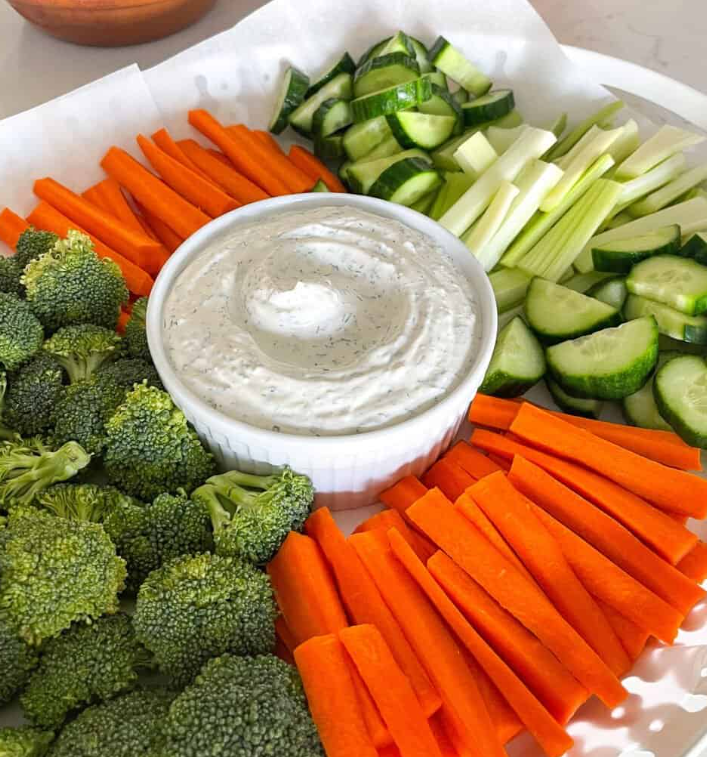
If you’ve ever put out a veggie tray at a party, you already know the vegetables themselves are rarely the problem. Carrots are carrots. Celery tastes like celery. Bell peppers disappear first if they’re sliced right. The tray usually looks fine.
What decides whether people actually keep coming back is the dip.
Most guests don’t consciously think about it. They grab a piece, dip it once, and either come back later or don’t. That decision happens fast. If the dip feels off—too bland, too sharp, too “healthy,” or just unfamiliar—the tray quietly stalls. The vegetables stay full while everything else on the table gets picked over.
So when people ask what the best dip for a veggie tray is, they’re usually hoping for a single answer. In reality, there isn’t one. The better question is which dip works best for this group of people, this event, and this amount of time you have.
Why the Dip Ends Up Doing All the Work
Raw vegetables don’t bring much fat, salt, or intensity on their own. That’s why they’re refreshing, but it’s also why they depend on whatever they’re paired with. A good dip fills in what the vegetables lack. It adds richness, rounds out bitterness, and gives people a reason to keep eating something they didn’t come for specifically.
There’s also a comfort factor. At gatherings, people default to flavors they recognize. Even adventurous eaters tend to play it safe when they’re standing around chatting with a plate in one hand. A dip that feels familiar lowers the barrier. People don’t need to think about it.
This is where many veggie trays go wrong. Someone focuses on making the vegetables look impressive, then pairs them with a dip that’s technically interesting but emotionally distant. The tray looks great. It just doesn’t get eaten.
The Option That Almost Never Fails: Creamy Ranch-Style Dips
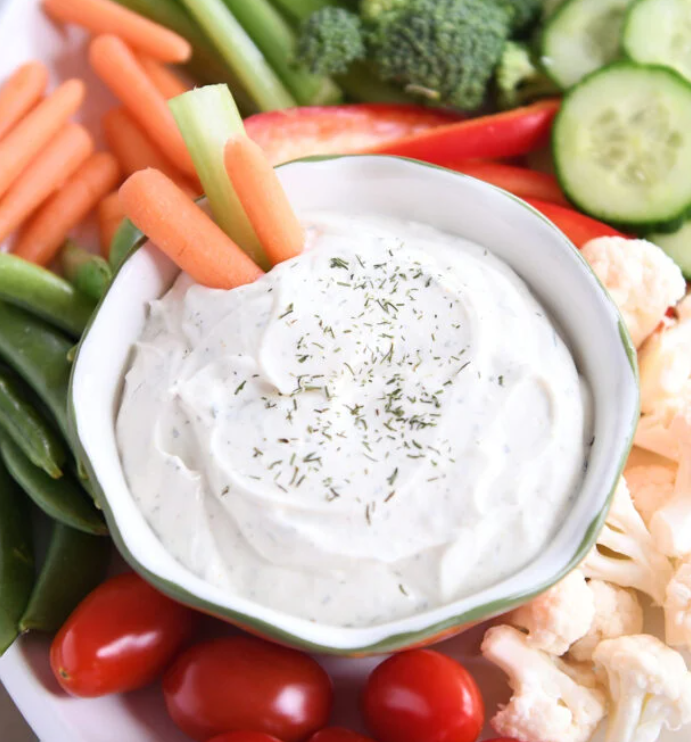
There’s a reason ranch-style dips show up everywhere. They don’t demand attention, and that’s their strength. The flavor is mild but not boring, creamy but not heavy, and flexible enough to work with almost any vegetable on the tray.
Most versions start with sour cream and mayonnaise. The exact balance matters less than people think. Equal parts give you something safe and familiar. Leaning heavier on sour cream keeps it lighter and tangier. Adding more mayonnaise makes it richer and smoother. None of these choices ruin the dip; they just nudge it in one direction or another.
Herbs are where people tend to overthink things. Fresh dill, parsley, and chives sound better, and they do taste brighter at first. But dried herbs are often more practical. They soften as the dip sits and end up blending more evenly. For a dip that’s going to be made ahead of time, dried herbs are usually easier to control.
Time in the fridge matters more than ingredient precision. Freshly mixed ranch tastes flat. After an hour or two, it starts to come together. Overnight is often better, especially if the herbs are dried. Past that, you’re mostly fine as long as it’s stored properly.
Small tweaks can change who the dip appeals to. Garlic pushes it toward savory. A little heat wakes it up without scaring anyone off. Adding avocado smooths out the tang and gives it a softer finish. None of these turn it into something unfamiliar, which is why they work.
When You Don’t Want to Think: Packet and Mix Dips
There’s a certain point where convenience matters more than originality. That’s where packet dips earn their place.
Mix-based vegetable dips are fast, predictable, and forgiving. They’re designed to work with basic sour cream and don’t require tasting and adjusting. For large groups or last-minute plans, that reliability is hard to beat.
The flavor tends to be bolder than homemade dips. More onion, more salt, more savory notes. That can actually help when vegetables aren’t at their peak or when people are snacking casually rather than sitting down to eat.
Cost and time savings are obvious, but consistency is the quiet advantage. Everyone knows what these dips taste like. That familiarity lowers hesitation, especially in settings like office parties or school events where people are cautious about unfamiliar food.
They’re not the same as ranch-style dips. Mix dips lean heavier and feel more assertive. Ranch feels creamier and softer. Depending on the crowd, either can be the better choice.
Health-Focused Dips That Don’t Get Ignored

Healthier dips only work when they don’t feel like a compromise. The moment a dip feels like it’s there “for dietary reasons,” most guests treat it as optional.
Hummus avoids that problem more often than other alternatives. It’s thick, filling, and familiar enough that people know what to expect. Versions made with roasted vegetables add sweetness and color without changing the basic idea.
Texture pairing matters here. Crunchy vegetables hold up best. Soft vegetables tend to get lost, which makes the experience less satisfying. When hummus works on a veggie tray, it’s because the vegetables give it something to push against.
Greek yogurt–based dips sit somewhere between classic and health-forward. They can work well, but only if they’re seasoned carefully. Greek yogurt on its own is sharp and thin. A bit of fat, whether from olive oil or a small amount of mayonnaise, helps balance that out.
For guests who care about protein or calories, these dips send the right signal. For everyone else, they still need to taste good first.
Picking the Right Dip for the People You’re Feeding
Trying to please everyone with one dip is risky. A better approach is to offer two. One creamy and familiar, one slightly different. That combination covers far more preferences than any single option.
Family gatherings usually reward familiarity. Office settings reward simplicity and speed. Health-oriented events need at least one option that aligns with expectations, even if it’s not the most popular.
Time and stress matter too. A dip that’s easy to prepare calmly often performs better than something more ambitious done in a rush. Guests don’t know how much effort went into it. They only know whether they want another bite.
Dietary restrictions don’t need to dominate the table. One alternative option is usually enough. The rest of the tray can stay approachable.
Small Serving Choices That Make a Difference
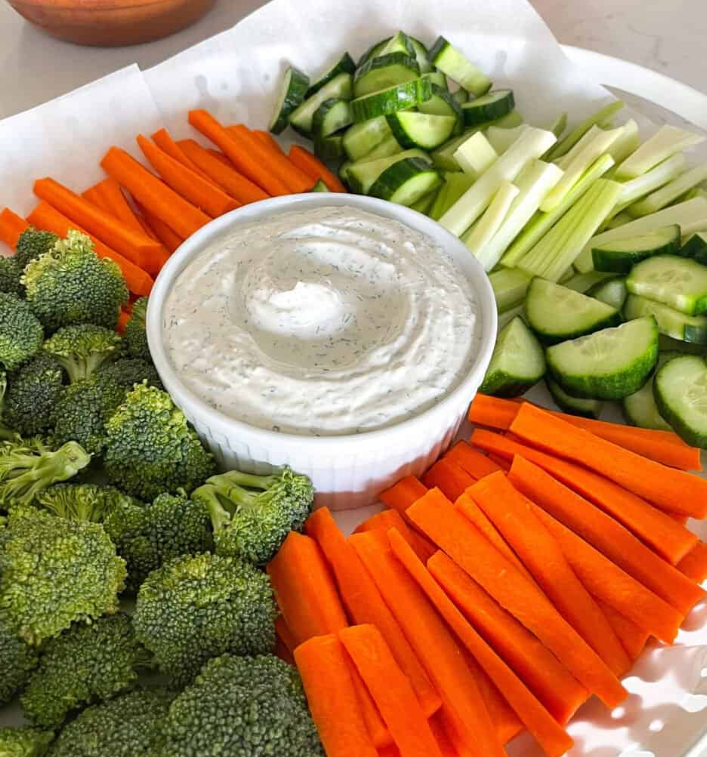
Dip temperature affects flavor more than people realize. Too cold and everything tastes muted. Letting the dip sit out briefly before serving helps.
Consistency matters if the dip is pulling double duty. Something perfect for vegetables can be too thick for chips. A small adjustment with milk, yogurt, or lemon juice usually fixes that.
Vegetable choice matters as well. Firm vegetables encourage dipping. Softer ones tend to break or feel disappointing. Color contrast helps visually, even if people don’t consciously notice it.
These details don’t stand out on their own, but together they shape how the tray is received.
A More Useful Way to Think About “Best”
There isn’t a single best dip for a veggie tray. There’s only the dip that makes sense for the moment. When the dip feels familiar, balanced, and easy to enjoy, people eat the vegetables without thinking about it.
And when that happens, the tray does exactly what it’s supposed to do.