
If sushi bowls only had to look good on a counter, most packaging decisions would be easy. The problems start when that same bowl needs to survive delivery, hold temperature, protect presentation, and still represent your brand in someone’s hands 30 minutes later. That’s where most packaging projects quietly go wrong—not because of one big mistake, but because of a chain of small decisions made without real usage in mind.
This isn’t a theory-driven breakdown. It follows the actual path buyers go through—from concept to mass production—and highlights where things tend to fall apart, especially when working with a custom sushi bowl manufacturer or evaluating a new sushi bowl packaging supplier for restaurant chains.
When “good-looking” replaces “fit-for-use”
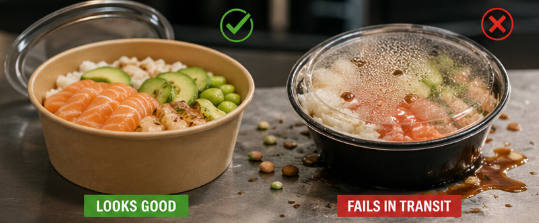
A common starting point is visual inspiration. Brands often come in with references—minimalist kraft bowls, glossy black bases, clear lids. The issue isn’t aesthetics; it’s treating them as the primary decision driver.
In real operations, sushi bowls behave differently from standard takeaway meals. Vinegar rice releases moisture. Fresh toppings vary in density. Temperature shifts from warm rice to cold fish create condensation. When these factors aren’t mapped early, packaging that looked perfect in a catalog fails in transit.
Teams working with an oem sushi bowl factory for food brands often realize too late that the selected structure doesn’t match their serving style. For example, bowls designed for dry meals struggle with poke-style builds that include sauces and oils. The result isn’t catastrophic failure—it’s subtle degradation: soggy bases, cloudy lids, flattened presentation.
The smarter approach isn’t asking “what looks premium,” but “what conditions will this bowl go through in the next 45 minutes?”
Size decisions that ignore real food behavior
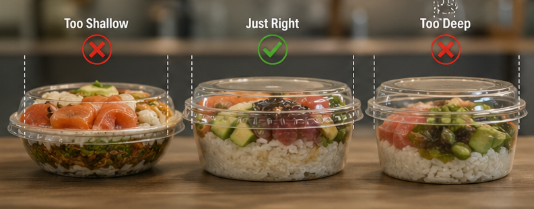
On paper, capacity is straightforward. A 1000ml bowl should hold a standard portion. In practice, sushi bowls don’t fill like liquids. Ingredients stack, compress, and shift.
A frequent issue appears during launch: bowls that technically meet volume requirements but feel either overcrowded or visually underfilled. This disconnect usually comes from skipping actual fill tests before confirming tooling with a custom printed sushi bowl supplier for quick service brands.
Depth is another overlooked factor. Shallow bowls protect presentation but risk spillage. Deep bowls improve containment but reduce perceived value when customers open them. There’s no universal solution—only a balance based on menu composition.
Experienced buyers working with a sushi bowl packaging manufacturer for bulk orders typically request multiple prototypes with real food, not substitutes. It’s the only reliable way to understand how rice settles, how toppings spread, and how the final product feels when opened.
The quiet failure of lid and sealing systems
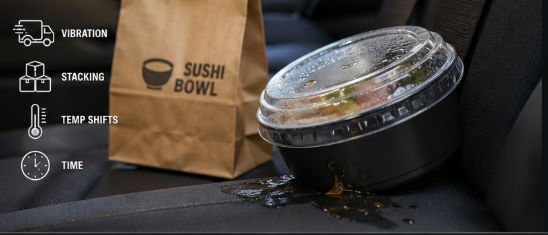
Most packaging failures don’t happen in the kitchen. They happen on the road.
A lid that feels secure during assembly can fail under vibration, slight pressure, or temperature changes. Yet many projects still rely on static leak tests—tilting a filled bowl slightly and calling it done.
Delivery conditions are less forgiving. Movement, stacking, and time all compound small weaknesses. Brands sourcing from a custom sushi bowl supplier for delivery businesses often encounter complaints that aren’t consistent enough to trace immediately: occasional leaks, shifted lids, or minor spills that damage trust over time.
The real issue is mismatch. Snap-on lids, heat seals, and film covers all behave differently under heat and moisture. Choosing the wrong system isn’t about quality—it’s about context.
Teams working with an odm sushi bowl packaging factory for takeaway solutions tend to perform simulated delivery runs, not just lab tests. It’s the difference between theoretical performance and actual reliability.
Material choices that sound right but perform poorly
Sustainability, transparency, and cost all influence material selection. But sushi bowls introduce specific challenges: acidity from vinegar, oil from toppings, and moisture retention.
A material that works well for dry foods may soften or deform when exposed to warm rice. Clear lids may fog up, hiding the product. Eco-friendly options sometimes sacrifice barrier performance in ways that only become obvious after storage or transport.
Buyers partnering with a sushi bowl container manufacturer for foodservice distributors often face trade-offs they didn’t anticipate. The question isn’t whether one material is better—it’s which compromise aligns with the brand’s priorities.
In some cases, performance must come first. In others, sustainability messaging outweighs minor functional drawbacks. The mistake is assuming one material can optimize everything at once.
Branding that disappears in real use
Packaging design usually happens in controlled environments—flat layouts, clean lighting, perfect angles. But customers don’t experience it that way.
They hold the bowl, tilt it, open it, sometimes eat directly from it. Logos get covered by hands. Key visuals end up facing downward inside delivery bags. Colors that looked bold on screen appear muted under condensation.
Brands collaborating with a custom sushi bowl packaging manufacturer for private label brands often discover that their most carefully designed elements go unnoticed. Not because they’re poorly designed, but because they’re placed without considering real interaction.
The shift here is subtle but important: design for how the bowl is handled, not how it’s photographed.
Cost structures that don’t scale
Early-stage decisions often prioritize uniqueness—custom sizes, special finishes, unique lids. These choices can differentiate a product, but they also introduce complexity.
Minimum order quantities increase. Lead times extend. Inventory becomes harder to manage, especially when multiple SKUs each require dedicated packaging.
Buyers working with a sushi bowl supplier for restaurant groups sometimes reach a tipping point where packaging complexity starts affecting operations more than it supports branding.
A more sustainable approach is controlled standardization—sharing components where possible while customizing only what truly impacts customer perception.
The gap between samples and mass production
Sampling is where everything feels right. Colors match expectations. Structures feel solid. Timelines seem manageable.
Mass production introduces variables: slight color shifts, material inconsistencies, tighter tolerances. These aren’t necessarily quality issues—they’re realities of scale.
Brands engaging a custom sushi bowl factory for international buyers often underestimate how noticeable these differences can be when thousands of units are involved. What looked consistent in a small batch becomes visibly varied at scale.
The key isn’t eliminating variation entirely—it’s defining acceptable ranges before production begins.
Small user frustrations that hurt repeat orders
Not every problem shows up as a complaint. Some simply reduce the likelihood of a customer ordering again.
A lid that’s difficult to open. A rim that feels sharp. A bowl that’s awkward to hold. These details rarely trigger refunds, but they shape overall perception.
Teams sourcing from a sushi bowl packaging manufacturer for catering services often gather feedback only after launch, when adjustments are more costly. Yet these usability factors are often easier to fix than structural issues—if identified early.
Observing how customers actually interact with the packaging provides insights no specification sheet can offer.
Compliance issues that surface too late
When packaging crosses markets, requirements change. Material certifications, labeling standards, and environmental regulations vary widely.
What works in one region may not be acceptable in another. The risk isn’t just regulatory—it’s operational. Delays, rejected shipments, or relabeling costs can disrupt entire supply chains.
Buyers working with a custom sushi bowl supplier for export markets often need clarity not just on product specs, but on documentation and compliance alignment from the beginning.
The absence of a testing loop
Perhaps the most common underlying issue isn’t any single mistake—it’s the lack of a structured testing process.
Packaging decisions are often made in sequence: design, sample, approve, produce. What’s missing is iteration. Without real-world testing, feedback, and refinement, even well-informed choices can miss critical details.
Experienced teams working with a sushi bowl packaging factory for high-volume production build feedback loops into their process. Small pilot runs, delivery simulations, and controlled rollouts help identify problems before they scale.
Closing perspective
Custom sushi bowl packaging rarely fails because of one bad decision. It fails when decisions are made in isolation—design without logistics, materials without usage, cost without scale.
The goal isn’t to eliminate every risk. It’s to understand where risks actually come from, and address them before they show up in customer hands.
Because once the bowl leaves the kitchen, it’s no longer packaging—it’s part of the product experience.