
Why CPET Biryani Bowls Are Harder to Source in Canada Than Most Buyers Expect
For many Canadian food brands, biryani becomes a packaging problem long before it becomes a sales success. Once the menu moves beyond dine-in and into chilled or frozen distribution, the container is suddenly asked to do too much at once. It must survive freezer storage, tolerate oven reheating, and still look acceptable after microwave use. That is why buyers often start their search assuming there must be a local CPET biryani bowl manufacturer in Canada, only to discover that the reality is far less straightforward.
Canada does not have a dense network of factories dedicated specifically to CPET bowls for rice-based ethnic meals. Most supply comes from a mix of U.S. manufacturers, regional distributors, and overseas factories shipping into the Canadian market. For procurement teams evaluating a CPET biryani bowl supplier for commercial food brands, understanding this structure early prevents wasted time chasing suppliers that simply do not exist at scale.
What Buyers Actually Mean When They Ask for a CPET Biryani Bowl
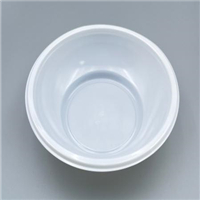
In theory, CPET is easy to define. In practice, buyers care less about polymer chemistry and more about what happens after reheating. A CPET container that warps, leaks, or loses rigidity after exposure to oil and steam is functionally useless for biryani. That is why experienced buyers focus on performance history rather than datasheets when working with a food-grade CPET biryani bowl factory.
Biryani places unusual stress on packaging. The rice traps moisture, the oils migrate aggressively, and the aroma tends to amplify any material weakness. Suppliers that regularly serve ready-meal or airline catering segments tend to understand these constraints better than those focused on generic trays. For that reason, buyers sourcing a high-temperature CPET biryani bowl manufacturer often prioritize application experience over marketing claims.
Compliance Is a Filter, Not a Differentiator
In the Canadian market, regulatory compliance is expected, not celebrated. FDA food-contact documentation, BPA-free confirmation, and alignment with Health Canada expectations are basic entry requirements. What separates suppliers is how quickly and clearly they can provide documentation tied to the exact product being ordered. A CPET biryani bowl supplier for regulated food markets that hesitates or generalizes is usually a risk signal.
Recyclability also plays a quiet but important role. CPET’s classification within PET #1 recycling streams makes it easier for brands to justify continued use, especially compared to mixed-material alternatives. For buyers managing sustainability reporting, sourcing from a CPET biryani bowl manufacturer aligned with Canadian recycling systems simplifies both compliance and communication.
1. Sonoco Products Company
Sonoco is often one of the first names Canadian buyers encounter when researching CPET packaging. The company’s scale and long history in dual-oven food containers make it a default reference point. While Sonoco does not market products specifically as biryani bowls, its deeper CPET trays align closely with typical biryani portion sizes. For procurement teams evaluating a large-volume CPET biryani bowl manufacturer for retail programs, Sonoco’s consistency is often the main draw.
Customization with Sonoco tends to favor longer-term commitments rather than small experimental runs. That makes the company better suited for established brands than early-stage concepts. Buyers looking for a custom CPET biryani bowl supplier for national distribution usually view Sonoco as a strategic partner rather than a flexible short-term option.
2. Genpak
Genpak occupies a different position in the market. Its strength lies in foodservice and institutional channels where packaging failure has immediate operational consequences. Genpak’s CPET containers are designed to withstand repeated handling, reheating, and transport. For buyers sourcing a CPET biryani bowl manufacturer for catering and foodservice use, this operational durability often outweighs aesthetic considerations.
Because Genpak products are widely distributed through established channels, Canadian buyers frequently encounter them through existing supplier relationships. This makes Genpak a practical CPET biryani bowl supplier for multi-location operators, especially where procurement simplicity matters as much as unit cost.
3. Pactiv Evergreen
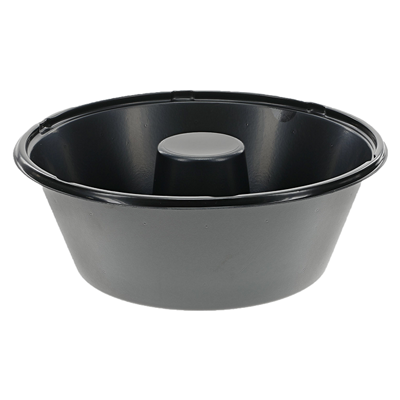
Pactiv Evergreen appeals primarily to buyers operating at scale. Its CPET product lines are designed with supermarket ready meals in mind, where shelf appearance and heating performance must align. Although not all CPET SKUs are ideal for biryani, certain deeper tray formats perform reliably with rice-based dishes. For brands evaluating a CPET biryani bowl manufacturer for private-label retail, Pactiv Evergreen often enters the conversation early.
What Pactiv Evergreen offers is predictability. Lead times, documentation, and production controls are well established. For buyers prioritizing supply security over experimentation, the company functions as a stable CPET biryani bowl supplier for long-term contracts.
4. Sabert Corporation
Sabert’s CPET offerings are frequently associated with premium food presentation. The company has a strong presence in hot food and catering environments where packaging must look intentional rather than utilitarian. For biryani brands positioning themselves above the mass-market segment, Sabert can serve as a CPET biryani bowl manufacturer for premium prepared meals.
Sabert’s containers tend to emphasize rigidity and seal integrity, which matters for oily dishes transported over longer distances. Buyers who value brand perception often shortlist Sabert as a design-forward CPET biryani bowl supplier, even if pricing sits above entry-level alternatives.
5. Global OEM CPET Manufacturers Supplying the Canadian Market
Despite the strength of North American suppliers, many Canadian biryani brands eventually explore overseas sourcing. Asian OEM factories often specialize in deeper bowls, thicker walls, and more flexible customization than domestic catalogs allow. For buyers seeking a CPET biryani bowl OEM manufacturer for export-to-Canada supply, global sourcing can unlock both structural improvements and cost advantages.
This route is not without risk. Documentation must be verified, samples must be stress-tested, and logistics must be tightly managed. When done correctly, overseas sourcing provides access to a CPET biryani bowl factory serving international wholesale buyers that can match or exceed domestic performance while offering greater design control.
How Experienced Buyers Compare CPET Biryani Bowl Suppliers
Seasoned procurement teams rarely choose suppliers based on temperature ratings alone. They look at how containers behave after reheating, how lids perform during transport, and how consistent wall thickness remains across production runs. A CPET biryani bowl manufacturer for high-volume food production must deliver repeatability, not just promising samples.
Cost comparisons also require context. A lower unit price may disappear once freight, minimum orders, and compliance delays are considered. In some cases, a North American supplier offers better overall value. In others, a vetted overseas partner is more competitive. The right choice depends on how the buyer defines risk when selecting a CPET biryani bowl supplier for bulk procurement.
CPET Compared With Other Packaging Materials

CPET continues to be favored for biryani because it occupies a middle ground between performance and practicality. Aluminum lacks microwave compatibility. PP struggles at oven temperatures. Compostable materials often fail under oil and moisture. These limitations explain why brands repeatedly return to CPET when working with a CPET biryani bowl manufacturer for oven-ready meals.
That said, CPET is not universal. For delivery-only concepts without reheating, simpler materials may suffice. Understanding when CPET adds real value prevents unnecessary cost and complexity.
Final Perspective for Canadian Buyers
There is no single CPET biryani bowl factory in Canada that solves every procurement scenario. What exists instead is a network of capable manufacturers and suppliers that, when evaluated correctly, can support Canadian food brands at every scale. By focusing on performance history, compliance clarity, and operational fit, buyers can confidently align with a CPET biryani bowl manufacturer for professional food operations that supports both growth and consistency.