
The global food service landscape is undergoing a seismic shift as regulatory pressures and consumer demand for sustainability reach an all-time high. For procurement managers and restaurant franchise owners, ditching traditional plastic isn’t just a trend—it’s a survival strategy. Sugarcane bagasse, the fibrous byproduct of the sugar industry, is now the primary material replacing petroleum-based plastics, offering a high-performance, carbon-neutral solution for small-format containers. This guide breaks down the industry and evaluates the top players dominating the production landscape in China.
The Science Behind the Fiber
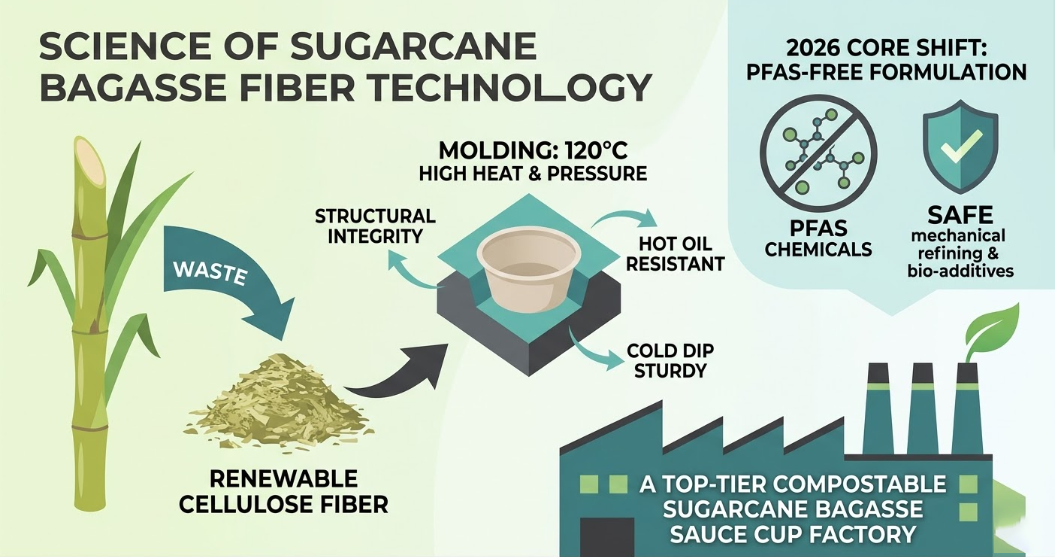
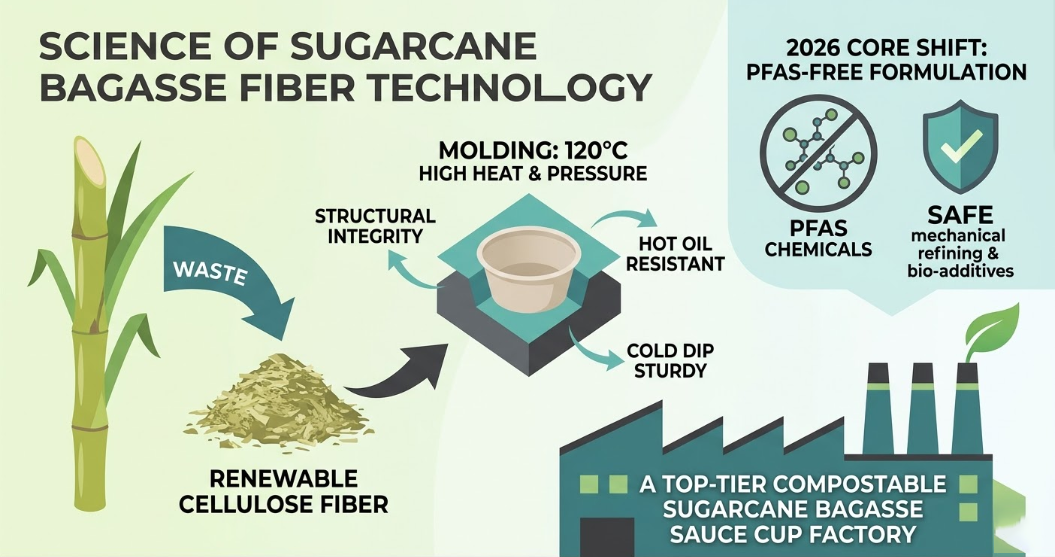
Bagasse isn’t just “waste.” It’s a robust cellulose fiber that remains after sugarcane stalks are crushed. Unlike wood pulp, which takes decades to grow, bagasse is a rapidly renewable resource. When molded under extreme heat and pressure, these fibers interlock to create containers that are naturally sturdy. What’s impressive is that these cups handle hot oils and cold dips without turning into mush, thanks to the inherent structural integrity of the sugarcane plant.
The biggest shift we’ve seen in 2026 is the total pivot toward PFAS-free formulations. In the past, “forever chemicals” were used for oil resistance, but new laws in the EU and North America have changed the game. The top-tier compostable sugarcane bagasse sauce cup factory now uses advanced mechanical refining and bio-additives to achieve that same grease resistance safely, ensuring their products clear the strictest export hurdles.
Why Bagasse Wins the “Plastic War”

The math is simple. A plastic cup sticks around for 400 years; a bagasse cup turns into nutrient-rich soil in about 90 days in a commercial compost pile. Beyond the waste issue, the carbon footprint is significantly smaller. Because sugarcane plants absorb massive amounts of CO2 while growing, the overall life cycle of the product is close to carbon neutral.
1. Qiaowang — The Regional Powerhouse
Based in the heart of China’s sugar country, Qiaowang has a geographic “moat” that others envy. By sitting right next to the refineries, they cut out massive logistics costs for raw pulp. This makes them an incredibly stable bagasse pulp portion cup supplier for global distributors who can’t afford price swings. Their production line is a beast of efficiency, particularly for high-volume 2oz and 4oz sauce cups that dominate the takeaway market.
2. Far East Cup — The Automation Specialists
Far East Cup is where technology meets sustainability. They’ve moved away from manual labor, investing heavily in dry-pressing tech and robotic precision. This matters because when you’re ordering a million units, you need the lids to fit perfectly every single time. As a leading sustainable sauce cup manufacturer for fast food chains, they’ve mastered the “snap-fit” rim design that keeps dressings inside the cup and off the customer’s lap.
3. Zhongxin — Compliance as a Service
Navigating the alphabet soup of certifications (BPI, TUV, FDA) is where Zhongxin shines. They don’t just sell cups; they sell compliance. Their R&D has been obsessed with the North American market, making them a go-to plastic-free bagasse sauce cup manufacturer for eco-conscious brands. They offer various wall thicknesses, so you can choose a lightweight option for cost savings or a heavy-duty version for thick, hot gravies.
4. Shaoneng Benben — The Enterprise Giant
If you need a billion cups, you go to Shaoneng. As a massive listed group, their scale is almost hard to wrap your head around. They have integrated the entire supply chain from pulp to finished product. For a corporate bagasse sauce cup factory with high annual capacity, they offer the most secure supply chain in the industry. Their 8oz dipping bowls are a staple for large-scale meal prep companies across Europe.
5. GreenOlive — Where Design Meets Function
Most bagasse products look “industrial,” but GreenOlive focuses on the brand experience. They understand that for a premium salad brand, the packaging is the product. They use high-precision molds to create a smoother finish and offer custom embossing that puts your logo front and center. This oem sugarcane bagasse sauce cup manufacturer for high-end catering helps brands maintain a premium feel even while using disposable packaging.
6. MVI Ecopack — Built for the Delivery Economy
MVI Ecopack lives and breathes the “takeaway” life. They spent years perfecting the seal between the cup and the lid—a common failure point for plant-based plastics. They provide matching bagasse lids that actually work, ensuring a 100% plastic-free meal. Their reputation as a biodegradable dipping cup supplier for takeaway platforms is built on their products’ ability to survive a 30-minute bike ride in a delivery bag without leaking.
7. YUTO Eco — The Quality Control Experts
YUTO comes from the world of high-end printing, so “perfection” is in their DNA. Their eco-fiber division uses medical-grade quality control to ensure every batch is identical. If you are a heavy duty bagasse sauce cup manufacturer for industrial food packing, precision is everything. They conduct rigorous leak and pressure tests to ensure their cups can be stacked 10 high without the bottom one buckling under the weight.
8. Sumkoka — The Full-Suite Provider
Sumkoka is the master of the “one-stop shop.” Most buyers need more than just a sauce cup—they need the plate, the bowl, and the lid to match. Sumkoka allows you to consolidate your shipping, which is a massive win for logistics budgets. Operating as a wholesale compostable sauce cup supplier for hospitality groups, they make it easy to transition an entire hotel or restaurant chain to eco-friendly gear in one go.
9. Shenglin Trading — Flexibility for the Mid-Market
Not everyone needs ten containers of cups at once. Shenglin understands the needs of growing brands that require flexibility. They manage the export complexities and provide clear, honest lead times. They function as a versatile bagasse small container factory for small to medium enterprises, offering professional-grade quality without the intimidating MOQs of the state-owned giants.
10. Gowing Eco — The E-Commerce Engine
Gowing Eco has built its business model around the speed of the internet. They offer retail-ready packaging and smaller case counts that work perfectly for Amazon FBA sellers or Shopify boutiques. As a nimble white label bagasse sauce cup supplier for online retailers, they can get a new brand off the ground in weeks rather than months, providing the agility that modern e-commerce demands.
How to Spot a Reliable Partner
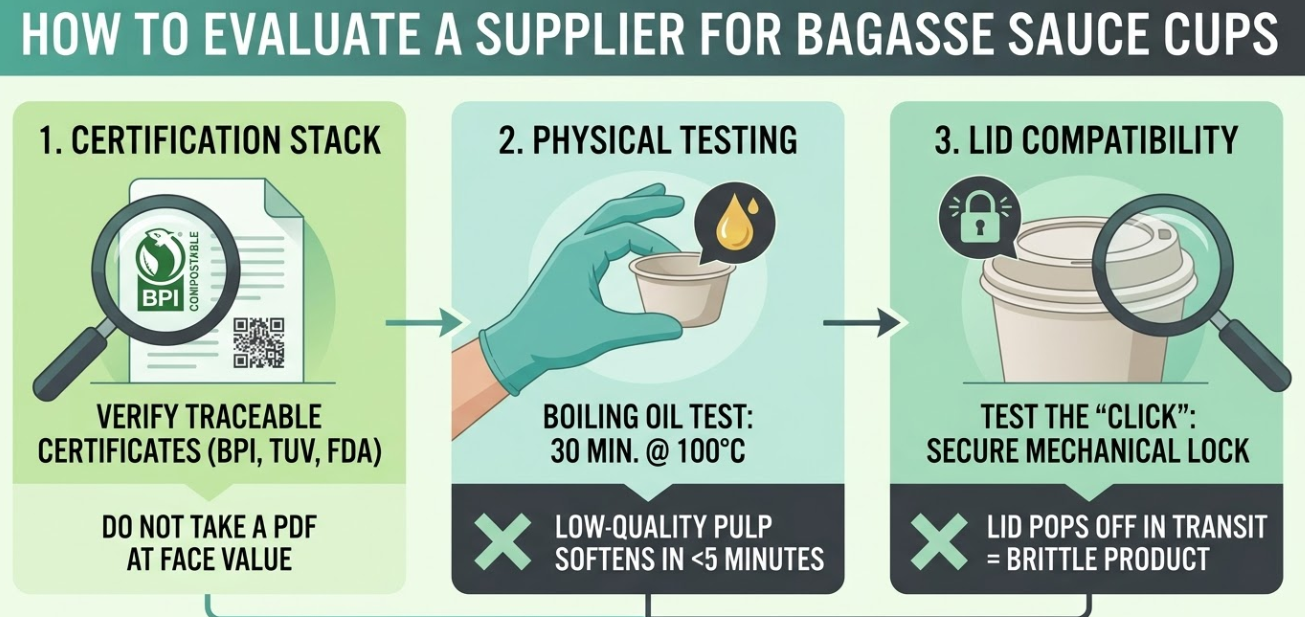
In this industry, the lowest price is often a red flag for low-quality pulp or missing certifications. You have to verify the “BPI” or “TUV” numbers on their official databases—don’t just take a PDF at face value. Also, ask for a “boiling oil test” sample. If the cup goes soft in five minutes, it’s going to fail your customers.
Lid compatibility is the second big test. A great cup is useless if the lid pops off in transit. Test the “click.” If the manufacturer makes both the cup and the lid in-house, you’re usually much safer than if they’re sourcing lids from a third party.
Looking Ahead
By 2026, we expect to see more “natural” unbleached bagasse. Consumers are starting to prefer that tan, earthy look because it “looks” more sustainable. We’re also seeing more home-compostable versions that don’t even need a commercial facility to disappear.
Picking a partner in China is about balancing cost, capacity, and trust. Whether you need the massive volume of Shaoneng or the branding expertise of GreenOlive, the market is ready. Future-proofing your brand starts with moving away from plastic today.