
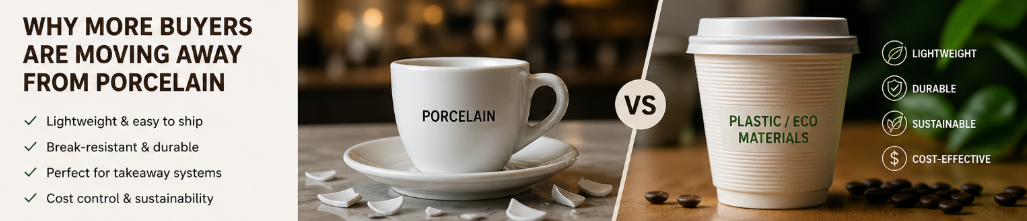
In Italy, espresso is usually associated with thick porcelain cups, small bars, and quick service at the counter. But if you look at how coffee is being consumed today—especially takeaway, delivery, and chain operations—the materials are changing. Plastic, recyclable polymers, and compostable alternatives are becoming more common, not just for convenience but for cost control and sustainability goals.
For wholesale buyers, this shift matters. The question is no longer “which Italian brand is most traditional,” but “which supplier can actually support my packaging model?” Below is a more grounded look at ten Italy-based or Italy-active manufacturers working with plastic or eco materials, and where they typically fit.
Why More Buyers Are Moving Away from Porcelain

Porcelain still works well for dine-in cafés, but it creates friction in large-scale operations. It’s heavy, breaks easily, and doesn’t integrate well with takeaway systems. In contrast, plastic and eco materials solve several practical issues at once—lighter shipping, easier storage, and compatibility with lids and carriers.
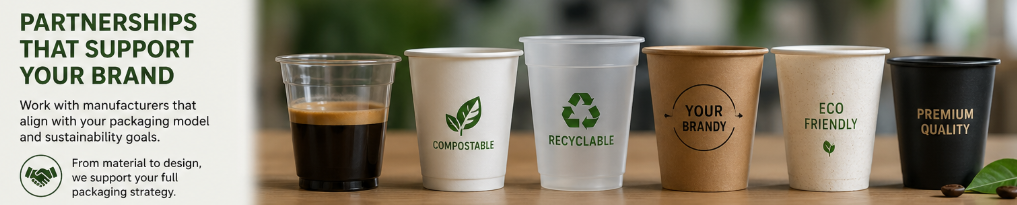
At the same time, regulations and consumer expectations are pushing businesses toward greener options. That’s why partnerships like a custom eco espresso cup manufacturer for private label coffee brands are becoming more common, especially for brands trying to align packaging with sustainability messaging.
1. Guzzini: Reusable Plastic with Design Focus
Guzzini has been working with high-quality plastics for years, especially reusable materials that feel closer to premium tableware than disposable packaging. Their espresso cups often sit somewhere between lifestyle product and functional tool.
They’re often used as a custom reusable espresso cup supplier for lifestyle coffee brands, particularly when visual design still matters.
2. Bormioli Rocco (Plastic Solutions): Scale and Stability
Although best known for glass, Bormioli Rocco also produces plastic items suited for foodservice. Their strength isn’t creativity—it’s production capacity and consistency.
For buyers dealing with volume, they can function as a bulk plastic espresso cup manufacturer for foodservice wholesalers, where reliability matters more than design variation.
3. ISAP Packaging: Built for Takeaway
ISAP focuses heavily on disposable food packaging. Their espresso-sized cups are typically used in vending, takeaway counters, and high-turnover environments.
In practice, they’re a straightforward disposable espresso cup supplier for takeaway coffee chains, especially where speed and hygiene are priorities.
4. Flo Group: Pushing Toward Compostable Options
Flo Group has been gradually shifting toward more sustainable materials, including compostable solutions. Their products are often integrated into broader food packaging systems.
They tend to fit as an eco friendly espresso cup manufacturer for quick service restaurants, particularly for brands trying to reduce environmental impact without overhauling operations.
5. Dopla: Event and Catering Friendly
Dopla produces large volumes of disposable tableware, including compostable lines. Their espresso cups are commonly used in events, catering, and temporary setups.
For distributors, they work as a compostable espresso cup supplier for catering distributors, where flexibility and pricing are key.
6. Huhtamaki Italy: Fiber-Based Direction
Huhtamaki has a strong presence in fiber packaging. While not limited to Italy, their local operations support European buyers looking for renewable material options.
They’re often selected as a fiber espresso cup manufacturer for international packaging buyers, especially when paper-based solutions are required.
7. Seda International Packaging Group: Branding at Scale
Seda focuses on custom-printed packaging for major chains. Their espresso cups are rarely standalone—they’re part of a complete takeaway system.
Because of this, they’re frequently an oem espresso cup supplier for branded takeaway systems, helping unify cups, lids, and outer packaging.
8. ILIP: Recyclable Plastic Focus
ILIP develops rigid plastic packaging with an emphasis on recyclability. Their designs are usually optimized for stacking, transport, and automated filling systems.
They’re commonly used as a recyclable espresso cup factory for retail and horeca buyers, particularly in regions with strict recycling policies.
9. Ecozema: Fully Compostable Positioning
Ecozema focuses almost entirely on compostable materials like PLA. Their products are designed to work within certified composting systems.
They’re often chosen as a biodegradable espresso cup supplier for eco conscious coffee brands, especially when sustainability is part of the brand story, not just a requirement.
10. Pack Service Group: Custom Plastic Flexibility
Pack Service Group offers tailored plastic packaging solutions. Their advantage is flexibility rather than scale—they can adapt designs to specific client needs.
They’re typically used as a custom plastic espresso cup manufacturer for wholesale distributors, especially for projects that don’t fit standard molds.
Looking Beyond the Cup Itself
One thing that becomes clear quickly: espresso cups are rarely sourced in isolation anymore. Buyers are thinking in terms of systems—cups, lids, sleeves, transport packaging, and even how everything looks on delivery platforms.
That’s where working with a private label espresso cup manufacturer for international distributors can simplify operations. Instead of coordinating multiple suppliers, businesses can align everything under one production framework.
Where the Market Is Headed

Material innovation is moving fast. Recyclable plastics are improving, compostable materials are becoming more accessible, and fiber-based options are gaining traction. At the same time, minimum order quantities are becoming more flexible, which helps smaller brands experiment.
Because of that, more companies are starting projects with an oem eco espresso cup factory for sustainable packaging projects, not just to meet regulations, but to test how customers respond to different packaging choices.
Final Thoughts
Switching to plastic or eco materials doesn’t automatically make a product better—it just makes it different. The real question is whether the material fits your business model. A takeaway chain, a vending operator, and a boutique café will all approach this differently.
Italy still plays a role in this space, but not in the same way it did with porcelain. Today, it’s less about tradition and more about how manufacturers adapt to modern packaging needs.
For wholesale buyers, the smartest move is to focus less on reputation and more on fit—production capacity, material compliance, customization, and how well the supplier integrates into your overall packaging strategy.