
Most cafés don’t question their cups until something starts to feel slightly off. The espresso still looks good at the machine, the recipe hasn’t changed, and the workflow seems stable—yet the drink that reaches the customer feels lighter, cooler, or less consistent than before. It’s not an obvious failure, just a quiet drop in quality that’s hard to explain.
At that point, teams usually go back to grind size or extraction time. But if those variables are already under control, it’s worth looking at something else—the cup. Especially when you’re working with plastic or eco-friendly materials, the cup isn’t neutral. It actively changes what happens after the shot is poured.
Once the shot is poured, the cup starts shaping the result
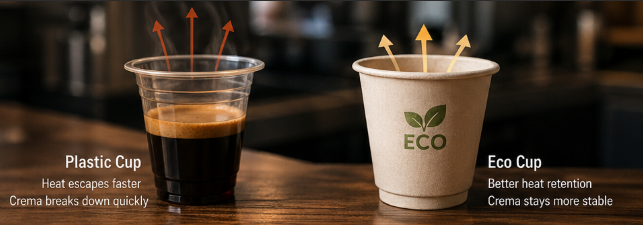
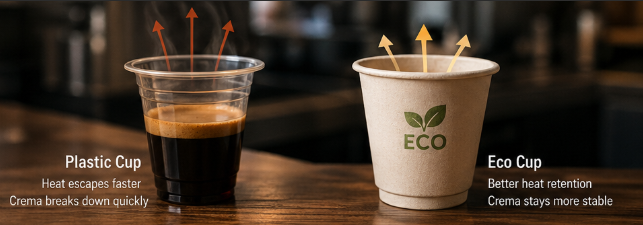
In a real café environment, espresso isn’t consumed the moment it’s extracted. There’s always a short delay—sometimes just a few seconds, sometimes longer in takeaway or delivery scenarios. During that time, temperature drops and crema begins to shift.
That’s where the cup comes in. It controls how fast heat escapes and how stable the surface remains. Many operators only realize this when they start discussing specs with a custom espresso cups manufacturer, and the conversation moves beyond appearance into actual usage conditions.
Plastic and eco cups react faster than expected. They don’t buffer the espresso—they expose it. That means whatever happens in those first 30–60 seconds has a direct impact on what the customer experiences.
Plastic cups: convenient, but sensitive to design details
Plastic espresso cups are widely used because they’re practical. They’re easy to stack, easy to transport, and work well for takeaway-heavy operations. But from a performance perspective, they’re less forgiving.
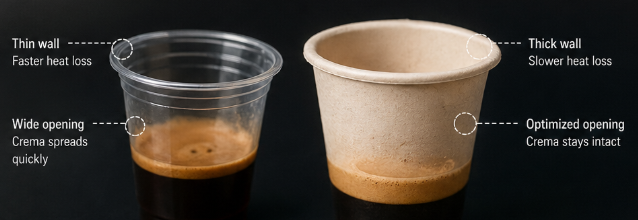
The biggest issue is heat loss. Plastic doesn’t retain warmth; it lets heat move outward quickly. So the espresso starts cooling almost immediately after being poured. You might not notice it at the bar, but by the time the customer drinks it, the difference is there—less body, shorter finish, muted aroma.
That’s why buyers working with an oem espresso cups supplier tend to focus on structure rather than just material. A slightly thicker wall, a double-layer build, or even a small design adjustment around the rim can slow down heat loss enough to keep the drink closer to its intended profile.
Crema is also affected. In lightweight plastic cups, the liquid settles differently. If the opening is too wide or the inner shape is too flat, the crema spreads out quickly and becomes thin. It’s not that the crema disappears—it’s that the cup doesn’t help it stay intact.
Eco-friendly cups: sustainable choice, but performance varies
Eco-friendly espresso cups are becoming more common, especially for brands that want to reduce plastic use. They meet sustainability expectations, but they don’t always behave consistently when it comes to hot espresso.
The challenge is variation. Some eco cups are designed with inner layers that help manage heat and moisture. Others prioritize biodegradability, which can mean faster heat loss or less stable inner surfaces. Two cups that look similar can perform very differently.
When sourcing from a sustainable espresso cups factory, it’s important to define what you actually need. If espresso is a core product, the cup has to support high temperature and small volume. Otherwise, the drink may cool too quickly or lose structure before it’s consumed.
Crema stability can also be affected. Some eco materials have slightly uneven inner textures, which can interfere with how crema settles. It’s not dramatic, but over time it creates inconsistency—one cup looks fine, the next looks flat.
This is why some operators choose to refine their specifications with a biodegradable espresso cups supplier, making small adjustments to improve performance without giving up sustainability goals.
The issue is rarely the material alone—it’s how it’s used
Plastic and eco cups both have their place. The problem usually comes from using a cup that wasn’t designed for your specific workflow.
A thin plastic cup made for cold drinks won’t perform well with hot espresso. An eco cup built for general beverages may not handle the intensity of a concentrated shot. Even a good product can underperform if it doesn’t match how you serve.
Operators who work with an espresso cups supplier for takeaway coffee brands tend to approach this differently. They start with real conditions—how long the drink sits, whether a lid is used, how fast orders move—then match the cup to those conditions.
That approach avoids the common situation where everything looks right on paper but doesn’t hold up in service.
Takeaway and delivery make cup performance more critical

If espresso is consumed immediately, small temperature changes might go unnoticed. But once takeaway or delivery is involved, the cup has to carry the drink through a longer window.
From the moment the lid goes on, the clock starts. Heat escapes, internal conditions change, and crema begins to break down. The cup’s role is to slow that process as much as possible.
This is where working with a custom printed espresso cups manufacturer for beverage chains becomes useful. Instead of adapting a generic option, you can align the cup’s structure, lid fit, and branding with how your drinks are actually served.
Even small changes—like a better seal or a slightly adjusted opening—can extend how long the espresso maintains its quality.
Branding should support, not interfere with performance
Cups are part of the customer experience. They carry your logo, your colors, and often shape how your brand is perceived. But if the cup doesn’t perform well, that experience breaks down quickly.
The challenge is making sure design choices don’t create new problems. A finish that looks good might affect insulation. A shape that stands out might not support crema stability.
Working with a custom logo espresso cups supplier for eco packaging brands helps align these priorities. Instead of treating branding and function separately, they’re developed together, so the final product works in real conditions.
You can identify cup-related issues with simple checks
You don’t need complex testing to see whether your cups are affecting espresso quality. A straightforward comparison is often enough.
Use the same espresso and pour it into different cups. Let them sit briefly, then taste. Pay attention to how quickly the temperature drops and how the crema behaves. Differences usually show up quickly once you look for them.
Some businesses take a cautious approach by testing small batches from a wholesale espresso cups distributor for quick-service operators before scaling up. It’s a practical way to see how a cup performs in real use, not just in specifications.
If everything else is stable, the cup might be the missing factor
By the time a customer drinks an espresso, the only thing still influencing it is the cup. If that cup allows heat to escape too quickly or doesn’t support crema structure, the drink won’t match what you intended—even if everything upstream was done right.
Plastic and eco-friendly cups don’t need to be avoided, but they do need to be chosen carefully. They respond quickly to temperature and structure, which means small design differences have a real impact.
For businesses looking to improve consistency without overhauling their entire setup, revisiting cup selection can make a noticeable difference. Working with an espresso cups factory for bulk takeaway programs is less about sourcing and more about making sure the final step supports everything that comes before it.
Because in the end, espresso quality isn’t just about how it’s made. It’s about how well it holds up until the moment it’s actually enjoyed.