
We all have that one morning ritual that feels untouchable. Maybe you’re the type to hunt down rare, single-origin beans, or you’ve spent a fortune on a water filtration system that promises clinical purity. It feels like a healthy, disciplined start to your day. But here’s the kicker: while you’re obsessing over the “cleanliness” of the coffee itself, you’re likely ignoring a massive chemical red flag sitting right in your hand.
The uncomfortable truth is that the real danger in your morning routine isn’t the caffeine or the acidity—it’s the reaction between a 90℃ liquid and the synthetic materials of your cup. From microplastic shedding to hormone-disrupting leachable chemicals, your choice of vessel might be undoing all your wellness efforts. For businesses looking to pivot, finding a reliable recycled plastic coffee cup factory that prioritizes medical-grade safety over mere marketing buzzwords is the first step toward fixing this.
The Paper Cup Trap: It’s Not Just Cardboard
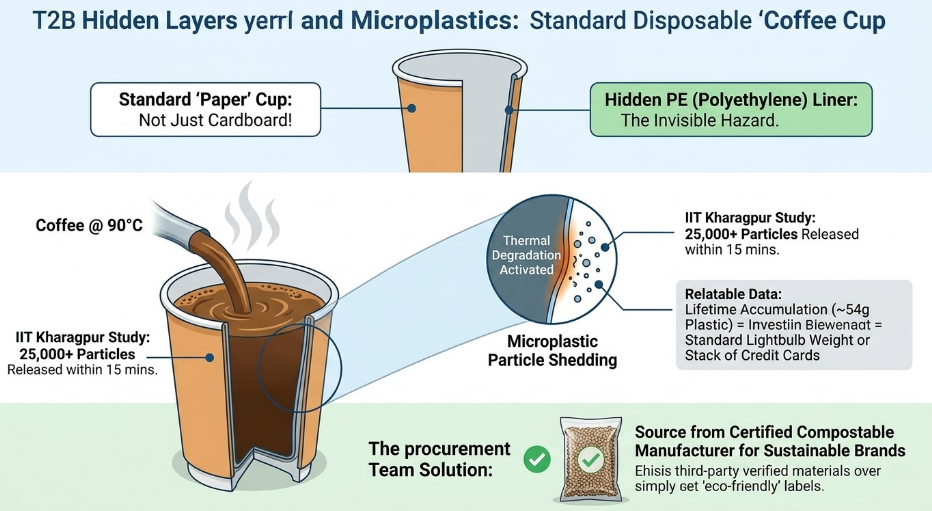
Let’s be real: paper cups look harmless. They feel like cardboard, and they usually sport a green “recyclable” logo. But paper can’t hold hot liquid for more than a minute without turning into a soggy mess. To solve this, manufacturers line every single “paper” cup with a thin, invisible layer of Polyethylene (PE) plastic.
When that scorching coffee hits the liner, it triggers “thermal degradation.” A famous study from IIT Kharagpur revealed that a single paper cup releases roughly 25,000 microplastic particles into your drink in just 15 minutes. If you grab one every morning, the math is simple: you’re looking at a lifetime accumulation of ~54g of plastic. That is basically the weight of a standard lightbulb or a stack of credit cards sitting in your digestive tract. For procurement teams, working with a certified compostable coffee cup manufacturer for sustainable brands is the only way to ensure that “eco-friendly” doesn’t just mean “plastic-coated paper.”
The “BPA-Free” Marketing Myth
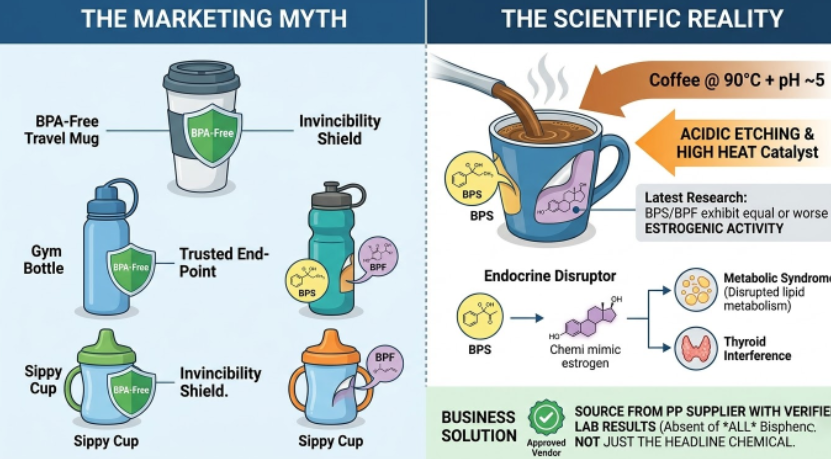
We’ve been trained to look for the “BPA-Free” sticker like it’s a shield of invincibility. It’s on travel mugs, gym bottles, and even kids’ sippy cups. But the chemical industry just engaged in a massive game of “whack-a-mole.” When Bisphenol A (BPA) got a bad reputation, companies simply swapped it for BPS or BPF.
The latest research suggests these replacements are just as bad—and in some cases, more estrogenic—than the original BPA. These chemicals are endocrine disruptors, meaning they “mimic” hormones like estrogen in your body. This can lead to metabolic syndrome and thyroid interference. Since coffee is naturally acidic (pH $\sim 5$), it effectively “etches” the plastic, speeding up the chemical migration. Smart retailers are now sourcing from a premium PP coffee cup supplier focusing on BPA-free alternatives who can actually prove their products are free of all bisphenols, not just the one currently in the headlines.
Why Coffee Pods Are Basically Chemical Extractors

The convenience of pod-based systems is undeniable, but the physics are a health nightmare. Unlike a standard cup where the coffee just sits there, a pod machine uses high-pressure steam to blast through a plastic capsule.
A study from UConn highlighted that this high-pressure, high-heat environment creates a perfect “extraction chamber”—not just for the coffee, but for the plasticizers in the pod. You aren’t just drinking a latte; you’re drinking a pressurized chemical rinse. This is exactly why an experienced coffee brewing component manufacturer for high-end systems usually opts for medical-grade silicone or stainless steel internals to avoid this “double-exposure” risk.
Where Does All That Plastic Actually Go?
We used to tell ourselves that we just “pooped out” any plastic we swallowed. Science has debunked that. Microplastics have been detected in human blood, lung tissue, and even the placenta.
But the most chilling discovery is in the brain. Recent autopsies have revealed that microplastics can cross the blood-brain barrier. In some cases, plastic fragments made up 0.5% of the weight of brain tissue in dementia patients—a significantly higher concentration than in healthy controls. While we’re still connecting the dots on the long-term effects, having synthetic polymers in your brain is a massive red flag. These chemicals also act as “obesogens,” messing with how your body stores fat. This is why a specialized plastic coffee cup factory for medical-grade standards focuses so heavily on testing—to keep the chemistry out of your cells.
Finding a Safer Way to Caffeine
You don’t need to quit your coffee habit; you just need to quit the plastic. If you want the safest experience, follow this hierarchy of materials:
-
Ceramic is the Gold Standard: High-quality, non-porous ceramic is chemically stable. Just make sure the glaze is lead-free.
-
Stainless Steel is Great, But… It’s tough and recyclable, but it can leave a metallic tang. The solution? Ceramic-lined steel. It gives you the durability of metal with the purity of ceramic.
-
High-Grade Polymers (As a last resort): If you absolutely must use plastic for weight or cost reasons, ensure it is sourced from a high-quality Triton plastic coffee cup manufacturer that utilizes high-heat resistant, non-leaching resins.
The Honest Trade-Offs
No material is perfect. Ceramic is brittle. Stainless steel is heavy. Glass breaks if you drop it on the sidewalk. But when you weigh these minor inconveniences against the prospect of lifetime plastic bioaccumulation, the choice is pretty obvious.
For the busy professional, the easiest change is the “Lid-Free” rule. If you must use a takeaway cup, take the plastic lid off. The steam hits that lid, condenses into toxic droplets, and falls right back into your drink. That one small move can cut your chemical exposure by a huge margin.
A Final Word for Consumers and Businesses
The movement toward plastic-free coffee isn’t about fear; it’s about empowerment. As a consumer, your power lies in your daily choice—bringing a reusable mug isn’t just an “eco” move; it’s a move for your own endocrine health.
As a business owner, your power lies in your supply chain. By choosing to work with an innovative double-walled coffee cup supplier for corporate branding who understands the risks of traditional PE linings, you are signaling to your customers that you value their long-term health.
Even for those still tethered to plastic for durability, finding a global export plastic coffee cup factory with FDA certification is the bare minimum for ethical sourcing. Your morning coffee is a ritual of clarity and energy. Let’s make sure the cup you drink it from doesn’t turn that clarity into a chemical fog.