
Let’s be honest: executing a flawless Biryani is a high-stakes gamble, a messy marriage of culinary science and raw, artistic intuition. For restaurant operators and catering leads, a bowl of Biryani represents a complex structural achievement—a layered masterpiece held together by steam, fat, and precisely timed spices. However, as global cravings for South Asian flavors explode, the market is unfortunately drowning in lackluster, “fast-food” imitations. Whether you are a chef refining your signature menu or a B2B buyer hunting for quality consistency, spotting these “red flags” is a non-negotiable skill. Even the most sophisticated PP plastic biryani bowl manufacturer for global distributors cannot mask the structural failure of a dish that has ignored the fundamental, centuries-old rules of the Dum process.
Red Flag 1: The “Melted” Rice Crisis and Structural Collapse

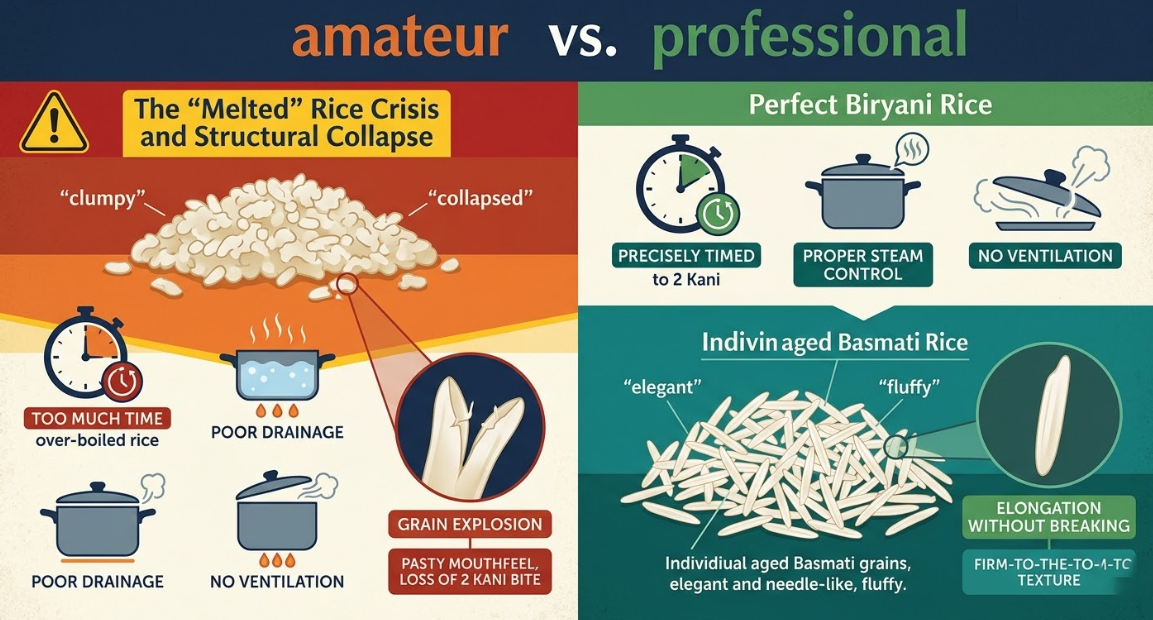
The very first thing that hits your senses—and eventually your palate—is the rice. In an authentic Biryani, the long grains are the undisputed hero of the show, not some soggy, clumped-up backup dancer. Premium aged Basmati is defined by its needle-like elegance, capable of elongating significantly during the steaming phase without breaking into pieces.
If you peel back a lid only to find a clumped, mushy mound of starch, you’re staring at a major red flag that screams “amateur hour.” This “melted” disaster usually happens when the rice is over-boiled before layering or when the steam is trapped without any way to escape. A custom microwaveable plastic biryani bowl supplier for restaurants knows that structural integrity is everything; they provide vented, high-heat resistant lids specifically to stop condensation from turning the rice into a swampy, unappetizing mess. If the grain tips are split open—a sign of “grain explosion”—the starch has collapsed, leaving a pasty mouthfeel that lacks the essential “2 Kani” (firm-to-the-tooth) bite that defines a professional cook.
Red Flag 2: The Bitter Sentence of Burnt Onions
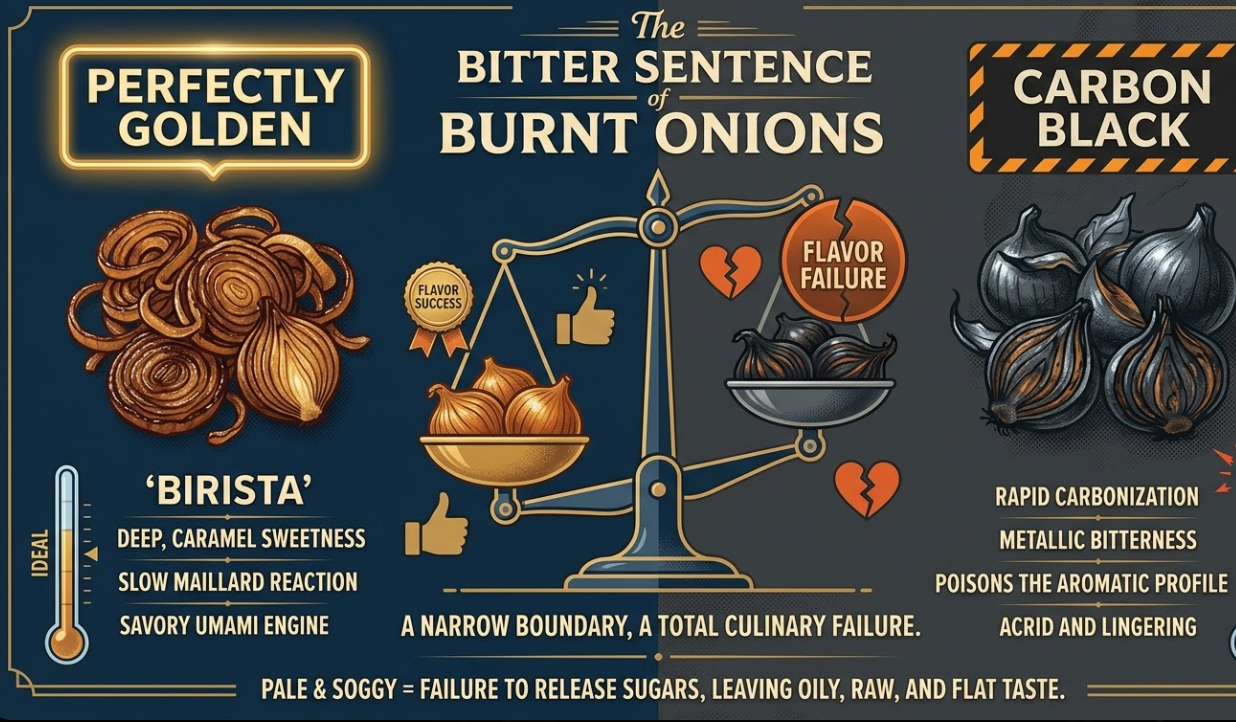
Fried onions, or Birista, act as the savory, umami-rich engine of the entire dish. When handled with extreme patience, they offer a deep, dark caramel sweetness that rounds out the spices. However, the boundary between “perfectly golden” and “carbon black” is dangerously thin. Many rushed, high-volume kitchens stumble here, leading to the second red flag: acrid, dark onions that effectively poison the entire aromatic profile.
When onions are flash-fried at violent, unmanaged temperatures, they undergo rapid carbonization rather than a slow, sweet Maillard reaction. This creates a metallic, lingering bitterness that no amount of sugar or salt can ever fix. Furthermore, if the onions arrive pale and soggy, they have failed to release their concentrated sugars, leaving the meal tasting oily, raw, and flat. A reliable disposable PP plastic biryani bowl factory for event planners understands that presentation starts with visual honesty; seeing black flakes of burnt onion through a clear, high-clarity lid is an immediate warning of a kitchen that cuts corners on the basics.
Red Flag 3: The Chemical Neon Glow of Artificial Dyes
True visual charm in a Biryani comes from the “mottled” effect of real saffron—a variegated tapestry of ivory, pale gold, and deep sunset-orange grains. A massive red flag of a mediocre, cost-cutting bowl is an aggressive, uniform “neon” glow that looks more like industrial highlighter fluid than actual food.
If your meal arrives looking like it was spray-painted with a neon orange marker, you are likely consuming synthetic tartrazine or cheap food coloring. These dyes are often used as a “smokescreen” to hide low-quality, yellowed rice or to bypass the high cost of genuine saffron strands. Beyond the obvious lack of flavor, these chemicals often leave a strange, dry, or metallic residue on the tongue. When sourcing from a reliable heavy-duty plastic biryani bowl manufacturer for food chains, professional buyers ensure the material purity and transparency showcase the natural textures of the grains, rather than a suspicious, monochromatic orange slurry that stains your fingers and the container itself.
Red Flag 4: The Harsh “Raw Spice” Punch and Acidic Imbalance
The aroma of a world-class Biryani should be a warm, floral invitation—it should never be a sharp slap in the face. A mediocre bowl often announces itself with a harsh, acidic punch that burns the back of the throat before you even take a bite.
This sharpness usually signals an imbalance of cheap, over-fermented yogurt or, worse, artificial souring agents used to fake the complex tang of a traditional marinade. Another olfactory warning is the “raw spice” smell. This occurs when whole spices or ground masalas aren’t properly “bloomed” in hot oil to release their essential oils before the liquid is added. Instead of a rounded, toasted fragrance, you get a gritty, medicinal scent. Even the most eco-friendly recyclable plastic biryani bowl supplier for sustainable brands can’t save a dish that smells more like a pharmacy than a feast. If clove or cinnamon dominates every other note with a stinging intensity, the balance is officially broken, and the kitchen has failed the most basic flavor test.
Red Flag 5: The “Sealed-In” Mush of Poor Layering

Biryani is a layered casserole by design, not a stir-fry or a mixed rice dish. It requires distinct strata where the meat juices slowly perfume the rice sitting above them. A mediocre, “mall-food” version often arrives as a compressed, wet mound where everything has been violently mashed together into a generic “brown rice” heap.
When a kitchen traps the Biryani in a container for too long without any moisture control, the residual heat continues to cook the grains until they turn into a dense, compressed block. This lack of “fluff” is a total death sentence for the experience. High-end wholesale injection molded plastic biryani bowl factory for international exporters specialize in rigid, deep-dish designs that protect the internal layers from being crushed during the rigors of transit. If you can’t see the beautiful contrast between the snow-white grains and the spice-coated protein, the kitchen has likely taken a lazy shortcut by mixing pre-cooked rice with a generic curry sauce—a cardinal sin that any real Biryani lover will spot in seconds.
The Bottom Line: Demand Culinary Integrity
Spotting these five red flags is the first step in demanding better from the global food industry. Every single detail matters—from the age of the Basmati grains used in the pot to the heat-resistance and ventilation of the serving vessel. A bulk stackable plastic biryani bowl supplier for hospitality businesses offers that final touch of professional respect for a dish that traditionally takes hours, if not days, to prepare correctly.
Next time you order, don’t just dig in. Look for the variegated colors, smell for the floral warmth of mace and saffron, and check for that perfect grain separation. If you see too many red flags, it’s time to move on and find a kitchen that actually respects the craft. Quality Biryani is a celebration of patience; anything less is just an insult to your palate.