
We’ve all been there: you scrape the last bit of double-chocolate fudge from the bottom, and the container feels surprisingly beefy. It’s the perfect size for tomorrow’s chili, right? It feels wasteful to just bin it. But under the kitchen light, what looks like a handy freebie is actually a microscopic minefield. While “reduce and reuse” is a great mantra for the planet, applying it to single-use plastic tubs is a gamble with your gut health that most of us don’t even realize we’re taking.
The Invisible “Lunar Landscape” Inside Your Cup
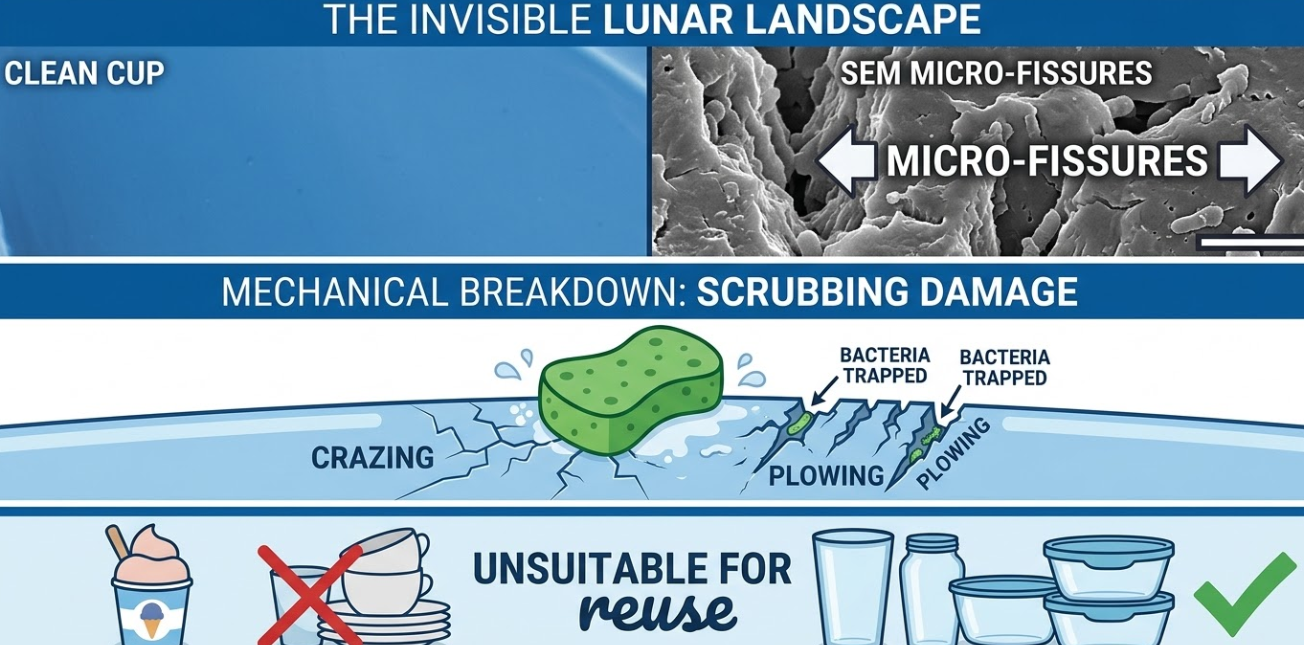
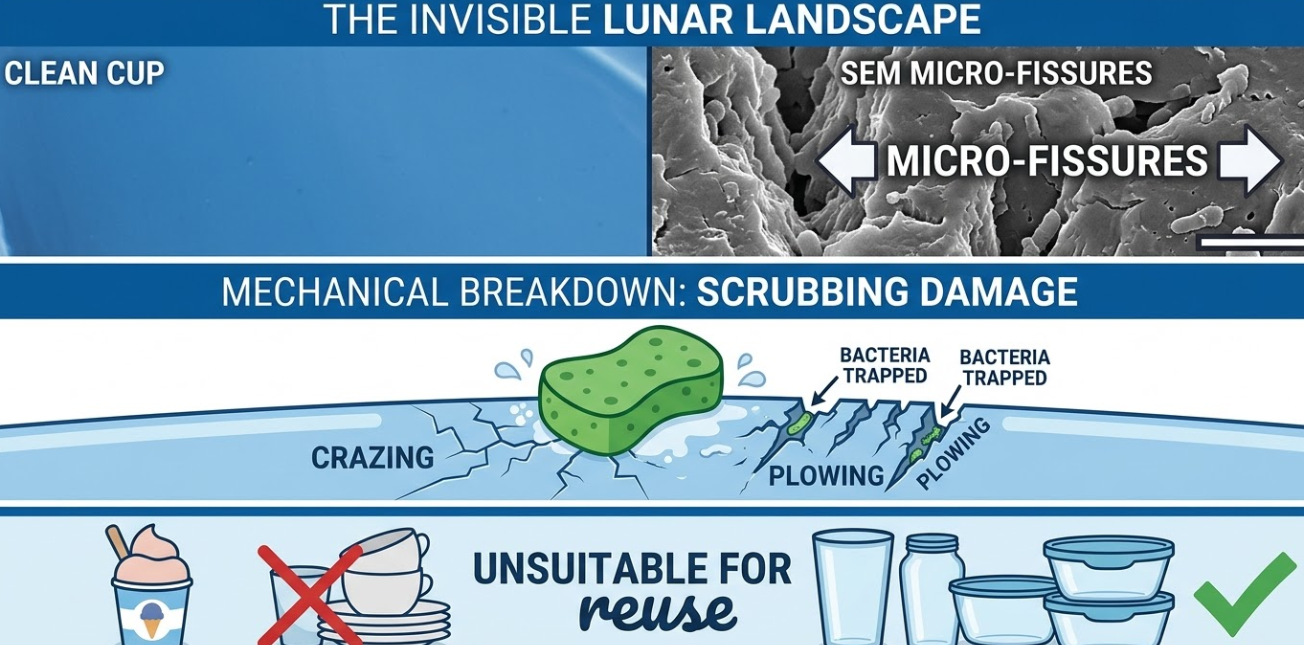
Scrubbing a cup in the sink might make it shine, but if you tossed that plastic under a Scanning Electron Microscope (SEM), you’d see a horror show. Single-use food packaging just isn’t built for the long haul. The moment you go at it with a sponge—even those “non-scratch” ones—you’re essentially plowing a “lunar landscape” of micro-fissures into the surface. These canyons are far too narrow for soapy water to flush out, but they are the perfect size for a bacterial colony to call home.
This mechanical breakdown is the exact reason why a disposable PP ice cream cup manufacturer focuses on a molecular density tuned for a one-way trip. Unlike high-end kitchenware, the polymers in these tubs undergo “crazing”—a spiderweb of internal cracks—when they hit the thermal stress of a hot dishwasher. These tiny jagged caves aren’t just aesthetic flaws; they are the primary infrastructure for germs to settle in for good.
Fortresses of Filth: The Biofilm Problem
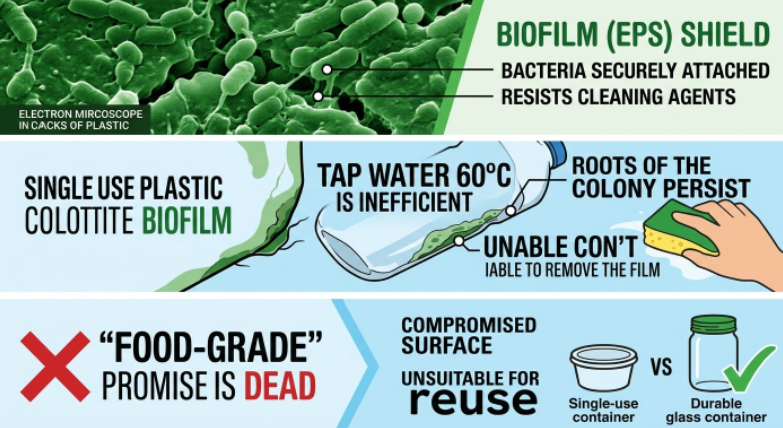
The real headache isn’t just a few loose germs; it’s the “biofilm.” When pathogens like Listeria or E. coli find a nice, deep scratch, they don’t just hang out. They start pumping out a biological “superglue” called Extracellular Polymeric Substances (EPS). This stuff anchors them to the plastic and creates a literal shield that shrugs off your dish soap.
Once a biofilm sets up shop, it’s incredibly tough to evict. Your average 60°C tap water simply won’t cut it. You might rinse away the top layer of bacteria, but the “roots” of the colony stay buried in the plastic’s pores. This is a massive red flag for any custom PET ice cream cup supplier who values food safety; once that plastic surface is compromised, the “food-grade” promise is effectively dead.
Who’s Actually Crashing in Your Leftovers?
So, who are these uninvited guests? Listeria monocytogenes is the big one. It’s a “psychrotroph,” which is a fancy way of saying it loves the cold. While other bugs go dormant in the fridge, Listeria keeps quietly multiplying in those scratches. If your “clean” cup has a hidden biofilm, your leftovers could reach dangerous bacterial levels in just a few days.
Then there are the molds. Aspergillus and Penicillium love the damp, rolled rims of reused containers. When researchers look at the microbial load of these “saved” plastics, they often find colony counts reaching 9.0log10 CFU/mL. That’s a billion live organisms in a tiny space—a level of contamination that can turn a simple lunch into a week of misery for anyone with a sensitive stomach.
Built to Break: The Engineering Reality
We need to stop treating single-use and multi-use plastics as the same thing. A reliable plastic ice cream cup factory for wholesale business uses specific grades of plastic optimized for one freeze-thaw cycle. They aren’t designed to handle the “fatigue” of being washed and dried over and over.
The walls are kept thin for fast freezing, which is great for the ice cream but bad for your cupboard. Every time the plastic flexes or gets hot, those micro-fractures get wider. Plus, those textured bottoms and rolled edges that make the cups so easy to stack? They are “dead zones” where moisture and organic bits get trapped, creating a buffet for bacteria that no faucet can fully reach.
The Chemical Leaching Trap

It’s not just about the bugs—there’s a chemical side to this mess too. Plastic is a soup of polymers and additives like stabilizers. When you blast a single-use tub with heat or—heaven forbid—microwave it, those chemical bonds start to fray. This is when leaching happens.
Oily or fatty foods act like a magnet, pulling chemicals out of the stressed plastic and straight into your food. For an industrial PLA ice cream cup supplier for international trade, keeping migration levels within safety limits is a strict, documented process. But that safety net vanishes once you start the “infinite reuse” cycle. The material simply wasn’t meant to hold up against repeated chemical and thermal assault.
Why Your “Deep Clean” is a Myth
We have this mental trap: “If it doesn’t smell and looks clear, it’s fine.” It’s a dangerous way to think. Dishwashers are actually the worst thing for these plastics. The caustic soap and high-heat drying make the plastic “fog up”—that’s not just a cosmetic change; it’s the sound of polymer chains snapping.
Professional labs use autoclaves and intense sterilization that would melt an ice cream cup in seconds. If a sustainable sugarcane bagasse ice cream cup manufacturer marks a container as “single-use,” they’re telling you the material can’t handle real sterilization without breaking down. You’re essentially trying to sanitize something that was designed to be disposable.
Smart Swaps: Real Sustainability
You can be eco-friendly without risking a stomach bug. The real fix is a “permanent fleet” of glass or stainless steel. Glass is non-porous—it has zero “caves” for bacteria to hide in—and you can sterilize it a million times.
If you really need the convenience of lightweight tubs for dry storage, look for gear from an oem polystyrene ice cream cup factory that builds “multi-use” specific containers. These have the wall thickness and high-density polymers needed to survive the sink.
Before you save that next tub, check for the “red flags”: any cloudiness, scratches you can feel with a fingernail, or odors that won’t go away. If you see them, recycle it. For those in the trade, sourcing from a high-quality food-grade plastic ice cream cup wholesaler ensures your customers get a safe, one-time-use experience every time. For the rest of us, the best rule is simple: if it came with the food, it should probably go with the trash.