
Walking down the frozen dessert aisle in 2026 feels less like grocery shopping and more like navigating a psychological minefield. Those soft pastel palettes, “hand-churned” fonts, and bold “all-natural” stickers are meticulously engineered to bypass your logic and hit your dopamine receptors. But as any veteran PP ice cream cup manufacturer will tell you, the front of the tub is pure theater. The side panel? That’s where the actual forensics happen.
With production standards shifting, the gap between “premium-looking” and “premium-quality” has become a canyon. Whether you’re a parent hunting for a clean treat or a procurement lead vetting a sustainable PET ice cream cup factory, understanding label anatomy is no longer optional—it’s a survival skill. Brands frequently use “visual clutter” to mask industrial stabilizers. Here are the five red flags that should make you put that pint back immediately.
Red Flag #1: The Shady Math of “Serving Sizes”

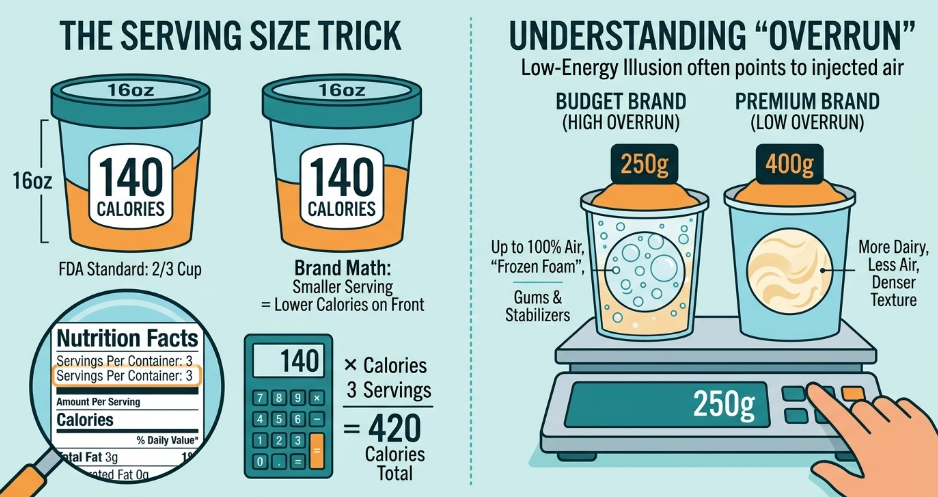
The oldest trick in the book isn’t a secret chemical; it’s a math problem. Even though the FDA updated the standard serving size to $2/3$ cup back in 2020, brands still play “hide the calorie.” They’ll slap a massive “140 Calories” on the front, but hide the fact that the small 16oz container actually holds three servings in microscopic print. If a decadent-looking flavor claims to be low-cal, look closer.
This “low-energy” illusion often points to high “Overrun”—or, more accurately, injected air. Budget brands whip up to 100% air into their base, creating a “frozen foam” instead of actual dairy. If the cup feels suspiciously light, you’re paying for nitrogen and stabilizers. For a global HDPE ice cream cup supplier for wholesale, transparency in printing these nutrition facts isn’t just about compliance; it’s the only way to build real consumer loyalty in a skeptical market.
Red Flag #2: The 2025 Allergen Warning – Hidden Risks in Plain Sight
Safety should be a non-negotiable, but the industry still stumbles. A glaring red flag is a vague allergen statement—or worse, a missing one. Take the Friendly’s 2025 recall as a chilling case study: over 300 cartons of Cookies & Cream were yanked from shelves because they contained undeclared soy and wheat. This wasn’t just a “labeling error”; for a sensitive consumer, it was a life-threatening gamble.
You need to know the difference between “Contains” (the law) and “May Contain” (the lawyer’s disclaimer). If a brand hides behind “shared equipment” without clear warnings, they are prioritizing a clean-looking label over your safety. Any reliable CPET ice cream cup manufacturer must have a bulletproof quality control chain to ensure the physical container matches the exact batch inside, preventing these dangerous—and expensive—recalls.
Red Flag #3: Artificial Dyes Wearing “Natural” Masks
If your mint chip is a radioactive green, you’re likely eating a chemical cocktail. Red 40, Yellow 5, and Blue 1 are the usual suspects, often linked to neurobehavioral issues in kids. The real red flag is the “Regional Double Standard.” Many global giants use fruit extracts like spirulina or beet for their European versions but stick with cheap, synthetic dyes for the US market.
Watch out for the lazy “Color Added” or the “Carmine” trap. Carmine is technically natural (it’s crushed bugs), but it’s a deal-breaker for vegans and a major allergen for some. From the perspective of an eco-friendly PLA ice cream cup supplier for shops, the shift toward non-toxic packaging usually mirrors the shift toward clean ingredients. A brand that cuts corners on the dye is likely cutting corners on the packaging grade, too.
Red Flag #4: The “Chemistry Lab” Ingredient List
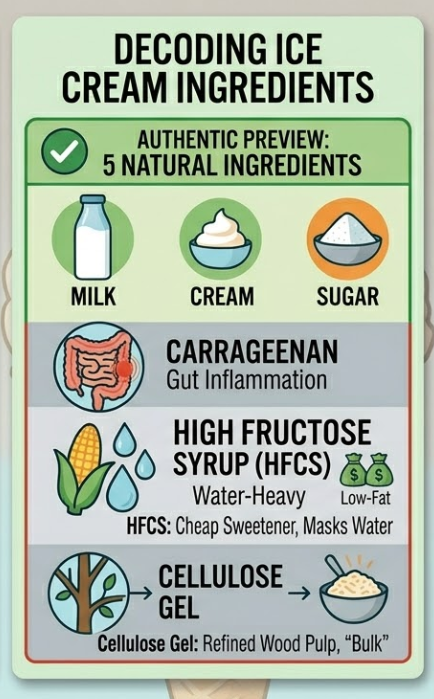
Authentic ice cream really only needs five things: milk, cream, sugar, eggs, and a natural flavor like vanilla bean. When the list starts looking like a NASA technical manual, something is wrong. Take Carrageenan, for example. It’s used to fake a “creamy” mouthfeel in low-grade products but has been repeatedly flagged for causing gut inflammation.
Then there’s High Fructose Corn Syrup (HFCS). Its presence is a dead giveaway of a budget-first formulation. HFCS isn’t just a sweetener; it’s a tool to keep water-heavy, low-fat mixtures soft enough to scoop. If you see “Cellulose Gel”—basically refined wood pulp—you’re looking at a product built for profit, not taste. A bulk rPET ice cream cup factory catering to premium brands knows that high-quality, additive-free formulas actually require better physical protection from freezer burn because they don’t have those chemicals to lean on.
Red Flag #5: The Trap of “Vague” Marketing Claims
“Light,” “Natural,” and “Reduced Sugar” are the most weaponized words in the freezer. The FDA has rules, but brands find the gaps. “Lower Sugar than what?” usually means compared to their own most sugary product, not a healthy benchmark. It’s a classic bait-and-switch.
The NuNaturals sweetener swap case is a perfect example of this. They changed ingredients behind the scenes, leading to a Class II FDA risk, while keeping the “Natural” marketing front and center. If an ice cream claims to be “High Protein,” check the sugar alcohols. Often, they pack in erythritol to hide a chalky texture, which can cause serious bloating. Professional buyers for a private label PP ice cream cup factory for boutique creameries always insist on third-party testing because, in 2026, a misleading claim is a brand-killing liability.
Your 60-Second Label Audit Checklist

Next time you’re reaching for that “fancy” cup, take a minute to do this quick audit:
-
The Top-3 Rule: Milk or Cream must be the first two ingredients. If Water or Corn Syrup is #1, drop it.
-
The Number Scan: Look for digits like Blue 1 or Red 40. If the color didn’t come from a plant, it’s a red flag.
-
The Weight Check: Pick up two brands. The heavier one has less air and fewer gums (like Guar or Cellulose).
-
The “Contains” Box: Scan the bottom for bolded allergens. If it’s missing or vague, the brand is cutting corners.
By demanding more transparency, we force the entire supply chain—from the BPA-free plastic ice cream cup manufacturer for events to the boardroom—to stop hiding behind pretty pictures. Your health is worth that extra minute of reading.