
Have you ever finished a delicious pint of premium gelato, flipped the container over, and felt a sudden pang of betrayal? That deep, structural indentation at the base—often called a “push-up bottom” or “petaloid base”—can make it feel like you’ve been shortchanged. In a world where packaging aesthetics often mask shrinking product volumes, it’s natural to assume this is a clever marketing ploy to save on ingredients. However, as a professional in the industrial packaging sector, I can tell you that the reality is grounded in rigid physics, thermal dynamics, and high-speed manufacturing requirements. If you are a brand owner looking for a reliable ice cream cup factory for bulk orders, understanding the “why” behind this design is essential for choosing the right container for your product.
The Illusion of Volume: Why Our Brains See a “Cheat”
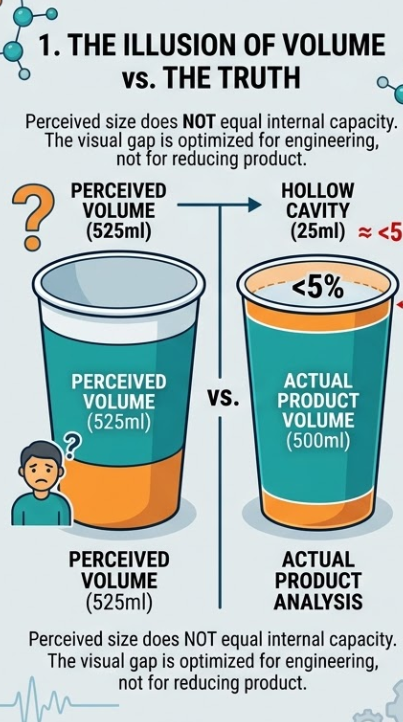
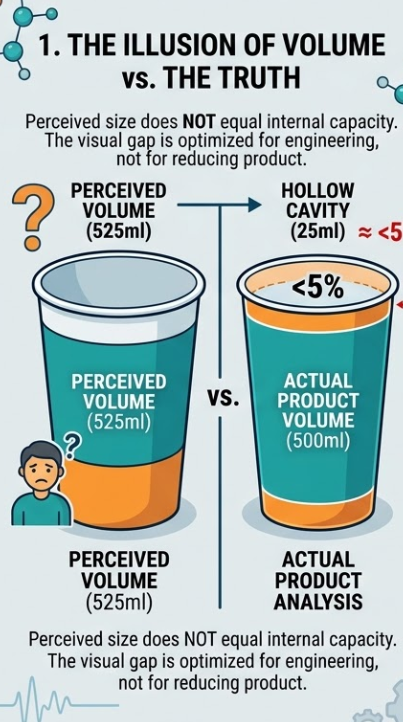
The first thing you notice about a high-quality dessert container is its shelf presence. When a consumer picks up a cup, their brain performs a rapid calculation of value based on the exterior dimensions. When that thumb-sized cavity is discovered at the bottom, the immediate reaction is one of “visual deception.” Research into consumer psychology suggests that we instinctively equate the outer perimeter of a vessel with its internal capacity. In reality, the hollow space in a standard 500ml container usually accounts for less than 5% of the total brimful volume.
For businesses, this creates a delicate balancing act. You need a design that looks generous but remains structurally sound. When you partner with a specialized ice cream cup manufacturer for global brands, you aren’t just buying a plastic or paper vessel; you are buying a calculated piece of engineering. The visual “gap” is a trade-off for a container that won’t crack in the freezer or wobble on the retail shelf.
The Engineering Necessity: Why “Flat” is a Recipe for Failure

To understand why a flat bottom is a nightmare in the frozen food industry, we have to look at the material science of polymers like Polypropylene (PP) and Polyethylene Terephthalate (PET). When ice cream is flash-frozen at temperatures reaching -30°C, the moisture content within the dairy mixture expands. Simultaneously, the plastic container undergoes thermal contraction. If the base of the cup were perfectly flat, the internal pressure would cause the center to “oil-can” or bulge outward. A bulging base means the cup will no longer sit level, creating a “rocking” effect that is unacceptable for premium retail displays.
The concave design acts as a structural reinforcement. By arching the plastic inward, the base gains a higher “Top Load” strength, allowing it to withstand the weight of multiple units stacked in a shipping crate. This is why a custom ice cream cup supplier for supermarket chains will almost always insist on a recessed base. It transforms a flexible piece of plastic into a rigid geometric arch that handles pressure from both the product inside and the stack above.
The Secrets of the Injection Molding Gate

If you look closely at the very center of that hollow bottom, you will often find a tiny, rough nub or a smooth circular mark. This is the “gate”—the entry point where molten plastic was injected into the mold. In a high-speed production environment, removing this gate residue perfectly flush with the surface is nearly impossible without adding expensive secondary processing steps.
By designing a hollow bottom, the ice cream cup factory for wholesale distributors can “hide” this injection point within the cavity. This ensures that the part of the cup touching the table is a clean, smooth ring rather than a central point that could scratch a glass surface or catch on a conveyor belt. It’s a classic example of “form following function,” where a perceived flaw is actually a clever solution to a manufacturing bottleneck.
Material Dynamics: PP, PET, and the Cold Chain
The choice of material significantly dictates the depth and shape of the hollow base. PP (Polypropylene) is the industry standard for “hard pack” ice cream because of its excellent low-temperature impact resistance. However, PP has a high mold shrinkage rate. Without a recessed base to manage the cooling stresses, the bottom would warp into an irregular, concave mess.
On the other hand, for clear “sundae” style containers, many brands look for an odm ice cream cup producer for dessert shops to create PET options that showcase layers of fruit and cream. PET is more rigid but can be brittle when frozen. The hollow base in PET designs often features “ribbing” to distribute the stress of the freezing process more evenly, preventing the hairline fractures that can lead to leaks during the thawing process in a consumer’s kitchen.
It’s Not Just Ice Cream: The Physics of Pressure
This design philosophy isn’t exclusive to the freezer aisle. Think of the “five-point” petaloid base on a 2-liter bottle of soda or the deep “punt” at the bottom of a wine bottle. In carbonated drinks, the base must resist internal gas pressure; in wine, the punt helps with sediment collection and structural integrity during the corking process.
In the world of industrial food packaging, “Function over Fashion” is the golden rule. When a professional ice cream cup manufacturer for food service providers develops a new mold, they aren’t trying to trick the end-user; they are trying to ensure that the 50,000th cup produced is exactly as stable and leak-proof as the first one. The hollow bottom is a physical insurance policy against the chaotic variables of the global cold chain.
How to Tell a Quality Cup from a “Cheap” Trick
While most hollow bottoms are there for engineering reasons, it is true that some low-end manufacturers might exaggerate the depth to save on material costs. However, this is easily debunked by looking at the Net Weight label. In the United States (FDA) and Europe (EFSA), food labeling laws are incredibly strict. A brand must provide the exact weight of the product, regardless of how large the packaging appears.
For a procurement manager, the goal is to find a balance. You want a cup that feels substantial in the hand but remains efficient for logistics. When evaluating a high-volume ice cream cup supplier for international exporters, you should look for “wall thickness uniformity.” A quality cup will have consistent thickness through the sidewalls and into the recessed base. If the plastic is paper-thin at the corners of the hollow bottom, it is a sign of a poorly designed mold that will likely fail or crack under stress.
The Verdict: Engineering Integrity Wins
So, the next time you see that hollow space at the bottom of your favorite treat, remember that it’s the only thing keeping your ice cream from wobbling off the table or leaking into your grocery bag. It’s a sophisticated solution to the challenges of injection molding, thermal expansion, and vertical stacking.
In the B2B landscape, transparency is everything. The most successful packaging is that which performs its duty invisibly. Whether you are a small artisanal creamery or a massive multinational, finding the right oem ice cream cup factory for bespoke packaging is the key to ensuring your product reaches the customer in perfect condition. The hollow bottom isn’t a scam—it’s a silent partner in the journey from the factory to the freezer.