
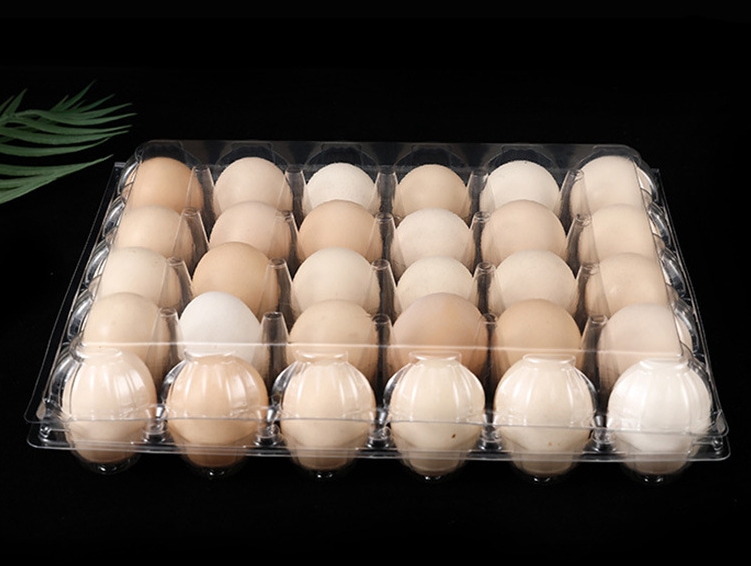
Most buyers start with the same question: Which one is cheaper?
Pulp egg trays or plastic egg trays.
That question makes sense, but it rarely survives the first real shipment.
In practice, egg trays are not just packaging items. They sit quietly in the middle of your cost structure, absorbing small inefficiencies that only become visible when something goes wrong—broken eggs, rejected loads, or unexpected logistics charges. By the time those issues appear, the difference between pulp and plastic trays is no longer theoretical.
Cost looks simple—until it isn’t
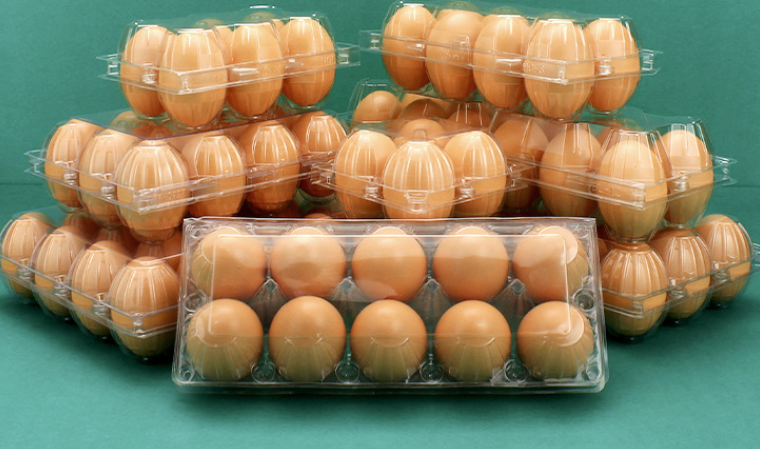
On paper, pulp egg trays usually look cheaper. Raw material prices are relatively stable, tooling requirements are modest, and suppliers are easy to find in most regions. For small or irregular orders, the unit price of pulp trays often wins without much debate.
Plastic trays follow a different curve. PET, PP, and PS prices move with oil markets, and mold investment is not insignificant. That upfront cost alone is enough to turn some buyers away, especially when they are only comparing invoice prices.
What tends to get overlooked is how quickly those numbers shift once volume and handling are involved. Once molds are amortized, the cost per tray becomes predictable in a way pulp rarely achieves at scale. The gap does not always close completely, but it narrows faster than many buyers expect.
Logistics quietly changes the math
This is where decisions often flip.
Pulp trays are light, but they are bulky, which leads to lower stacking density and fewer units per pallet or container. For export shipments, this difference compounds quickly.
Moisture is another factor that tends to be underestimated. Pulp trays stored in humid environments degrade gradually rather than failing visibly. Corners soften, trays warp, and stacking strength drops just enough to cause issues during handling. The losses rarely appear as “tray failure,” but later as cracked eggs or unstable loads.
Plastic trays behave differently. Humidity has little effect on structural integrity, and stacking performance remains consistent. In long-distance transport, this consistency often translates into fewer surprises, even when tray cost is higher.
Bulk purchasing is where intent meets reality
At low volumes, pulp trays usually remain the default choice. There is little reason to complicate the process if breakage rates are acceptable and transport distances are short.
Things change once orders reach scale. At that point, buyers start asking a different question: How many times can this tray realistically be used?
Plastic trays are not always purchased with reuse in mind, but they often end up being reused anyway. Even a limited number of cycles can significantly reduce the cost per egg moved. Pulp trays rarely offer that option; once moisture and handling take their toll, replacement becomes unavoidable.
This does not mean plastic trays automatically offer better ROI. Reuse only creates value when operations are designed to support it. Without return logistics, plastic trays behave like disposable products—just more expensive ones.
How trays actually protect eggs

Breakage is rarely caused by dramatic drops. Most losses come from vibration, repeated handling, and cumulative micro-impacts.
Pulp trays rely on fiber cushioning. They compress slightly and absorb energy, which works well over short distances and controlled routes.
Plastic trays take a different approach. Instead of absorbing energy, they limit egg movement through rigid cell geometry. Over long transport routes, reduced movement often results in lower cumulative damage, even if impact absorption appears lower in isolation.
Impact resistance is about what happens after the first hit
Pulp trays deform when dropped. That deformation absorbs energy, but it also permanently weakens the structure. After one significant impact, the tray is often compromised.
Plastic trays distribute force across the structure. Unless design limits are exceeded, they retain shape, which matters in environments where trays are stacked and handled repeatedly.
Egg size adds another variable. Larger eggs increase stress at contact points. Plastic trays maintain spacing more consistently, while pulp trays are more prone to localized collapse.
Durability is not the same as reusability

Pulp trays are designed for single use. In dry conditions, limited reuse is possible, but performance degradation is uneven and unpredictable. Once moisture enters the fiber structure, strength drops rapidly.
Plastic trays degrade differently. Performance declines gradually rather than suddenly, making usable lifespan easier to estimate. This predictability matters more than absolute durability in large operations.
Durability only creates value when systems are built around it. A durable tray in a disposable workflow does not automatically reduce costs.
Storage conditions often decide outcomes
Storage is rarely discussed, yet it plays a major role.
Pulp trays stored in uncontrolled environments are sensitive to humidity and time, increasing risks of warping and contamination during long storage cycles.
Plastic trays remain stable across a wider range of conditions. They are easier to clean, less likely to absorb residues, and simpler to manage in facilities with hygiene requirements.
For buyers using third-party storage or multiple warehouses, this stability reduces hidden operational risk.
Environmental impact is not as clear-cut as it seems
Pulp trays are biodegradable, which gives them a strong environmental image. Actual degradation depends on regional waste handling systems, not just material type.
Plastic trays do not biodegrade, but many are recyclable. PET and PP, in particular, fit into established recycling streams in several markets. Recycled-content trays further reduce impact—assuming collection systems function as intended.
In practice, environmental performance depends more on usage cycles than material labels.
Regulations and expectations complicate decisions
There is no universal regulatory answer. Some regions restrict plastics, while others focus on recyclability or reuse.
Retailers increasingly impose their own standards. In some cases, perception influences acceptance as much as compliance. A technically compliant tray may still be rejected if it conflicts with sustainability messaging.
Where each option tends to work best
In commercial farming and grading centers, plastic trays are often favored for durability and handling efficiency.
For export and long-distance transport, plastic trays deliver more consistent results under variable conditions.
Local markets and short supply chains continue to rely on pulp trays, where simplicity and low upfront cost dominate decision-making.
What buyers usually end up doing
Very few operations rely on a single tray type.
A common approach is using plastic trays upstream and pulp trays downstream, balancing durability with disposability. This hybrid model rarely looks ideal in theory, but it performs reliably in practice.
If breakage rates are already acceptable, switching materials may not solve meaningful problems. When losses persist, tray material is often a contributing factor—but rarely the only one.
Egg trays are not chosen in isolation. They reflect how eggs move, how often they are handled, and what risks a business is willing to absorb. The right choice is usually the one that fits the existing system—not the one that looks best in a comparison table.