
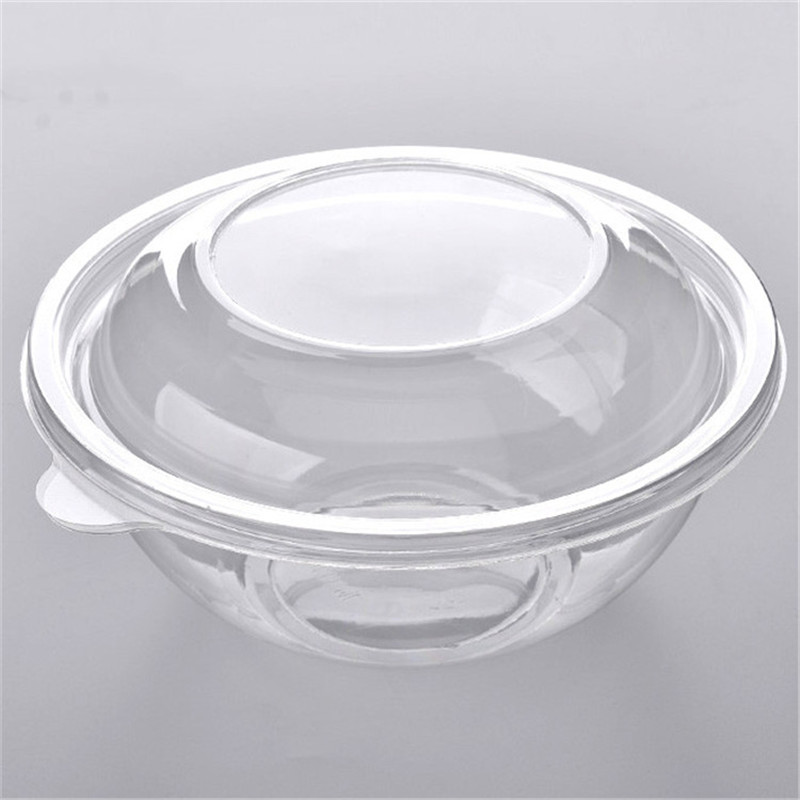
For buyers sourcing sushi packaging at scale, PLA sushi bowls often look simple until real orders begin. Transparency, compostability, and food safety are easy to claim on a website. Keeping those qualities consistent across thousands of units, week after week, is where many suppliers quietly fail.
This is why “premium” PLA sushi bowls are rarely about aesthetics alone. They sit at the intersection of material science, cold-chain behavior, and operational discipline. The factories discussed below were selected not because they say the right things, but because their manufacturing logic aligns with how sushi is actually packed, stored, and delivered.
Why PLA Sushi Bowls Require a Different Supplier Standard
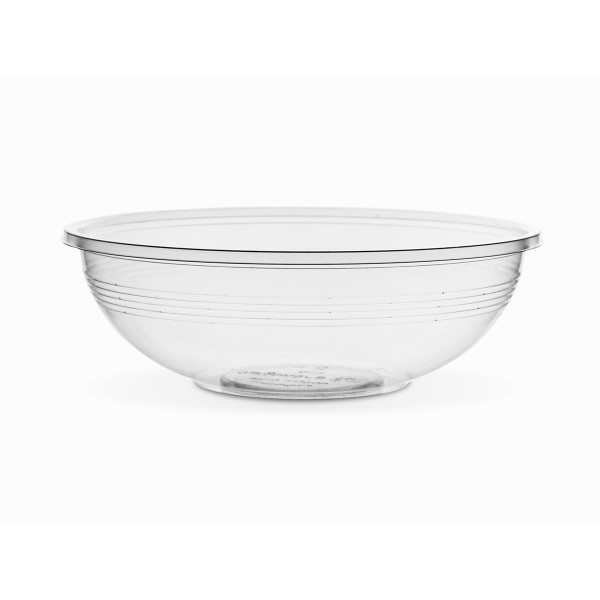
PLA behaves very differently from PET or bagasse. It performs best in cold or ambient conditions, where clarity and rigidity support product presentation. In sushi applications, that clarity is not optional. Consumers expect to see the product immediately, without fogging or deformation.
A reliable PLA sushi bowl manufacturer understands that performance is determined less by shape and more by resin quality, forming temperature, and cooling control. These details rarely appear in marketing copy, but they dictate whether bowls remain stable after hours in refrigerated display or delivery bags.
Factories that treat PLA as a secondary material often struggle to maintain this consistency. Premium buyers notice quickly.
Certification Is a Baseline, Not a Differentiator
Most export-ready factories can provide some form of compostability documentation. What matters is whether those certificates apply to finished products or just raw materials. For sushi packaging, buyers should assume bowls and lids must be evaluated together.
An experienced compostable sushi bowl supplier for international markets will already anticipate these questions. They usually provide documentation proactively because they have navigated customs inspections and third-party audits before. When suppliers hesitate or redirect questions, it is often a sign that PLA is not their core focus.
1. GeoTegrity Eco Pack (Xiamen) Co., Ltd. and the Discipline of Export-Oriented Manufacturing
GeoTegrity operates with a clear export mindset. Its PLA sushi bowls are designed around common cold-food volumes rather than experimental shapes. That restraint is intentional. By limiting excessive variation, the factory maintains tighter control over wall thickness and lid fit.
Buyers working with a custom PLA sushi bowl factory in China like GeoTegrity often value predictability more than novelty. Tooling changes are possible, but the factory favors incremental adjustments rather than radical redesigns. For distributors and foodservice brands, this approach reduces surprises during scale-up.
Their location near Xiamen Port also supports stable shipping schedules, which quietly influences total landed cost over time.
Material Transparency Matters More Than Marketing Language
PLA sourcing is not uniform. Resin origin, polymer grade, and storage conditions all affect final performance. Some factories treat PLA like a commodity. Others treat it as a controlled input.
A credible OEM PLA sushi bowl manufacturer will explain how resin sourcing ties into forming parameters. When suppliers can articulate this connection clearly, it usually reflects internal process discipline rather than sales training.
2. Hefei Hyde Environment Protection Technology Co., Ltd. and Performance-Driven Design
Hefei Hyde approaches PLA from a technical perspective. Rather than offering broad catalogs, it focuses on performance metrics that matter in real use. Low-temperature brittleness, condensation behavior, and seal stability are central to its development logic.
This makes Hyde appealing to buyers who have already experienced failures elsewhere. A high-performance PLA sushi bowl supplier like this is often chosen after trial-and-error with more generic options. The learning curve is shorter because the factory speaks the same language as procurement and quality teams.
Its inland manufacturing base does add logistical complexity, but buyers focused on consistency often accept that trade-off.
When “Premium” Means Fewer Adjustments Later
Premium sourcing does not mean eliminating risk entirely. It means shifting risk from daily operations to controlled evaluation phases. Factories that invest in process stability reduce the need for constant troubleshooting.
A dependable PLA sushi packaging manufacturer for cold food brands typically shows this through consistent batch behavior rather than bold claims.
3. Shanghai Ecojimu Technology Co., Ltd. and the Value of R&D Proximity
Ecojimu benefits from its Shanghai location in ways that go beyond logistics. Proximity to material suppliers and design resources shortens development cycles. For brands experimenting with visual differentiation, this matters.
Ecojimu works well for projects where design and packaging evolve together. A private label PLA sushi bowl manufacturer like this is often selected by premium retailers or boutique chains that want subtle surface finishes or custom dimensions without committing to massive volumes.
The trade-off is cost. Ecojimu is not positioned for price-driven tenders, but for buyers who prioritize alignment between brand identity and packaging behavior.
Clarity Without Compromise Is Harder Than It Looks
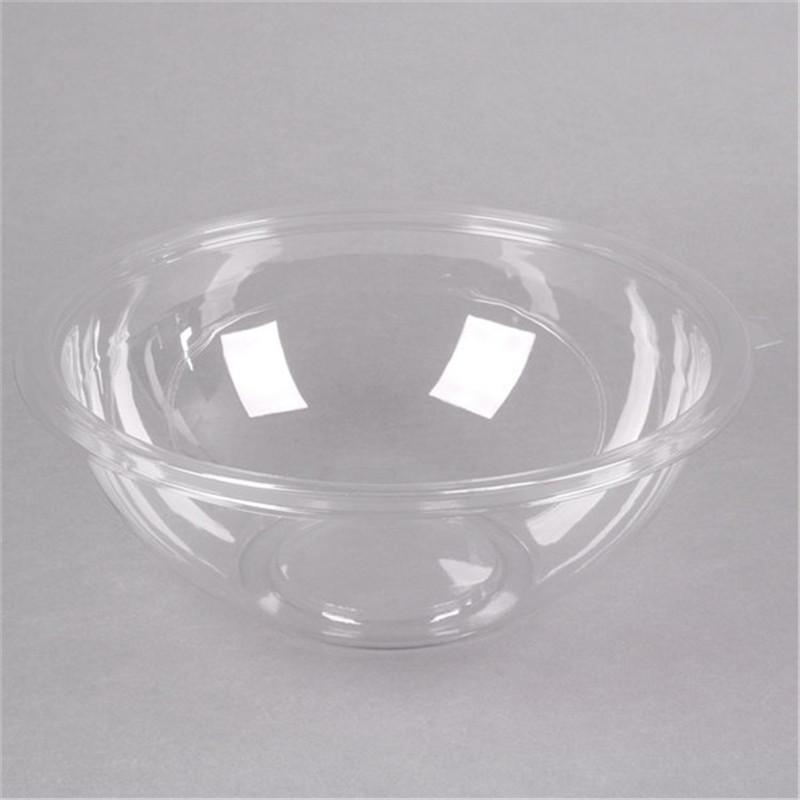
PLA clarity is easy in samples. Maintaining that clarity after stacking, sealing, and transport is more difficult. Factories that understand this rarely oversell.
An experienced PLA sushi bowl factory for branded foodservice tends to underpromise and overdeliver. That mindset reduces friction during long-term cooperation.
4. SuPack Green Packaging Co., Ltd. and Material Focus as Risk Control
SuPack stands out by keeping its production concentrated on PLA-based containers. This focus reduces cross-material contamination risks and simplifies quality control.
For buyers who want to minimize uncertainty, a PLA-only sushi bowl supplier for bulk procurement offers peace of mind. SuPack’s catalog is practical rather than experimental, but its consistency appeals to operators managing multiple locations.
This kind of supplier rarely attracts attention through flashy launches, yet often becomes a long-term partner.
5. Green Olive Environmental Technology Co., Ltd. and Scale-Oriented Reliability
Green Olive emphasizes volume stability. Its PLA sushi bowls are optimized for stacking efficiency and transport resilience rather than design novelty.
Buyers sourcing for national or regional distribution often prefer a large-scale PLA sushi bowl manufacturer like Green Olive. Once specifications are confirmed, the factory’s strength lies in repetition. That reliability becomes increasingly valuable as order volumes grow.
Comparing the Five Without Ranking Them
Each of these factories serves a different sourcing mindset. Some prioritize speed to market. Others prioritize performance margins or design alignment. There is no universal “best,” only best fit.
A distributor focused on availability may lean toward scale-oriented operations. A brand launching a premium concept may value development support more. Understanding these differences prevents mismatched expectations.
Understanding PLA’s Real Limits in Sushi Applications
PLA is not a universal solution. It performs best below moderate temperatures and excels in cold display. Buyers who ignore these limits often encounter warping or seal failures.
A knowledgeable PLA sushi bowl supplier for refrigerated food applications will explain these boundaries clearly. When suppliers gloss over them, problems usually follow.
Sourcing From China Without Creating Hidden Costs
Successful sourcing depends on process, not optimism. Samples should be tested under real conditions, including condensation and stacking stress. Contracts should reflect realistic lead times and quality tolerances.
An experienced PLA sushi bowl manufacturer for overseas buyers understands these expectations and structures cooperation accordingly. This reduces disputes and preserves margins over time.
Final Thoughts
Premium PLA sushi bowls are not about chasing trends. They are about choosing factories whose production logic aligns with your operational reality. The five manufacturers discussed here represent different answers to the same question: how to deliver compostable sushi packaging that performs consistently at scale.
For buyers willing to evaluate suppliers beyond surface claims, PLA can be a reliable and visually compelling solution. The key is choosing partners who treat it that way.