
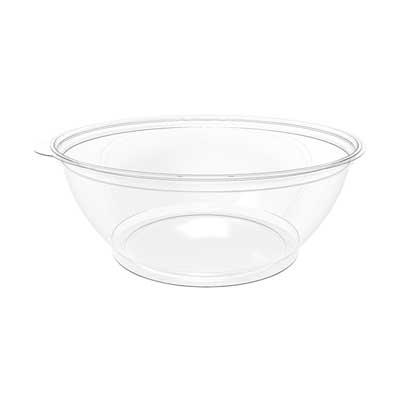
In Japan, sushi packaging is rarely discussed in isolation. For most food brands and retailers, the container is part of the product system itself. If the lid does not seal properly, if the tray warps after refrigeration, or if recycled content claims cannot be explained clearly, the issue shows up quickly in store operations rather than on paper.
This is why rPET sushi bowls have gradually become a practical sourcing topic instead of a sustainability talking point. Buyers are expected to balance clarity, handling performance, and regulatory consistency, often under tight timelines. The manufacturers reviewed below were selected based on how their products perform in real supply chains, not on how broad their product catalogs appear.
How rPET Sushi Bowls Are Viewed in the Japanese Market
In day-to-day procurement conversations, rPET usually refers to post-consumer PET that has already been cleared for food contact and can be traced through a defined recycling route. In sushi packaging, this material is most commonly used for transparent lids or fully clear trays, where product visibility directly affects sell-through.
Japanese buyers tend to focus less on abstract sustainability language and more on evidence. Retailers increasingly ask how recycled content is verified, whether documentation stays consistent over time, and how claims align with internal ESG reporting. For any rPET sushi bowl supplier working with Japanese retailers, the ability to explain these details calmly and clearly matters as much as price.
From a performance perspective, modern rPET has reached a point where it no longer feels like a compromise. While small differences in clarity still exist compared with virgin PET, most products meet visual expectations for sushi counters. Compared with PP, rPET generally maintains shape and surface finish better under chilled conditions.
What Buyers Tend to Notice First When Choosing a Manufacturer
Many sourcing problems do not originate from missing certificates. They appear after the first production run. Lids that fit during sampling but loosen slightly at scale, trays that stack unevenly, or containers that crack after repeated cold exposure are common reasons suppliers are replaced.
Manufacturers with long-term relationships in Japan usually design around these risks. For buyers evaluating a custom rPET sushi bowl manufacturer for chain-store distribution, repeatability often outweighs innovation. Being able to run the same SKU month after month without adjustment is a quiet but valuable capability.
Geography also shapes expectations. Domestic suppliers are often chosen for speed, communication, and regulatory familiarity. Overseas suppliers are introduced when pricing pressure or customization requirements become harder to manage locally. Understanding this internal logic helps narrow the field early.
Why These Five Manufacturers Were Selected
Each manufacturer discussed here meets three baseline conditions. They supply finished sushi bowls, trays, or matching rPET lids rather than raw materials alone. Their products have been used in contexts compatible with the Japanese market. Their rPET claims can be supported through documentation or long-term commercial use.
Companies focused only on material trading or distribution were excluded, as they shift responsibility away from the actual producer and add uncertainty for food packaging buyers.
(1) FP Corporation as a Domestic Reference Standard

Within Japan, FP Corporation is often treated less as a competitive option and more as a reference point. Its rPET sushi trays and lids are designed for environments where consistency matters more than visual novelty, such as convenience store logistics centers.
For procurement teams looking for a Japan-based rPET sushi bowl factory compatible with automated packing systems, FP Corporation’s predictability reduces friction. Specifications remain stable, approvals move faster, and performance issues are rare. Higher minimum volumes are common, but for large programs this trade-off is usually acceptable.
(2) Chuo Kagaku and the Emphasis on Presentation Control
Chuo Kagaku has built its reputation around sushi and bento containers where appearance plays a direct role in sales. Its rPET products focus on surface finish, clarity, and proportion rather than experimental structures.
For buyers sourcing from a high-clarity rPET sushi tray supplier serving supermarket assortments, Chuo Kagaku offers continuity. Many rPET models are derived from existing PET designs, which allows material changes without forcing operational changes on the packing line.
(3) Suzhou Accum Packaging as a Cost-Oriented Option
Outside Japan, Suzhou Accum Packaging is often evaluated when budgets tighten or when private-label programs expand quickly. The company supplies sushi trays and bowls with optional rPET lids and supports multiple food-contact standards.
Importers exploring OEM rPET sushi bowl production for regional markets tend to value Accum’s flexibility. Tooling options and dimension adjustments are easier to negotiate, although longer lead times and indirect communication are part of the equation.
(4) Easy Green Eco Packaging and Design Sensitivity
Based in Taiwan, Easy Green Eco Packaging focuses on formats that align closely with Japanese dining presentation, including sushi boats and flat plates. These shapes are often chosen by brands that want packaging to reinforce product identity.
For buyers interested in ODM rPET sushi packaging solutions shaped around brand aesthetics, Easy Green provides a balance between customization and operational control. Logistics routes are shorter than mainland China, which can simplify sampling and revision cycles.
(5) Riken Technos and Long-Term Material Stability
Riken Technos approaches rPET sushi packaging from a materials standpoint rather than a catalog-driven one. Its background in plastic sheets and films supports forming solutions where uniformity over time is critical.
This makes Riken Technos relevant for buyers planning large-scale rPET sushi bowl sourcing with long production horizons, where consistency across multiple years matters more than rapid design turnover.
How Buyers Commonly Position These Suppliers
In practice, procurement teams rarely compare these manufacturers head-to-head. Domestic suppliers are often assigned to high-visibility retail programs. Overseas suppliers are introduced where pricing flexibility is required. Taiwan-based production is sometimes used as an intermediate option when both design input and delivery speed matter.
Seeing suppliers through this lens helps reduce mismatched expectations during evaluation.
Final Checks Before Locking in a Supplier
Before committing, buyers typically verify recycled content through third-party testing and compare documentation against actual production batches. Sample trials focus less on appearance and more on sealing behavior, cold storage durability, and food-contact safety.
Over time, broader risks come into play. rPET feedstock availability, capacity allocation, and logistics volatility can all affect total cost. For teams seeking a stable rPET sushi bowl manufacturer supporting long-term food packaging programs, alignment between supplier capability and operational reality remains the most reliable safeguard.