
For a procurement officer at a mid-to-large scale enterprise, the decision to source catering is never just about the food. It is a complex calculation of logistics, brand reputation, and fiscal accountability. When debating whether to order sandwich trays online or walk into a physical storefront, the stakes involve more than just convenience. You are choosing between an automated, scalable supply chain and a localized, artisanal—but often volatile—manual process. While “buying local” has its charm for small groups, the professional sector is rapidly moving toward digital-first models for a reason: data-driven consistency.

The Structural Shift in Professional Sourcing
The fundamental difference begins at the production level. A local storefront is designed for “low-volume, high-touch” transactions. They thrive on the walk-in customer. However, when a corporate buyer needs 100 trays delivered to three different office wings simultaneously, the retail model often fractures. This is why seasoned buyers now bypass the “middleman” storefront and connect directly with a custom sandwich tray manufacturer.
By going digital and direct, you are essentially tapping into a facility designed for high-throughput. These manufacturers utilize “Lean” production principles that a neighborhood deli simply cannot replicate. In a factory setting, the moisture content of the bread, the thickness of the protein slices, and the structural integrity of the tray are all monitored via strict QC protocols. When you order from a retail store, you are at the mercy of whoever happens to be behind the counter that morning. Online ordering provides a digital contract that ensures the 100th tray looks exactly like the first.
Logistics: The “Last Mile” Battleground
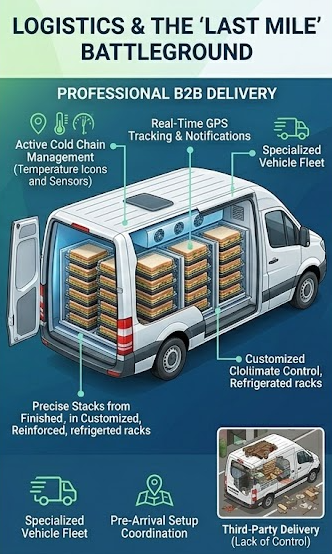
One of the most significant pitfalls of the in-store model is the lack of professional logistics. When you buy in-store, you often handle the transport yourself or rely on a “third-party” delivery app driver who may have a backseat full of other orders. For a high-stakes corporate event, this is a recipe for disaster. A reliable sandwich tray supplier for corporate events views delivery as a core part of the product, not an afterthought.
Professional B2B suppliers utilize specialized vehicle fleets equipped with climate control. They understand that a sandwich tray is an engineering challenge: it must remain at a specific temperature to prevent the bread from becoming “rubbery” while keeping the vegetables crisp. Online-first suppliers often provide real-time GPS tracking and pre-arrival notifications, allowing your on-site team to coordinate the setup perfectly. In-store orders, by contrast, often leave you “in the dark” from the moment the payment clears until the food—hopefully—shows up at the door.
Efficiency and the Death of the Manual Invoice
From an administrative perspective, the in-store model is a nightmare for accounting departments. Physical receipts get lost, ink fades, and manual data entry leads to errors in tax reclamation. By choosing a professional sandwich tray factory for wholesale buyers, you integrate the purchase into a digital ecosystem.
Digital platforms allow for:
-
Automated Expense Integration: Instant digital invoices that sync with software like SAP or Oracle.
-
Recurring Order Templates: The ability to “set and forget” weekly board meetings with a single click.
-
Granular SKU Management: Instead of “one large tray,” you can specify exact material types, such as PET or PP, to match your company’s sustainability mandates.
For a procurement lead managing a six-figure annual catering budget, the man-hours saved by moving to an online system represent a significant “soft cost” reduction. You aren’t just buying food; you are buying back your staff’s time.
Customization and Material Innovation
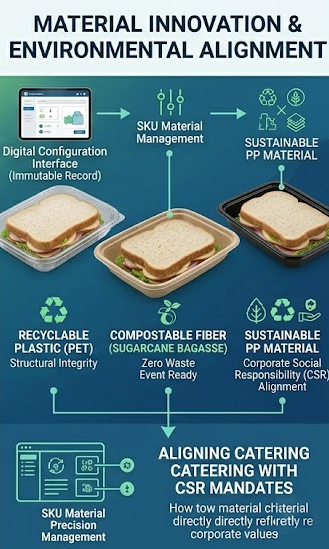
A common misconception is that in-store ordering allows for better “special requests.” In reality, the opposite is true. An in-store employee might forget a “no-mayo” request during a busy lunch rush. A digital interface, however, acts as an immutable record. When working with an innovative sandwich tray provider for catering business, you have access to configuration tools that a local deli could never offer.
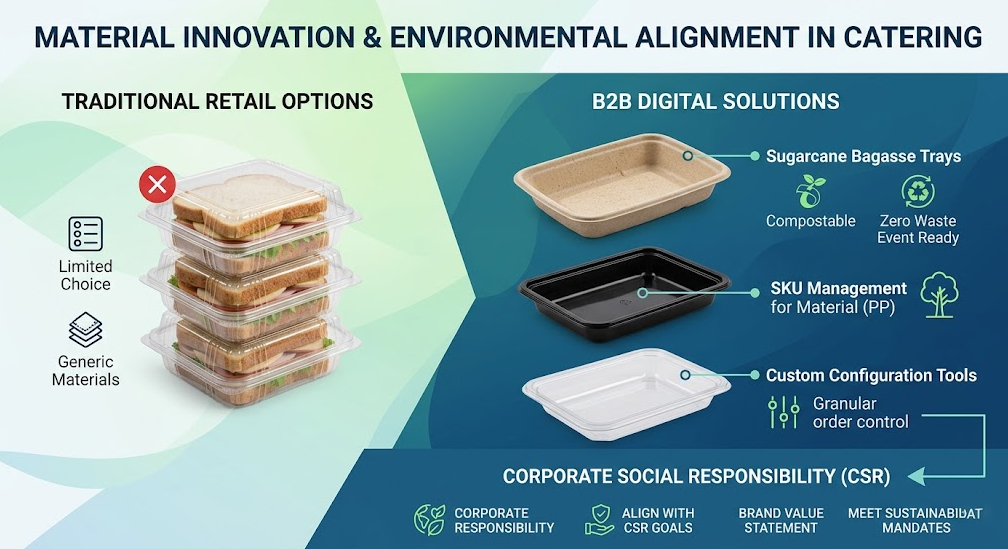
This extends beyond the ingredients to the packaging itself. Modern B2B suppliers are at the forefront of material science. For instance, if your event has a “Zero Waste” theme, an online supplier can offer sugarcane bagasse or compostable fiber trays—options rarely stocked by a local retail shop that prioritizes cheap, generic plastic. By choosing an innovative sandwich tray factory for professional caterers, you can align your catering with your corporate social responsibility (CSR) goals, turning a simple lunch into a statement of brand values.
Risk Mitigation and Quality Control
In the B2B world, “good enough” is a liability. If a tray of sandwiches leads to a foodborne illness at a high-profile shareholder meeting, the fallout is catastrophic. This is where the online model’s “industrial” nature becomes a safeguard. A certified sandwich tray manufacturer for hotel chains is subject to far more rigorous inspections than a local retail shop.
These facilities often operate under Global Food Safety Initiative (GFSI) recognized schemes. Every batch is traceable; if there is an issue with a specific ingredient supplier, the manufacturer can identify every affected tray within minutes. A retail storefront rarely has this level of granular traceability. When you order online from a professional entity, you are paying for a level of risk mitigation that “local charm” simply cannot provide.
The Economics of Direct Sourcing
Let’s talk about the bottom line. A retail store has to pay for prime real estate, storefront displays, and front-of-house staff. Those costs are passed to you in the form of a 20-30% markup. Direct online sourcing eliminates these “non-value-added” expenses. When you negotiate with a cost-effective sandwich tray exporter for global markets, you are paying for the product and the logistics—not the store’s rent.
Furthermore, digital platforms thrive on price transparency. You can instantly compare bulk-tier pricing without the “salesmanship” of a store manager. For organizations operating across multiple regions, an online supplier can offer “National Account” pricing, ensuring that your office in New York pays the same as your office in Chicago. This level of price standardization is impossible in the fragmented world of in-store purchasing.
Conclusion: Scalability is the Final Word
The choice between online and in-store eventually comes down to the scale of your ambition. If you are a small team of four, walk to the corner deli. But if you are an operations manager responsible for the smooth execution of professional environments, you need a partner that speaks the language of industry.
Partnering with a reputable sandwich tray supplier for logistics planning transforms catering from a “chore” into a strategic asset. You gain the peace of mind that comes from ISO-certified production, the financial benefit of direct-from-factory pricing, and the logistical precision of professional delivery. In the modern economy, standing in line at a store is a sign of a legacy mindset. The future is digital, direct, and designed for those who value their time as much as their budget. By selecting a high-capacity sandwich tray wholesaler for professional buyers, you aren’t just ordering lunch—you are optimizing your business.