
The European food service landscape is currently navigating a complex intersection of stringent environmental mandates and a post-pandemic surge in “on-the-go” dining. For procurement officers and operations managers, the search for a reliable packaging partner goes beyond mere pricing. It is about identifying a custom sandwich tray manufacturer that can bridge the gap between aesthetic presentation and the rugged requirements of logistical cold chains. From the industrial heartlands of Germany to the innovative design hubs of Italy, the European manufacturing sector offers a diverse array of solutions tailored for high-volume catering.
The Shift Toward Material Circularity in EU Manufacturing
In the wake of the Single-Use Plastics Directive (SUPD), the criteria for “high-quality” packaging have shifted. It is no longer enough for a tray to be sturdy; it must now fit into a circular economy. Leading factories across the continent are pivoting from virgin plastics to recycled polymers and bio-based resins. Engaging with a sandwich tray factory for catering distributors now requires a deep dive into life-cycle assessments (LCA) and chemical migration testing to ensure compliance with EFSA standards.
1. Faerch (Denmark) – The Vanguard of Tray-to-Tray Recycling
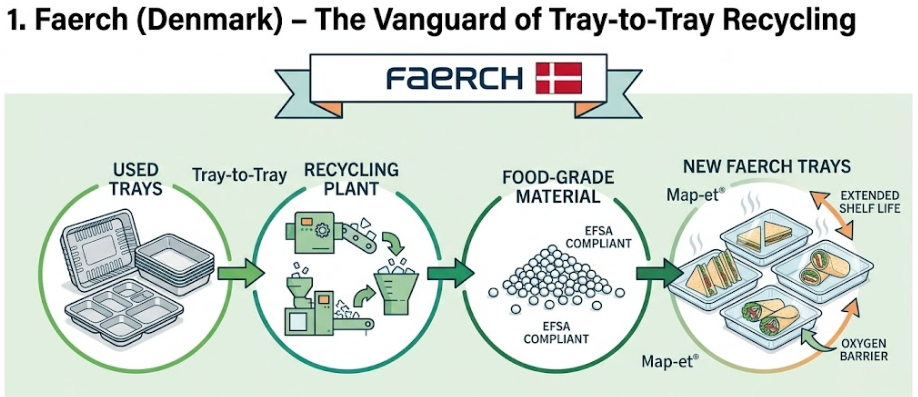
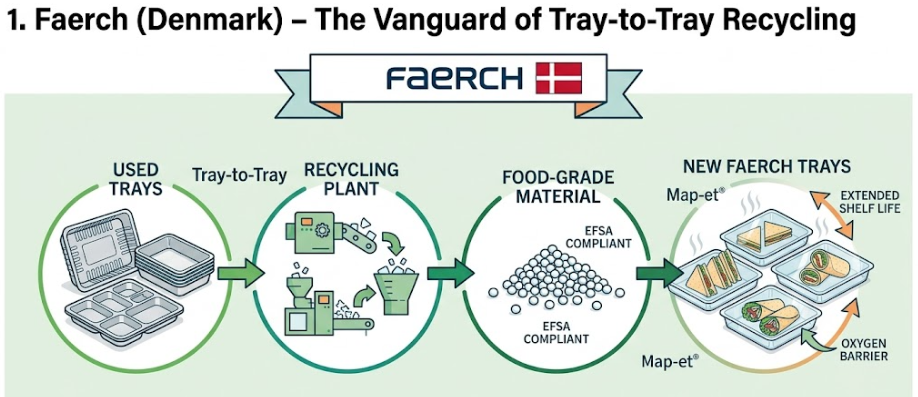
Faerch has effectively set the gold standard for circularity in Europe. Their proprietary recycling infrastructure allows them to take post-consumer PET trays and turn them back into food-grade packaging. For large-scale caterers, their “Map-et” range provides superior oxygen barrier properties, significantly extending the shelf life of fresh triangles and wraps. As a dominant sandwich tray supplier for wholesale buyers, Faerch offers a level of supply chain transparency that is rarely matched in the regional market.
2. Guillin Group (France) – Engineering Visual Appeal

The French market leader, Guillin, operates with a philosophy that the “eyes eat first.” Their production lines are optimized for high-clarity rPET, ensuring that artisanal fillings remain the focal point of the display. They function as a high-capacity sandwich tray manufacturer for bulk orders, supporting pan-European grocery chains and airline caterers who demand millions of units monthly without a dip in structural consistency.
3. Sabert Europe (Belgium) – Premium Branding & Material Diversity
Based in Nivelles, Sabert Europe specializes in the premium segment of the hospitality industry. While many competitors focus solely on plastics, Sabert has mastered the use of bagasse and pulp for a more “organic” brand feel. Their status as a leading ODM sandwich tray factory means they don’t just sell off-the-shelf items; they collaborate with brands to develop bespoke molds that fit specific sandwich dimensions, like extra-deep club sandwiches or oversized baguettes.
4. Paccor (Germany) – Precision Engineering for Global Logistics
Paccor, a member of the Faerch Group, is renowned for its technical rigor. Their German facilities utilize advanced thermoforming techniques to create ultra-lightweight trays that do not compromise on rim strength—a vital feature for heat-sealing applications. This technical edge makes them a preferred sandwich tray supplier for international traders who prioritize minimizing shipping weight to offset rising fuel surcharges in the B2B sector.
5. HotForm (Italy) – Agility Meets Mediterranean Design
HotForm exemplifies the Italian flair for combining form with function. Their catalog is vast, featuring unique shapes that cater to regional sandwich styles like tramezzini. For buyers who need to react quickly to market trends, HotForm acts as a highly responsive sandwich tray factory for large-scale importers, offering shorter lead times for custom-colored trays that help seasonal promotions stand out on the shelf.
6. Coveris (Austria) – The Science of Freshness Extension
Coveris takes a holistic approach to packaging by integrating film science with tray manufacturing. Their Austrian R&D centers focus on anti-fogging lids and perforated films that regulate moisture levels. By partnering with this sandwich tray manufacturer for food service brands, catering businesses can reduce food waste by up to 15%, as their packaging systems are designed to maintain the “crunch” of the bread while keeping fillings moist.
7. Klöckner Pentaplast (Germany) – High-Performance Barrier Solutions
Often referred to as KP, this company is a powerhouse in multi-layer film technology. Their sandwich trays are designed for high-speed automated packing lines, featuring consistent denesting (easy separation) that prevents machine downtime. They are a go-to sandwich tray supplier for hospitality groups that manage massive central kitchens where operational speed is just as important as the unit cost.
8. ANP (Poland) – The Hub for Cost-Effective Scalability
Poland has rapidly become the manufacturing backbone of Central Europe. ANP leverages lower overhead costs and a strategic location to provide aggressive pricing for PET and PP containers. For businesses looking to diversify their supply chain away from Western European premiums, ANP is an essential sandwich tray manufacturer for strategic sourcing, offering modern facilities and reliable rail-link logistics to all major EU cities.
Navigating B2B Procurement: Beyond the Unit Price
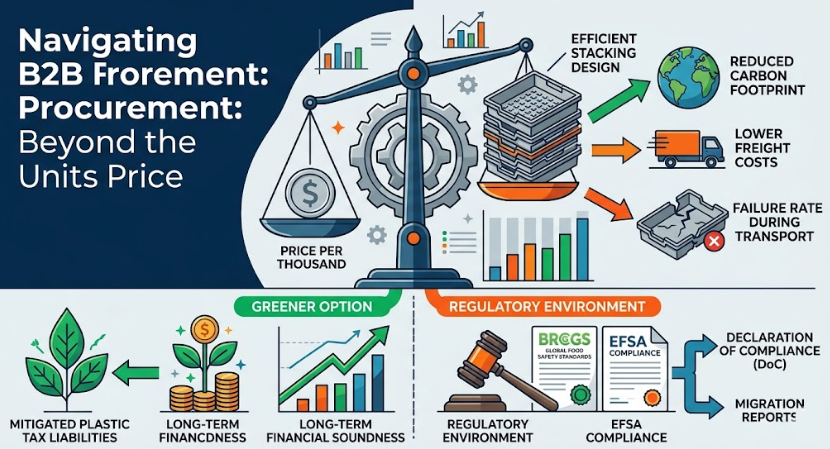
When evaluating these factories, operations managers must look beyond the “price per thousand.” The true cost of packaging includes the “failure rate” during transport and the efficiency of the stacking design. A tray that saves 10% in pallet space can effectively reduce your carbon footprint and freight costs by a similar margin.
Furthermore, the European regulatory environment is moving toward “Plastic Taxes” in various member states. Choosing a sandwich tray factory for catering businesses that offers a high percentage of recycled content (PCR) can help mitigate these tax liabilities, making the “greener” option the more financially sound choice in the long run.
Quality Assurance and Technical Compliance
Every factory listed above adheres to BRCGS Global Food Safety standards. However, for specific catering needs—such as MAP (Modified Atmosphere Packaging) for fresh meat sandwiches—it is crucial to verify the “gas transmission rates” of the materials. Professional B2B buyers should request migration reports and “Declaration of Compliance” (DoC) documents to ensure the trays do not leach chemicals when in contact with fatty acids or acidic condiments.
Final Thoughts for Decision Makers
The European sandwich tray market is no longer a commodity-driven space; it is a technology-driven one. Whether your priority is the circularity of Faerch, the design of HotForm, or the cost-efficiency of ANP, the key is to build a relationship based on technical transparency. By selecting a specialized custom sandwich tray manufacturer, you are not just buying a box—you are investing in the integrity of your food and the efficiency of your entire delivery ecosystem.