
In a high-pressure commercial kitchen, “zero waste” is less about saving the planet and more about protecting the bottom line. It’s the difference between a profitable quarter and a slow leak in your overhead. We often look at a vibrant fruit bowl and see only the prime cuts—the mango cheeks or the apple wedges. But for those of us steering high-volume prep—whether in a boutique bistro or a massive catering hub—the real margin is buried in the stuff we usually scrape into the bin. Maximizing yield isn’t a suggestion; it’s a technical discipline. This guide breaks down how to squeeze every cent of utility out of your produce without turning your station into a sticky, chaotic swamp.
Hardware is the First Line of Defense
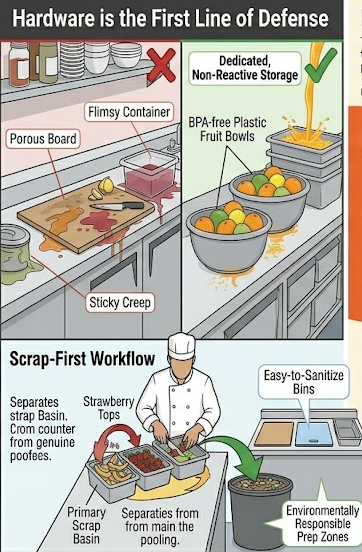
Efficiency is a fantasy if your hardware isn’t up to the task. If you’re working on porous boards or with reactive, flimsy containers, you’re basically inviting “sticky creep” to colonize your countertop. This is precisely why smart procurement managers track down a specialized BPA-free plastic fruit bowl supplier early in the game. You need ergonomic, non-reactive storage that doesn’t surrender to high-acid citrus. A dedicated, inert spot to catch zest and runaway juices prevents sugars from migrating across your entire line and ruining the pace of service.
Maintaining a clean-room environment during deep-yield processing isn’t about scrubbing harder; it’s about a “scrap-first” workflow. You never start a shift without a primary scrap basin in your immediate strike zone. By instantly segregating strawberry tops or melon rinds from actual compost, you stop fruit liquids from pooling and hardening. For those scaling a retail line or a massive commercial venture, partnering with a high-capacity recycled plastic fruit bowl factory provides the rugged, easy-to-sanitize bins required to keep high-traffic prep zones both environmentally sound and medically sterile.
Mining the “Fragrant Gold” in Peels
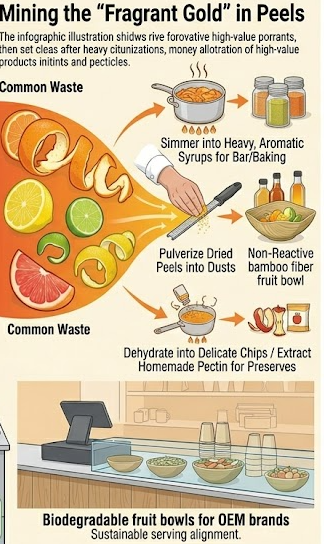
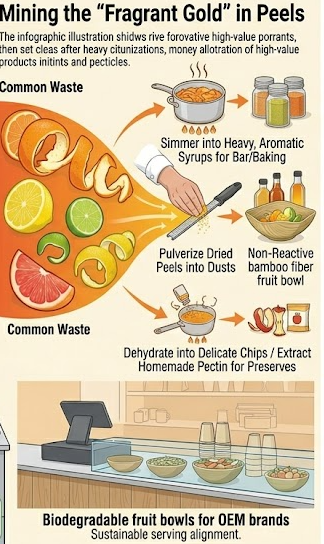
Fruit skins aren’t trash; they are concentrated oil capsules. In many cases, the aromatic punch of the rind eclipses the fruit’s interior. Instead of dumping lemon or orange rinds, treat them as raw stock for high-margin infusions. Dehydrated peels can be pulverized into artisanal dusts or reduced into heavy, complex syrups for the bar. When scaling this kind of flavor recovery, it pays to consult a professional bamboo fiber fruit bowl manufacturer. You want eco-friendly vessels that offer a natural aesthetic but won’t react with volatile citrus oils, keeping the purity of your zest intact.
This goes way beyond citrus. Apple skins, for instance, can be flashed into delicate chips or boiled down with the cores into a rich, house-made pectin. This kind of resourcefulness slashes your waste volume overnight. We’re seeing more high-end cafes and sustainable hotels coordinate with an innovative biodegradable fruit bowl factory for OEM brands to source service pieces that mirror this “nose-to-tail” philosophy. It signals to the guest that every part of the plant—and the planet—is being handled with professional respect.
Turning Seeds and Cores into Assets
Most people see seeds and cores as an annoyance. In a professional operation, they’re secret weapons for building flavor depth. Papaya seeds have a sharp, peppery bite that makes a killer spice substitute once dried. Pineapple cores, while too fibrous for a fruit plate, are sugar-dense and perfect for juicing or making “fruit jerky.” On an industrial scale, this isn’t just clever cooking—it’s a revenue stream. A customized wheat straw fruit bowl manufacturer can help brands plate these earthy, raw ingredients in a way that highlights their sustainable roots while remaining fully compostable.
The trick to managing these sticky components is processing speed. Seeds need to be rinsed and hit the parchment immediately to dodge mold. Cores go straight into the stock pot or a labeled freezer bag. This stops that “syrup glaze” from setting on your stainless steel and attracting pests. If you’re building a brand around these habits, a partnership with a leading acrylic fruit bowl supplier for global distributors gives you the crystal-clear, shatterproof housing needed to track and organize scraps at a glance. If the staff can’t see it, they won’t use it.
Liquid Gold: The Art of Juice Recovery
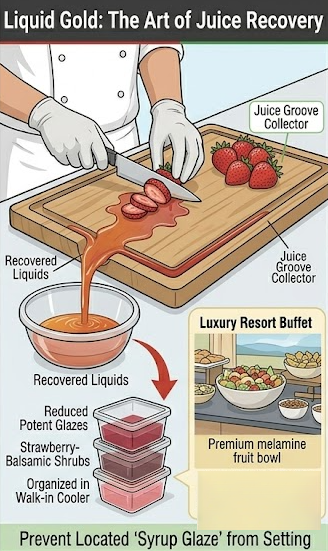
In a low-yield kitchen, escaping juice is a mess to be wiped up. In a high-yield kitchen, that’s lost inventory. Use boards with deep, integrated grooves to funnel these liquids into a collector. In hospitality, presentation and yield are inseparable. That’s why luxury resorts often lean on a premium melamine fruit bowl manufacturer—they need buffet displays that stay elegant and shatter-resistant even during a chaotic morning rush, without sacrificing the ability to clear and recover product quickly.
Recovered liquids are the base for potent glazes or “shrubs” for your non-alcoholic menu. A balsamic-strawberry reduction made from bruised edges and discarded tops has a flavor profile no industrial syrup can touch. To handle this at scale, an expert PET plastic fruit bowl factory can churn out the lightweight, stackable containers you need to keep various reductions organized without devouring your walk-in cooler’s square footage.
The Closed-Loop Mindset
Maximizing yield isn’t a one-off project; it’s a culture shift. When a team realizes watermelon rinds are just future pickles and mango stones are the base for a signature tropical syrup, their movement in the kitchen becomes more purposeful. The station stays cleaner because every scrap has a destination.
Ultimately, the goal is a cycle where the trash can is the last resort. By selecting the right material partners, such as a wholesale eco-friendly fruit bowl supplier, you turn a simple kitchen vessel into a tool for operational survival. Whether you’re a home cook or a business owner, the path is clear: respect the scrap, respect the craft, and the profit will follow.