
In the high-stakes world of luxury hospitality and large-scale retail catering, a fruit display is far more than a simple snack arrangement; it is a complex exercise in structural engineering. For hotel food and beverage managers or supermarket visual merchandisers, the “overflowing harvest” aesthetic is the gold standard. However, the unforgiving laws of physics often intervene. The immense downward pressure from heavy cantaloupes, honeydews, or mini-watermelons can effortlessly pulverize delicate, high-margin berries into an unmarketable pulp in a matter of minutes. This isn’t just a visual disappointment—it is a direct hit to your inventory overhead and food cost percentages. Solving this logistical nightmare requires moving beyond basic placement and investing in a reliable rPET fruit bowl factory for bulk orders that prioritizes load-bearing geometry over simple decorative flair.
The Foundation: Engineering Stability via the Tripod Method
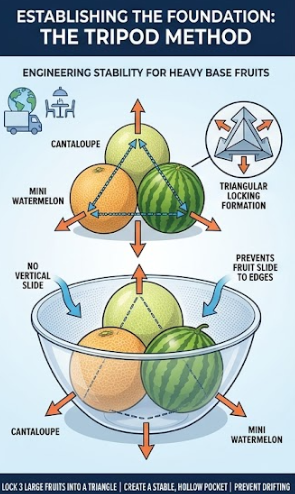
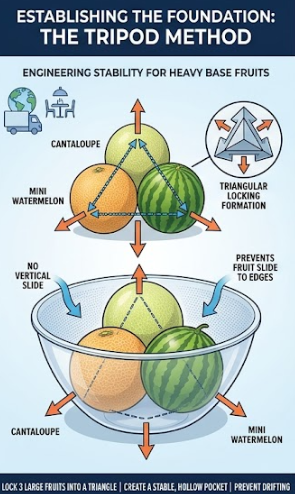
Every resilient fruit arrangement begins with a base that rejects aesthetic randomness in favor of structural integrity. In the professional B2B sector, the bottom layer functions as your load-bearing substrate. Heavy melons possess high density and slick rinds that naturally drift or shift under the cumulative weight of the stack. To prevent the “fruit slide” that inevitably obliterates smaller items, seasoned stylists utilize the “tripod” placement technique. By locking three large, sturdy fruits into a triangular formation at the bottom of the vessel, you create a stable, hollow pocket in the center. To replicate this at scale across multiple buffet lines, savvy procurement officers often work with a premium recycled plastic fruit bowl manufacturer specializing in B2B designs to source containers with anti-slip interior textures that keep these heavy base fruits from drifting toward the edges.
Diverting Vertical Pressure Through Zoning
The primary threat to a berry’s cell structure is cumulative vertical force. Without a calculated diversion tactic, a single large watermelon exerts enough downward pressure to liquefy soft fruits almost instantly upon contact. The secret to “gravity-proofing” your inventory lies in internal shelving. By using firm, mid-sized fruits—such as apples, pears, or citrus—to “bridge” the gaps between your base melons, you essentially build a secondary deck within the bowl. This deck intercepts the weight from the upper tiers and redirects that energy toward the sturdy walls of the container rather than the floor. If your current serving ware cannot handle this level of mechanical stress, it is time to consult a custom biodegradable fruit bowl supplier for international trade for vessels featuring reinforced interior ridges or wider diameters that encourage horizontal spreading rather than dangerous vertical piling.
Longevity Through Airflow Engineering
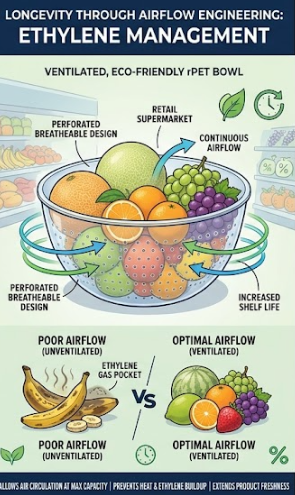
Stacking isn’t solely about managing weight; it is about the sophisticated management of ethylene gas and thermal pockets. When fruit is packed too tightly to prevent shifting, you inadvertently choke the airflow, which triggers rapid ripening and decay—a death sentence for sensitive berries. In a professional B2B environment, the material of the bowl is a massive functional variable that impacts the bottom line. Advanced eco-friendly polymers allow for perforated, breathable designs that keep air moving even when the bowl is at maximum capacity. Partnering with an innovative sustainable plastic fruit bowl OEM service provider allows brands to specify these exact ventilation requirements, ensuring the “full” look of the display doesn’t suffocate the produce and prematurely kill your shelf life.
Strategic Placement in the “Negative Space” Safe Zones
From a structural standpoint, berries should never sit at the bottom of the pile. Instead, they belong in the “safe zones” created by the larger fruit’s natural geometry. Once your heavy melons and structural citrus “beams” are locked into a stable formation, you should gently introduce the berries into the resulting crevices. Think of the melons as protective canyon walls and the berries as a river resting safely in the valley between them. This placement ensures the berries remain highly visible and accessible to guests without bearing a single ounce of load. To maintain this high standard across global franchises, sourcing from a professional eco-friendly fruit bowl factory for global exporters is vital; you need standardized dimensions so every staff member can replicate these “safe zones” consistently regardless of the shift or location.
Ergonomics for High-Traffic Commercial Buffet Lines

A gravity-proof bowl must remain stable even when a guest pulls an item from the bottom of the stack. If removing one apple causes a five-pound honeydew to roll onto your raspberries, the design of the vessel has failed. This is why the depth-to-width ratio is the most important specification in your equipment catalog. Wide, shallow profiles are vastly superior for mixed-density displays because they naturally limit the number of vertical layers required. When upgrading your hospitality hardware, a wholesale recycled plastic fruit bowl distributor for hospitality chains will usually suggest wider footprints. This allows heavy melons to sit side-by-side with berries rather than on top of them, effectively neutralizing the risk of crushing while maintaining a bountiful, high-end appearance.
Industrial Durability and Structural Stress Testing
In the commercial sphere, “gravity-proof” also refers to the container’s own structural breaking point. In a fast-paced back-of-house or a chaotic event hall, bowls face constant movement, high-heat industrial sanitization, and the massive dead weight of bulk fruit. A bowl that cracks or deforms under a 10kg load is a significant liability and a safety hazard. Modern B2B materials, such as high-impact rPET or reinforced bioplastics, offer the pristine clarity of glass with the rugged impact resistance of industrial-grade plastic. Organizations looking for long-term hardware solutions should contact a reputable sustainable plastic fruit bowl manufacturer for large-scale procurement to ensure their vessels have passed rigorous structural fatigue tests and are rated for heavy commercial use without warping or clouding over time.
Modular Solutions for Seasonal Inventory Shifts
The art of the stack changes with the calendar. Summer centers on heavy stone fruits and melons; winter is dominated by hardy citrus and grapes. Each seasonal shift requires a different stacking architecture. During peak berry season, consider using modular inserts or “bowl-within-a-bowl” setups to keep delicate items physically isolated from the heavy hitters while maintaining the illusion of a massive, singular heap. This level of customization usually requires a deep dive with a ccustom biodegradable fruit bowl ODM factory that can develop tailored dividers or tiered inserts. By mastering these physical principles and investing in professional-grade, eco-conscious hardware, you ensure that your displays remain a hallmark of freshness and quality that gravity simply cannot touch. High-volume buyers recognize that the right vessel is not just a plate—it is a tool for waste reduction and brand elevation.