
Most baking trays are not damaged in the oven. They are damaged in storage.
Warped corners, mystery scratches, rust spots that appear after months of “not using it at all”—these problems rarely come from baking temperatures alone. They come from how trays are stacked, where they sit, and what happens to them between uses. Long-term storage is not about hiding bakeware away. It is about keeping its shape, surface, and performance stable over time.
Understanding storage as a form of maintenance changes how you approach it.
Why Long-Term Storage Matters More Than You Think
When baking trays are stored incorrectly, damage tends to accumulate slowly. A tray may look fine when you put it away, yet six months later it no longer sits flat. This usually has nothing to do with manufacturing defects. Pressure from stacking, trapped moisture, and repeated friction between surfaces are far more common causes.
Different materials react differently over time. Aluminum trays bend under uneven weight. Steel trays develop rust when moisture lingers. Non-stick coatings degrade when constantly rubbed against hard edges. Glass and ceramic pieces fail suddenly, often from small chips created long before the crack appears.
Long-term storage is not a single action. It is a set of conditions you maintain.
Preparing Baking Trays Before Storage
Storing a tray that is not fully clean or dry is one of the most common mistakes. Oil residue attracts dust. Burnt-on food continues to break down coatings even when the tray is not in use. Moisture left in corners or rolled edges becomes a rust trigger.
Before storage, trays should be cleaned beyond what feels “good enough.” For metal trays, this means removing baked-on residue, not just surface grease. For coated trays, aggressive scrubbing should be avoided, but residue still needs to be softened and lifted rather than scraped.
Drying is not optional. Air-drying alone is often insufficient, especially for steel trays. A short period in a warm, dry environment ensures hidden moisture is gone. For carbon steel or uncoated steel, a very light protective oil layer can make a noticeable difference during long storage periods.
Storage begins before the tray ever enters the cabinet.
Matching Storage Methods to Tray Materials
Not all baking trays tolerate the same storage conditions. Treating them as interchangeable is a shortcut to damage.
Aluminum trays are lightweight and conduct heat well, but they deform easily when stored under pressure. They should never be placed at the bottom of heavy stacks. Stainless steel is more resilient but still vulnerable to trapped moisture. Non-stick trays require special attention because surface contact is their weakest point.
Glass and ceramic trays behave differently. They resist corrosion entirely but fail catastrophically when chipped or stressed unevenly. These trays benefit from stable, low-position storage where they are not repeatedly moved or compressed.
Silicone bakeware is flexible and forgiving, but it can permanently crease if folded or crushed during long storage. Flat storage with gentle separation works best.
Understanding what a tray is made of tells you how patient it will be with poor storage decisions.
Preventing Damage When Trays Touch Each Other

Most storage damage occurs at contact points. Scratches, coating wear, and noise during stacking all signal friction problems.
Separating trays with a protective layer reduces wear dramatically. The material itself matters less than consistency. Soft barriers that stay in place are better than hard ones that slide. Breathable materials help prevent moisture buildup, especially for metal trays.
For coated trays, separation is not optional. Direct contact between non-stick surfaces accelerates coating failure far faster than baking ever will. Glass and ceramic trays benefit from thicker buffers that absorb minor movement and prevent edge contact.
Long-term storage favors calm trays. If they move when the cabinet opens, they are already being damaged.
Why Vertical Storage Works for Most Kitchens
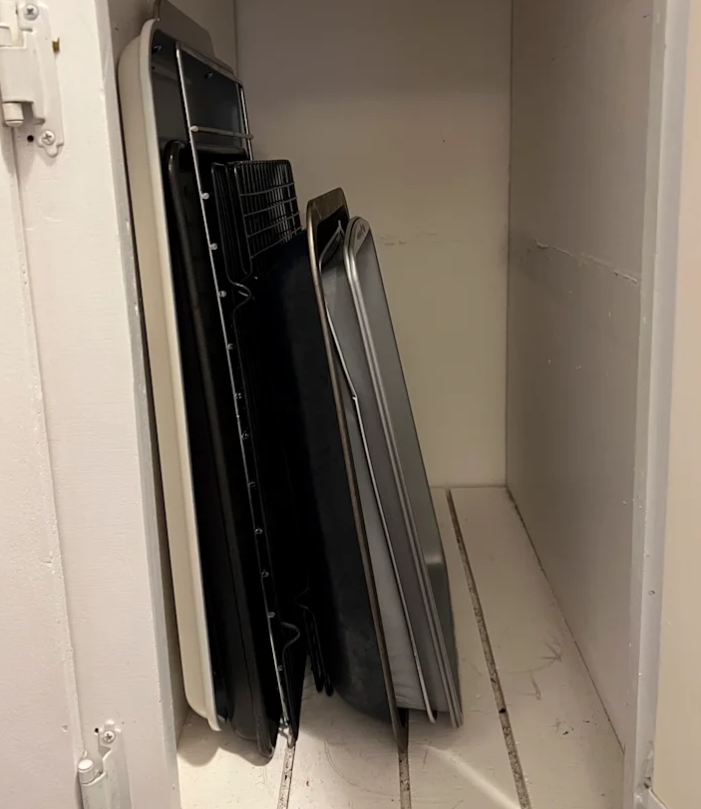
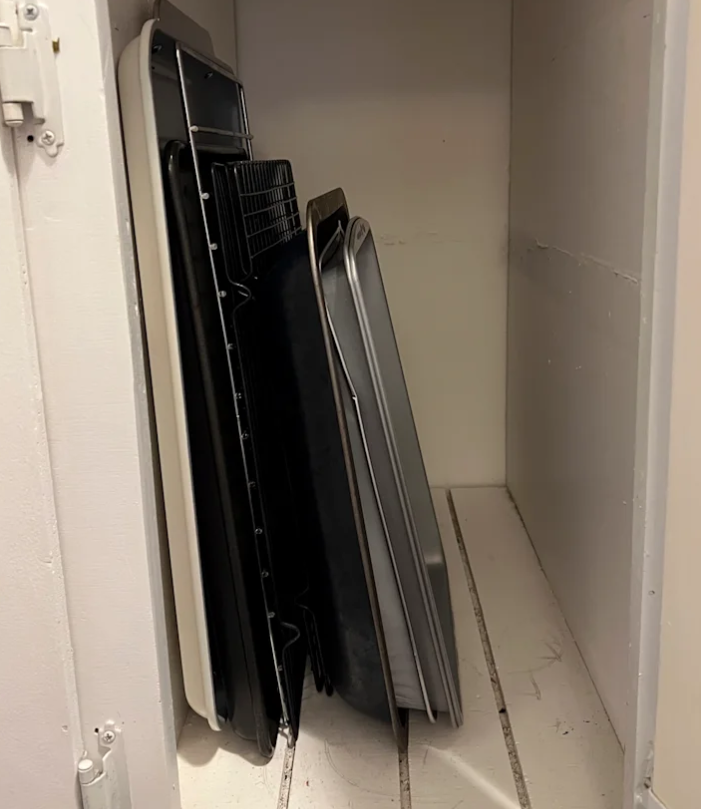
Storing baking trays vertically changes how force is distributed. Instead of weight pressing downward, trays support themselves along their strongest edges. This dramatically reduces warping, especially for large, thin trays.
Vertical storage also improves access. Trays can be removed individually without lifting an entire stack. Less handling means fewer accidents, fewer chips, and fewer moments where one tray scrapes across another.
Most flat metal trays perform well in vertical systems. Muffin pans and rectangular bakeware often adapt well too, as long as spacing is adequate. The key is stability. Trays should stand upright without leaning or flexing.
Vertical storage works best when spacing matches tray thickness. Too tight, and coatings rub. Too loose, and trays tip.
When Horizontal Storage Makes More Sense
Some bakeware simply does not belong in vertical systems. Heavy glass dishes and fragile ceramic trays are safer when laid flat. Their weight makes them unstable when standing, and their edges are more vulnerable than their bases.
Horizontal storage works when stacks are shallow and controlled. The bottom tray should be the strongest. Weight should decrease as the stack rises. Protective layers are essential, especially for glazed surfaces.
Shelf height matters here. Crowded shelves encourage scraping during removal. Low placement reduces the risk of dropping heavy pieces.
Horizontal storage is not inefficient. It is selective.
Choosing the Right Storage Location in the Kitchen
Where trays are stored often matters more than how. Deep drawers reduce lifting and awkward angles. Cabinets with adjustable interiors allow better spacing control. High cabinets are acceptable for rarely used trays but increase handling risk.
Areas near ovens, dishwashers, or sinks introduce heat and humidity fluctuations. These conditions accelerate corrosion and coating wear over time. Long-term storage favors stable, dry zones with good air circulation.
Unusual spaces, such as toe-kick drawers or narrow vertical compartments, can work surprisingly well for flat trays. The goal is not convenience alone, but consistency.
A tray that is easy to put away correctly is more likely to stay in good condition.
Storing Different Types of Bakeware Together
Baking trays rarely exist alone. Cooling racks, lids, specialty pans, and inserts often share the same space. Without a system, these pieces damage each other.
Cooling racks fit well alongside trays when stored vertically, as long as edges are aligned. Lids benefit from separate storage entirely, since they tend to scratch surfaces when mixed into stacks. Specialty shapes need clear boundaries to avoid pressure points.
Grouping by use frequency helps. Trays used weekly should be easiest to reach. Seasonal or specialty items can accept less convenient positions, provided they are protected.
Organization is not about aesthetics. It is about reducing unnecessary movement.
Long-Term Habits That Preserve Bakeware
Storage is not a one-time setup. Over time, trays shift, new pieces are added, and habits change. Periodic checks prevent small problems from becoming permanent damage.
Rotating usage helps distribute wear. Heavy items should remain low. Protective layers should be replaced when they compress or tear. Cabinets should occasionally be aired out, especially in humid climates.
Most importantly, storage systems should evolve. A setup that worked for five trays may fail with ten.
Long-term care is flexible, not fixed.
A Practical Storage Mindset
The best storage systems are not complicated. They are intentional.
Every tray should have a place that respects its material, shape, and weight. Every removal should feel controlled, not forced. If storage feels awkward, damage is likely happening already.
Baking trays last longest when storage decisions are made with the same care as baking itself. Not because trays are fragile, but because time is patient.