
Rust on a baking tray often causes confusion more than anything else. Some people see it and immediately assume the tray has become unsafe. Others treat rust as something cosmetic and keep using the tray without a second thought. Neither reaction is particularly helpful.
Rust does not tell a single story. Sometimes it is a surface issue. Sometimes it signals that the tray has already started to break down. Until that difference is clear, cleaning methods are just guesses stacked on top of each other.
Why Baking Trays Rust — And Whether It’s Worth Fixing
In most kitchens, baking trays rust quietly. It rarely happens overnight. A tray gets washed, left to dry, stacked a little too soon, then forgotten. Weeks later, faint discoloration appears. Months later, it becomes impossible to ignore.
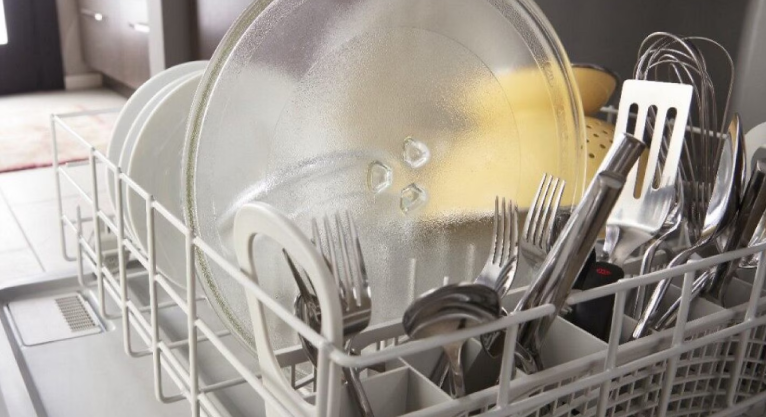
Moisture is usually involved, but not always in obvious ways. Steam trapped in cabinets, temperature changes near ovens, or trays placed inside one another while still warm can all contribute. Dishwashers make things worse by combining heat, water, and detergent in long cycles that strip away any remaining protection.
Material differences matter, though they are easy to overlook. Carbon steel rusts easily but tolerates maintenance. Stainless steel resists rust longer, yet once corrosion starts, it tends to spread beneath the surface. Aluminum behaves differently again, forming oxidation that looks alarming but does not behave like traditional rust.
From a safety standpoint, light rust on its own is rarely the issue. The real concern is whether the surface can still be cleaned reliably.
What Kind of Rust Are You Dealing With?
Not all rust feels the same. Some patches sit lightly on the surface and look worse than they are. The metal underneath remains intact, and the texture changes only slightly.
Other rust feels rough immediately. Darker spots, uneven surfaces, and small holes suggest that metal has already been lost. At that point, cleaning no longer restores the tray—it only improves how it looks.
The tray itself determines how forgiving rust will be. Bare steel trays can often recover if treated early. Non-stick trays usually cannot, because rust often means the coating has failed below the surface. Aluminum trays rarely rust in the traditional sense, so visible corrosion there often points to chemical damage instead.
Recognizing these differences early prevents unnecessary effort.
Baking Soda Method: The Safest First Attempt
For trays with light surface rust, baking soda is often the least risky place to start. It does not work quickly, and that is part of its advantage. Baking soda loosens oxidation without aggressively attacking the metal underneath.
A thick paste works better than a watery mixture. Spread it over rusted areas and let it sit. The waiting matters more than the scrubbing. When the rust softens, it comes off with far less force.
Scrubbing pressure should stay moderate. If heavy force feels necessary, the rust is probably deeper than expected. Carbon steel handles firmer tools. Aluminum and coated trays do not.
If a tray improves noticeably after one round, it is usually worth continuing. If nothing changes at all, stronger methods may not help either.
When Soaking and Scrubbing Works Better
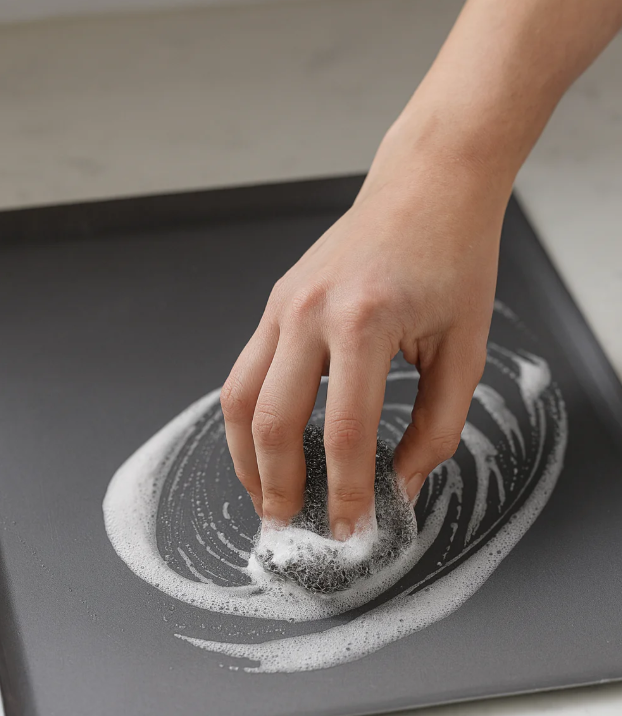
Some trays resist surface treatments because rust is trapped under layers of baked-on residue. In those cases, soaking helps more than scrubbing alone. Warm water and dish soap loosen grease and oxidation together, making removal easier.
This approach suits aluminum trays and older steel sheets that have lost their original finish. Steel wool or SOS pads can help, but only when used carefully. The goal is to remove rust, not reshape the tray.
Aluminum deserves particular restraint. Discoloration during cleaning often means the metal itself is being damaged. Once that happens, there is no way back.
Soaking helps preparation. It does not reverse damage.
Vinegar and Acid-Based Methods: Use With Caution
Vinegar removes rust by dissolving iron oxide directly. That makes it effective in stubborn cases, but also easy to misuse. Steel and iron can tolerate short exposure if rinsed and dried thoroughly afterward. Aluminum cannot.
On aluminum, acid causes rapid corrosion and pitting. Even brief contact can permanently weaken the surface. This is why vinegar should never be treated as a general solution.
Even on steel trays, vinegar removes protective layers along with rust. Without careful follow-up, rust often returns faster than before.
Vinegar works best as a controlled option, not a routine one.
Natural Alternatives and Their Realistic Limits
Salt and lemon are often suggested as natural cleaners. Together, they provide mild abrasion and acidity. This can help lift very light discoloration, especially on small areas.
Their limits show quickly. Compared to baking soda, they act slowly and offer little control. They work better as maintenance than repair.
Expecting dramatic results usually leads to frustration.
How to Keep Rust From Coming Back
Rust removal solves only part of the problem. Prevention begins immediately afterward. Drying is more important than most people realize. Hand-drying removes moisture trapped in seams and corners that air-drying leaves behind.
Bare metal trays benefit from occasional oiling. A thin layer of neutral oil slows oxidation, especially during long storage periods.
Dishwashers continue to be one of the fastest ways to shorten a tray’s lifespan. Even trays labeled dishwasher-safe often show rust sooner with repeated exposure.
Storage matters as well. Trays stacked without separation trap humidity and create friction. Dry, ventilated storage reduces both.
Small habits make a noticeable difference over time.
When Replacement Is the Smarter Choice

Some trays are simply done. Deep pitting, flaking metal, or rust that returns quickly after proper cleaning signal irreversible damage. At that stage, cleaning becomes cosmetic rather than functional.
Food safety becomes harder to guarantee when surfaces are uneven. Residue trapped in pits cannot be reliably removed, no matter how carefully the tray is washed.
There is also the question of time. Repeated restoration efforts often cost more effort than replacing the tray outright.
Stopping at the right time is part of good maintenance.
A Practical Perspective on Rust Removal
Rust removal works best when guided by judgment rather than habit. Not every rusty tray belongs in the trash, and not every tray deserves saving. Understanding materials, recognizing rust types, and choosing restrained methods lead to better results.
Baking trays are tools, not heirlooms. With reasonable care, many last far longer than expected. Long-term performance depends less on aggressive cleaning and more on consistent handling afterward.
Rust itself is not the failure. Ignoring why it appeared usually is.