
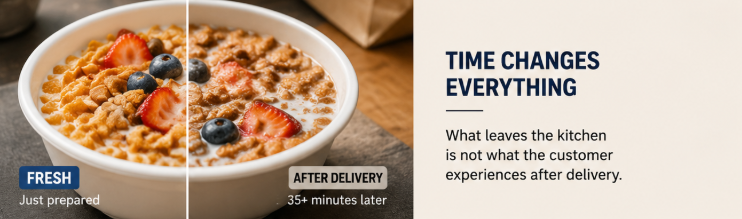
There’s a reason some breakfast brands quietly remove cereal bowls from their delivery menu after a few months. It’s not because customers stop liking cereal. It’s because cereal behaves differently once delivery enters the equation.
Inside the kitchen, everything looks perfect. Crunchy flakes. Cold milk. Fresh fruit. Nicely layered toppings. Then the order spends 35 minutes inside a delivery bag, hits traffic, sits outside an apartment lobby for five minutes, and suddenly the customer is eating something completely different from what the kitchen prepared.
One café owner described it in a pretty blunt way:
“By the time the customer opened the lid, the cereal had basically given up.”
That sentence stuck with me because it explains the real issue better than any technical packaging description. The problem isn’t just moisture. It’s time, movement, temperature, humidity, pressure, and packaging all working against the product at once.
Brands that succeed with long-distance cereal delivery usually stop treating the bowl as simple packaging. They start treating it as part of the product itself.

Why Customers Notice Soggy Cereal Immediately
People are surprisingly forgiving with delivery food. Fries go cold sometimes. Burgers shift around in transit. Drinks spill once in a while. Customers complain, but they move on.
Cereal is different.
Texture is the entire experience. If the crunch disappears, customers instantly feel disappointed. There’s no transition period. No “still acceptable” stage. Once flakes soften, the whole breakfast feels wrong.
One breakfast subscription company learned this the hard way after launching overnight oats and cereal bowls together. The oats performed well. The cereal bowls didn’t. Reviews kept mentioning the same thing:
“Fresh ingredients, but the cereal was soft.”
At first they blamed delivery drivers. Then they blamed ingredient quality. Eventually they realized the real issue was the bowl structure and assembly timing. That’s when they started sourcing from custom cereal bowl manufacturers instead of using standard off-the-shelf containers.
The difference showed up faster than expected.
Most Problems Start Before the Driver Arrives
A lot of operators focus heavily on transportation, but the real damage often begins earlier.
The cereal sits after preparation. Steam builds under the lid. Condensation forms slowly inside the container. Then milk starts absorbing into the cereal before pickup even happens.
One restaurant manager timed the process during a lunch rush and realized some bowls waited nearly 18 minutes before courier pickup. That alone was enough to ruin texture consistency.
After observing this, they changed two things. First, dry ingredients stayed separate until driver arrival. Second, they switched to a taller bowl from a new cereal bowl supplier with a tighter lid seal and better compartment spacing.
The customer complaints didn’t disappear overnight, but they dropped enough for the team to notice within two weeks.
Separation Usually Works Better Than Fancy Materials
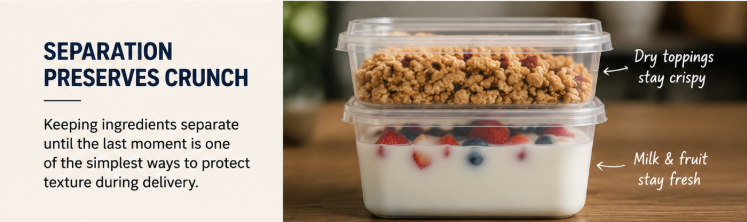
A lot of brands overcomplicate this issue. They search for high-tech coatings or expensive insulation systems when simpler solutions often work better.
Separating liquid and dry ingredients still gives the best results in most real-world delivery situations.
That doesn’t mean the packaging has to feel clumsy or inconvenient. Some companies now use stackable inserts or small upper compartments that keep cereal elevated until the customer mixes everything together.
One growing breakfast chain worked with ODM cereal bowl manufacturers to create a lid with a built-in dry compartment for granola and toppings. It wasn’t revolutionary packaging. Honestly, it looked pretty simple. But customers loved it because the cereal finally stayed crunchy during longer delivery routes.
Sometimes practicality beats innovation.
Drivers Affect More Than Most Kitchens Realize
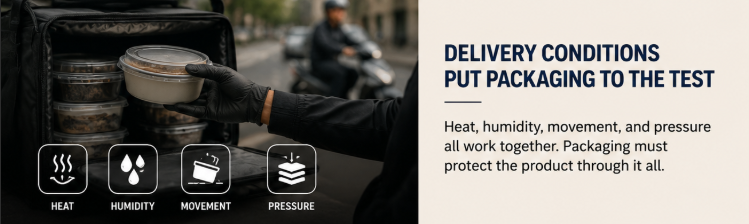
One owner spent an afternoon shadowing delivery drivers around the city and came back completely rethinking their packaging decisions.
Bowls tilted during turns. Orders got stacked under heavier bags. Some couriers placed hot food directly beside cold cereal bowls, creating condensation inside the container.
None of this was intentional. It was just real delivery behavior.
That experience pushed the company toward working with a cereal bowl factory for wholesale buyers that actually tested packaging under transport conditions instead of only focusing on appearance and cost.
The owner later admitted something interesting:
“The lid mattered more than the bowl material.”
That surprised their whole purchasing team.
Humidity Quietly Ruins Crunch Faster Than People Expect
Brands operating in humid regions usually discover this problem earlier than everyone else.
Even before milk touches the cereal, moisture in the air starts affecting texture. Granola softens around the edges. Crispy flakes lose structure surprisingly fast.
One Southeast Asian breakfast company struggled every rainy season. Their bowls performed perfectly during indoor testing but failed badly once humidity increased outside.
They eventually switched suppliers and began working with OEM cereal bowl manufacturers that offered improved moisture resistance and tighter lid closure systems. They also started sealing toppings separately instead of placing everything together inside one compartment.
That small adjustment dramatically improved consistency during longer routes.
Cheap Bowls Create Expensive Problems
A packaging manager once explained this perfectly during a sourcing discussion:
“Cheap bowls save money until customers start talking.”
Low-cost bowls usually fail in small ways at first. Weak lids. Minor leaks. Soft walls. Tiny shifts during transportation. Individually, these problems seem manageable. Together, they slowly damage the customer experience.
One cereal delivery brand eventually realized their refund rate was directly connected to packaging complaints. After switching to custom cereal bowl suppliers with stronger structural support, refunds dropped enough to offset the higher packaging cost entirely.
That’s the part spreadsheets often miss.
Packaging failures create operational costs that don’t immediately appear during purchasing negotiations.
The Best Packaging Often Looks Boring
Customers rarely notice great cereal packaging directly.
Nobody opens a breakfast delivery and compliments the engineering of the lid design. What they notice is whether the cereal still feels fresh.
That’s why experienced operators usually stop chasing flashy concepts after a while. Stability matters more. Reliability matters more. Consistency matters more.
One company redesigned its entire breakfast packaging line with help from a cereal bowl manufacturer for wholesale buyers and intentionally made the bowls simpler. Fewer moving parts. Fewer leakage points. Better stacking strength.
The packaging looked less impressive online.
But delivery performance improved immediately.
Real Testing Always Beats Office Discussions
Conference room packaging decisions only go so far.
Real testing tells the truth quickly.
Some brands now simulate actual delivery conditions before approving a bowl design. They leave samples inside hot cars. They shake delivery bags. They test long scooter rides through traffic.
One startup founder even drove around for over an hour with cereal bowls in his trunk during summer just to observe condensation behavior under real conditions.
The results completely changed their sourcing strategy. Later, they partnered with ODM cereal bowl suppliers that could modify lid ventilation and compartment spacing without redesigning the entire product line from scratch.
Small structural adjustments ended up improving delivery quality more than changing ingredients.
Crunch Is Part of the Product
For long-distance cereal delivery, crunch isn’t a bonus feature. It’s the product itself.
Customers remember texture immediately. If the cereal arrives soft, they usually assume the entire brand lacks quality control, even if the ingredients are premium.
The companies performing well in this category understand that packaging decisions directly shape customer trust. They test constantly. They observe delivery behavior. They adjust assembly timing. They work closely with suppliers who understand transport realities instead of only manufacturing cost.
Because once delivery starts, the cereal bowl stops being just a container.
It becomes part of the breakfast experience itself.