
The humble plastic egg tray is a quiet masterpiece of industrial design, engineered to shield fragile cargo as it moves through a relentless global logistics web. For the average home cook, these transparent containers are often seen as “disposable debris,” tossed into the bin as soon as the last egg is cracked. Yet, in an era where sustainability is no longer a suggestion but a necessity, we find ourselves asking: can these resilient polymer structures be reclaimed? Mastering the art of sanitizing these trays requires a blend of domestic common sense and an understanding of the rigorous standards set by a professional PET egg tray factory supplying global retailers.
The “Single-Use” Reality Check

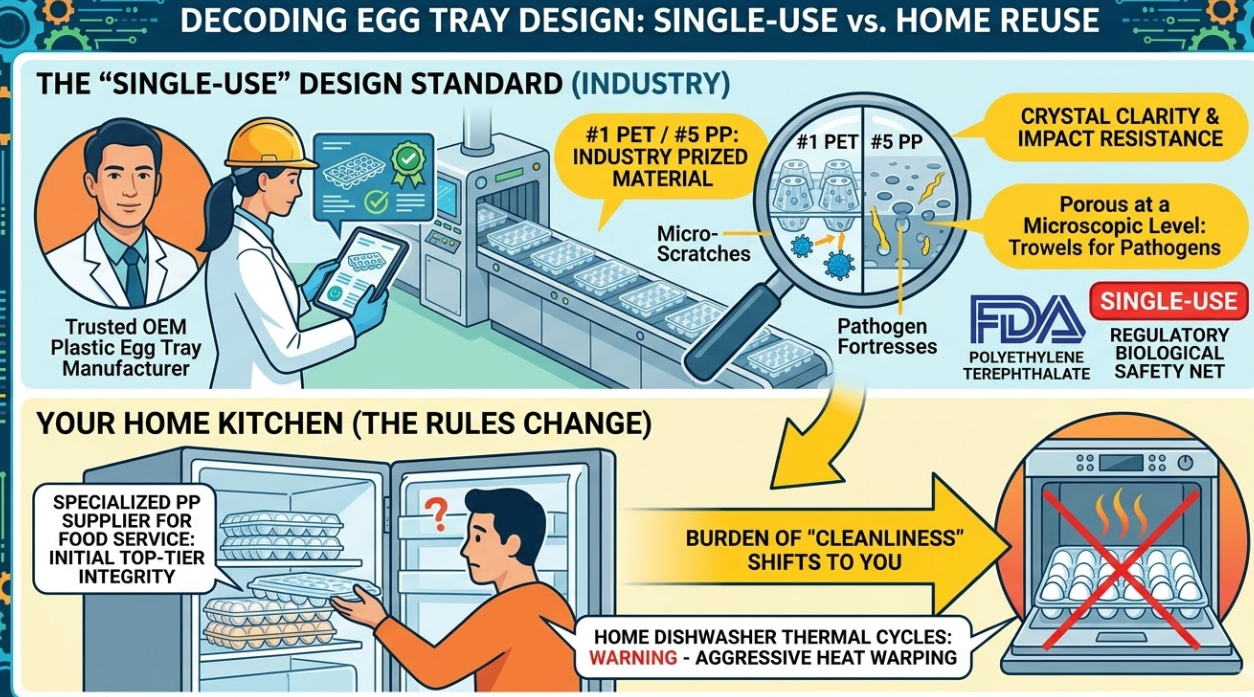
Flip over a standard supermarket tray, and you’ll likely spot the #1 PET or #5 PP recycling emblem. To a trusted OEM plastic egg tray manufacturer for bulk distributors, these specific materials are prized for their crystal-clear transparency and impact resistance. However, they aren’t traditionally built to survive the aggressive thermal cycles of a home dishwasher. Regulatory bodies like the FDA label these as “single-use” because plastic, at a microscopic level, is surprisingly thirsty; it contains tiny pores and can develop micro-scratches that act as fortresses for pathogens.
While commercial producers are legally barred from refilling old packaging to stop farm-to-farm disease, your home kitchen operates under different rules. The “single-use” warning is essentially a biological safety net. If you’ve sourced your containers from a specialized PP egg crate supplier for food service providers, the structural integrity is top-tier for its initial journey, but once it enters your fridge, the burden of “cleanliness” shifts entirely to your shoulders.
The Hidden Microbiology of Your Fridge
We often think of Salmonella as a “raw chicken problem,” but it is equally an “egg tray problem.” In the US, eggs are washed before they hit the shelf, a process that strips away the “bloom”—the egg’s natural armor. This leaves the egg cleaner but the tray more vulnerable to whatever lingers in your refrigerator. If you prefer farm-fresh eggs, you’re dealing with organic matter and soil that hit the plastic surface directly.
A quick splash of cold water won’t cut it. Research confirms that bacteria can hunker down on plastic for days. You touch the tray, then your toaster, then your sandwich—this is the “contamination relay race” that leads to food poisoning. To break this cycle, you have to treat your cleaning process with the same clinical gravity as a leading BPA-free egg box factory for health-conscious brands. You aren’t just washing a dish; you are performing a surface intervention.
The Sanitization Protocol: A Step-by-Step Guide

To safely breathe new life into a tray, follow a method that respects both chemistry and the material’s limits. First, the “stress test”: if the plastic feels brittle, looks cloudy, or has visible gouges, it’s a lost cause. Recycle it. If it passes, start with a lukewarm soapy soak to dissolve the “biofilm”—that invisible layer of grease and proteins that protects bacteria from disinfectants.
The real heavy lifting happens in the bleach bath. Mix one tablespoon of unscented chlorine bleach per gallon of cool water. Crucial tip: Never use boiling water. High heat can cause PET to warp or, worse, trigger the leaching of chemicals that weren’t meant for heat exposure. Submerge the tray for a full two minutes. This “dwell time” is the industry gold standard for total sterilization. Finally, skip the kitchen towel—it’s a hotbed for germs. Let the trays air-dry upside down on a clean rack. Total dryness is a biological dead end for most microbes.
The Toxic “Kitchen Cocktail” Warning
In a rush to sterilize everything, many DIY enthusiasts accidentally create a chemical hazard. There’s a persistent, dangerous myth that mixing bleach with white vinegar creates a “super-sanitizer.” In truth, this combination triggers a reaction that off-gasses toxic chlorine. Even a few breaths can leave you coughing with burning eyes. If you’re sensitive to harsh chemicals, 3% food-grade hydrogen peroxide is a fantastic alternative. It’s slower but highly effective for those using products from a reputable PET egg tray supplier for sustainable packaging initiatives.
Beyond the Omelet: Creative Repurposing

Once a tray is clinically clean, its “egg-cell” geometry becomes a brilliant organizational tool. Gardeners love them as seed-starting stations; the individual cells hold just enough soil for a seedling’s first roots, and the plastic retains vital moisture. Just remember to use a hot needle to melt drainage holes in the bottom.
In the home office, these trays conquer “drawer chaos.” They are the perfect size for paperclips, stamps, and hardware. However, even a tray from a premium clear plastic egg carton manufacturer for grocery chains has its limits. Under no circumstances should a reused tray be used for food contact—don’t use them as ice cube trays or for serving snacks to kids. The risk of long-term chemical migration from repeated washing simply isn’t worth the five cents you’d save.
Knowing When to Let Go
Plastics have a “fatigue point.” Every time a tray is washed or chilled, its molecular chains weaken. You’ll eventually notice “crazing”—those tiny, spider-web-like internal cracks. When your tray loses its flex or starts to yellow, it’s time to retire it.
When that day comes, ensure it hits the right bin. High-quality trays from a certified egg tray manufacturer for commercial poultry farms are usually 100% recyclable. By sending them back into the circular economy, they can be transformed into everything from fleece jackets to new industrial parts.
Mastering kitchen hygiene isn’t about being paranoid; it’s about being informed. By applying professional-grade logic to your daily habits, you can reduce waste without ever compromising the safety of your dinner table. Whether you’re sprouting herbs or sorting screws, a properly sanitized tray is a small victory for both your home and the planet.