
The visual appeal of a deep purple açaí base topped with vibrant fruits and crunchy granola has made it a global breakfast phenomenon. However, for many café owners and home enthusiasts, there is a frustrating reality: the “5-minute meltdown.” An açaí bowl that starts as a thick, sorbet-like masterpiece can quickly transform into a lukewarm, purple soup where the granola loses its crunch and the fruits sink into oblivion. Achieving the perfect textural window requires more than just a good blender; it demands a deep understanding of food physics and strategic layering. As a leading disposable PET acai bowl manufacturer for global distributors, we have studied how container dynamics and assembly sequences affect the consumer experience. This guide breaks down seven professional techniques to ensure every spoonful stays as crisp and cold as the first.
The Science of Sogginess: Why Bowls Fail
Before diving into the techniques, we must identify the primary mechanisms of degradation. Sogginess is rarely the result of a single mistake. It is usually a combination of moisture migration—where the juice from sliced fruits seeps into dry toppings—and thermal rise, where the bowl’s material fails to insulate the frozen base. When a base begins to melt, its micro-bubble structure collapses, losing the mechanical strength needed to support heavy toppings. This is why selecting the right vessel from a reliable PP acai bowl factory with R&D capabilities is crucial; the structural integrity of the container provides the thermal barrier necessary for a stable assembly.
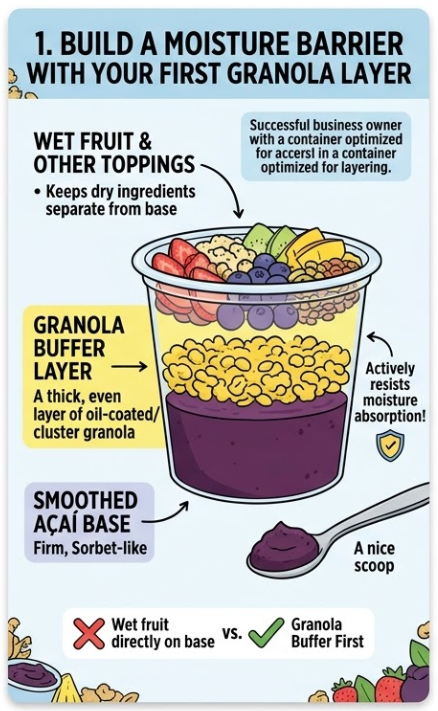
Technique #1: Build a Moisture Barrier With Your First Granola Layer

The most common mistake in açaí bowl assembly is placing wet fruit directly onto the frozen base. To combat this, professionals use the “Granola Buffer” method. Instead of saving all the granola for the top, sprinkle a thin, even layer of granola directly onto the smoothed açaí surface before adding anything else. This layer acts as a physical sacrificial barrier. It absorbs any immediate surface melt from the base while preventing fruit juices from traveling downward. For the best results, choose an oil-coated or “cluster” style granola. These varieties have a hydrophobic coating that resists moisture absorption significantly longer than plain rolled oats. When sourcing supplies, many business owners consult an OEM acai bowl supplier offering custom branding to ensure their packaging depth allows for this multi-layering technique without overflowing.
Technique #2: The “Pat-Dry” Rule for High-Moisture Fruits

Not all fruits are created equal in the world of layering. Strawberries, mangoes, and especially thawed frozen blueberries are “moisture donors.” If you place a freshly washed strawberry slice directly onto your bowl, the residual water acts as a solvent, accelerating the melting of the açaí base. The professional “Pat-Dry” technique involves laying sliced fruit on a lint-free paper towel for sixty seconds before assembly. This simple step removes the “free water” on the surface, extending the textural lifespan of the bowl by nearly ten minutes. In a high-volume commercial setting, prep cooks often air-dry fruit in a refrigerator for a brief period to achieve this same result. This attention to detail is what separates a premium product from a standard one, a philosophy shared by any top-tier PLA acai bowl manufacturer focused on sustainability, where precision in production mirrors precision in food prep.
Technique #3: Layer by Density to Prevent Structural Collapse

Gravity is the enemy of a melting açaí bowl. If you place heavy ingredients, like large chunks of pineapple or dense nut butter scoops, on top of delicate items like chia seeds or hemp hearts, the heavy items will inevitably crush the lower layers into the base. The “Density-First” rule dictates that you should anchor your bowl with medium-weight items like coconut flakes or sliced almonds first. These provide a “lattice” that can support heavier fruits. By placing the lightest, most delicate toppings last, you ensure they remain visible and dry. This logical stacking is essential for takeaway orders where the bowl might sit for fifteen minutes before consumption. Large franchises often partner with a custom plastic acai bowl factory for bulk orders to design containers with specific diameters that optimize this density stacking, ensuring the surface area is wide enough to distribute weight evenly.
Technique #4: Implement Zone Placement Instead of Random Scattering
While the “scattered” look is popular on social media, it is the fastest route to a soggy bowl. When dry granola and wet fruits are mixed together across the entire surface, the moisture from the fruit has nowhere to go but into the granola. The “Zone Placement” strategy involves keeping dry and wet ingredients in separate “neighborhoods” on the bowl’s surface. By isolating the fresh berries in one quadrant and the granola in another, you limit the surface contact between them. This prevents the “sponge effect” where granola pulls moisture from the fruit. From a business perspective, using high-clarity containers from a reputable PET food packaging manufacturer for catering brands allows the customer to see these distinct zones clearly, which enhances the perceived value and freshness of the meal.
Technique #5: The Frosty Bowl Preparation
The thermal mass of your serving vessel plays a massive role in how fast the açaí melts. A room-temperature bowl will immediately begin transferring heat to the frozen base, causing a “ring of melt” around the edges. Professionals pre-chill their serving bowls in a freezer for at least ten minutes. If you are operating an açaí shop, keeping your stack of bowls in a refrigerated or frozen dispenser is a game-changer. While ceramic and glass hold cold well, high-quality food-grade plastics are also excellent insulators. Many successful juice bars work with a premium acai bowl supplier for high-volume franchises to source insulated or thick-walled PET options that maintain the base’s “sorbet” consistency during the entire assembly process and the subsequent delivery.
Technique #6: Strategic Timing of Liquid Toppings
Honey, agave, and nut butters are the “finishers,” but they are also liquids that can ruin texture if added too early. A heavy drizzle of honey will seep through the cracks of the toppings and create “sugar channels” that draw heat into the base. The “Table-Finish” principle suggests that liquid toppings should only be added in the final ten seconds before the bowl is handed to the customer or eaten. If you are preparing bowls for delivery, consider providing the liquid components in a separate small container. This prevents the liquid from sitting on the granola during transit. This level of operational thought is typical for businesses that buy from an innovative disposable acai bowl factory in China, where the focus is on creating total packaging solutions rather than just single containers.
Technique #7: Maintaining Base Consistency Benchmarks
No amount of layering technique can save a base that is fundamentally too thin. The ideal açaí base should have a “spoonable-but-firm” consistency—think of a thick gelato that doesn’t slide off an inverted spoon. If your base is too runny from the start, it lacks the surface tension to hold any toppings at all. To achieve this, minimize the liquid-to-frozen-fruit ratio during the blending process. If the base comes out too loose, a quick five-minute “blast freeze” in a shallow metal pan can restore its integrity before assembly. A stable base ensures that the careful layering of granola and fruit remains on the surface, rather than sinking to the bottom.
Summary: The Ultimate Assembly Sequence
To put these seven techniques into practice, follow this pro-level assembly sequence: Start with a pre-chilled bowl from your trusted PET acai bowl factory partner. Fill with a base that meets the firmness benchmark. Immediately apply a thin “barrier layer” of oil-coated granola. Arrange your fruit zones, ensuring all high-moisture items have been patted dry. Stack by density, placing heavy nuts first and light seeds last. Finally, apply your liquid drizzles only when you are ready to dig in. By treating the açaí bowl as a structural engineering project rather than just a snack, you ensure a crisp, refreshing, and premium experience every time. Whether you are an enthusiast at home or a business owner looking to scale, these details are what define quality in the modern superfood market.