
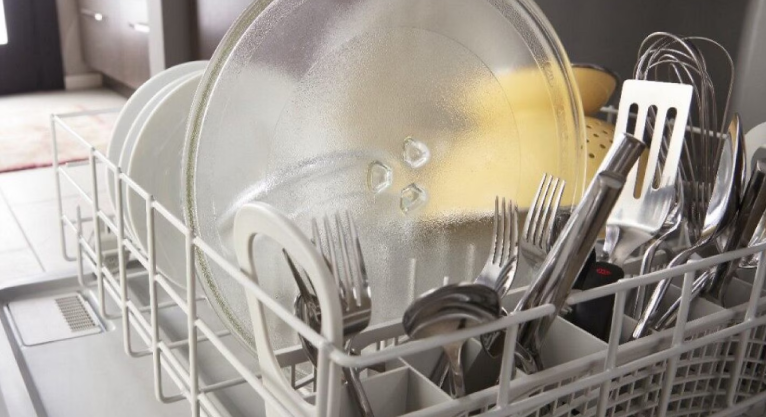
This question rarely comes from curiosity. It usually appears at the end of a long day, when the sink is already full and the baking tray looks worse than expected. Grease has cooled, residue has hardened, and the idea of scrubbing feels more tiring than necessary. At that moment, the dishwasher seems less like a machine and more like a shortcut.
Most people try it at least once. The tray goes in, the cycle runs, and when it comes out, nothing dramatic happens. It looks cleaner. It still feels solid. Baking continues. That first experience is often enough to settle the issue, at least temporarily.
If dishwashers truly ruined baking trays immediately, this would not be a common question. The confusion exists because the effects are rarely immediate, and almost never obvious.
Why Damage Is Difficult to Notice When It First Happens
When people think about damage, they expect a clear event. Something bends. Something cracks. Something peels. Dishwasher-related wear does not usually behave that way.
Instead, changes appear gradually. A tray heats slightly differently than it used to. Food releases less easily. Corners brown faster than the center, or the other way around. None of these shifts feel serious enough to demand attention on their own.
It is also easy to blame other factors. Ovens run hot. Recipes change. Ingredients behave differently from batch to batch. By the time cleaning habits come into question, the tray has already been used dozens of times since its last “normal” state.
Why Oven Heat and Dishwasher Heat Are Not the Same Thing

At first glance, it seems logical to compare the two. Baking trays survive high oven temperatures, so dishwasher heat should be harmless. The flaw in that reasoning is not temperature, but environment.
Oven heat is dry and predictable. The tray warms evenly, stays hot for a period of time, then cools down. Moisture is minimal. Chemical exposure is almost nonexistent.
Dishwashers add variables. Water, detergent, mechanical force, and fluctuating temperatures all interact at once. Metals expand and contract while wet. Coatings are stressed while softened. Protective layers are exposed repeatedly rather than occasionally.
The tray may tolerate each individual cycle without complaint. What it struggles with is repetition.
Aluminum Trays Change in Subtle Ways
Plain aluminum trays tend to age quietly. They rarely fail in a way that draws attention. Instead, the surface becomes uneven over time.
After repeated dishwasher cycles, aluminum often loses its original consistency. The finish may look dull, but the more important change is how heat moves across the surface. Areas that once behaved similarly begin reacting differently.
Baking results become slightly less predictable. One section browns faster. Another lags behind. These differences are small enough that most people adjust without realizing why adjustments are suddenly necessary.
Because aluminum does not rust dramatically or crack under stress, the connection between washing method and performance is easy to overlook.
Anodized Aluminum Feels Safer Than It Really Is
Anodized aluminum complicates the discussion because it does perform better at first. The surface feels harder. Wear appears later. This leads many people to assume it is immune to dishwasher use.
What anodizing actually does is slow down surface degradation. It does not stop it entirely. Hot water and alkaline detergents still wear away the protective layer, just more gradually.
The problem is that the changes are harder to see. Food begins sticking more often. Cleaning feels slightly rougher. These shifts are easy to attribute to age or heavy use rather than cleaning habits.
By the time the tray feels noticeably different, the protective advantage has already been reduced.
Non-Stick Trays Rarely Fail All at Once

When non-stick baking trays start peeling, the dishwasher often gets blamed for a single “bad” wash. In reality, that wash usually only reveals damage that has been accumulating over time.
Dishwashers do not dissolve non-stick coatings instantly. They weaken the bond underneath. Heat causes expansion. Water finds microscopic imperfections. Detergents interfere with adhesion. Spray pressure adds repeated stress.
For a long time, the coating still looks intact. Then food stops releasing as easily. Scrubbing becomes more necessary. Only later do flakes or lifted edges appear.
The visible damage feels sudden, but the process that caused it is anything but.
Carbon Steel Depends on Protection That Dishwashers Remove
Carbon steel baking trays rely heavily on surface protection. That protection may come from seasoning, oil residue, or a controlled oxide layer built up through use.
Dishwashers remove these layers efficiently. After one wash, nothing seems wrong. After several, moisture lingers longer on the surface. Small rust spots begin appearing in specific areas.
At first, this feels manageable. A little oil fixes it. A quick scrub removes discoloration. The problem is that dishwashers repeat the stripping process faster than most people replace the protection.
Over time, maintaining the tray becomes more work than expected, especially for something meant to simplify baking.
Stainless Steel Handles Dishwashers Better, Not Perfectly
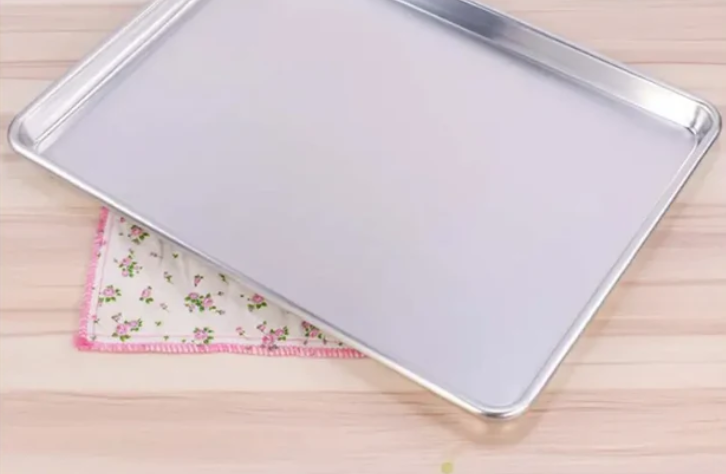
Stainless steel trays are often treated as the safe option. They resist corrosion and react less aggressively to detergents. In many cases, they tolerate dishwashers without obvious issues.
Even so, they do not remain unchanged. The surface finish slowly dulls. Water spots become permanent. Thinner trays may shift shape slightly after repeated exposure to heat and moisture.
These changes are rarely severe enough to stop use. That is why stainless steel feels forgiving. The wear still accumulates, just slowly enough to be ignored for a long time.
What “Dishwasher Safe” Actually Means
The phrase “dishwasher safe” creates confidence, but it lacks context. In most cases, it means the tray will survive dishwasher cleaning without immediate failure.
It does not mean that machine washing preserves performance. It does not guarantee long-term surface stability. These distinctions are rarely explained on packaging.
As a result, many people treat dishwasher safety as a recommendation rather than a tolerance limit. The difference only becomes clear after years of use.
Handwashing Changes the Timeline, Not the Reality
Handwashing does not prevent wear entirely. It simply alters how quickly it appears.
Exposure to water is shorter. Detergents are milder. Temperature changes are less extreme. The tray dries sooner. Each factor reduces stress slightly.
Together, these differences extend the tray’s useful life in a way that becomes noticeable over time. This is why handwashed trays often feel more predictable, even if they are technically dishwasher safe.
When Using the Dishwasher Still Makes Sense
Convenience matters. Many people will continue using the dishwasher occasionally, and doing so does not automatically ruin a tray.
Gentler cycles, lower temperatures, and careful placement reduce stress. Keeping trays away from heating elements and heavy cookware helps as well. These choices do not eliminate wear, but they slow it enough to feel acceptable.
The key distinction is whether dishwasher use is occasional or habitual.
The Kind of Damage Most People Do Not Track
Dishwasher-related damage rarely forces a clear decision. Trays are replaced gradually, often without a single defining moment.
Baking becomes less even. Food sticks more often. Cleaning takes longer. None of these issues feel urgent on their own.
Only when a new tray replaces an old one does the accumulated difference become obvious.
So, Can Baking Trays Go in the Dishwasher?
They can, and many do. Most last longer than people expect.
The more accurate answer is that dishwashers trade convenience for longevity. The cost is not dramatic or immediate. It is slow, subtle, and easy to miss.
Once that trade-off is understood, the choice becomes less confusing and more intentional.