
We’ve all been there, haven’t we? You stand in front of the fridge, pull out a container of greens you bought just forty-eight hours ago, and realize it has turned into a tragic, slimy mess. It’s annoying, a total waste of money, and it kills the vibe of a healthy dinner. But why does it happen so fast?
Think of leafy greens as the high-maintenance divas of the produce aisle. They aren’t like potatoes that you can just chuck in a dark corner. They are alive—technically—and they’re constantly reacting to the air, light, and moisture around them. For a home cook, it’s a nuisance; for a pro in the food industry, it’s a hit to the margins. To win this war, you have to think less like a chef and more like a scientist.

Why Salad Goes Bad So Quickly (And What’s Actually Happening)
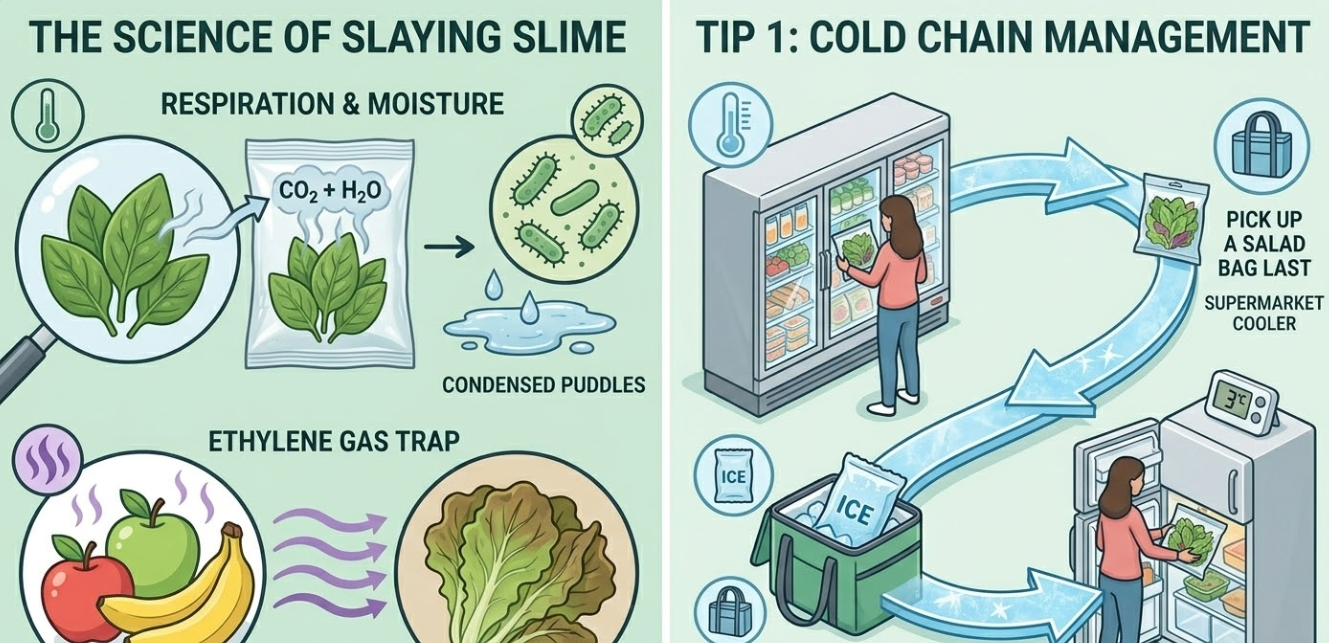
The moment a leaf is snipped from its root, it starts “breathing”—a process called respiration. It takes in oxygen and “sweats” out moisture. In a sealed bag, that sweat gets trapped, creating a tiny, humid swamp where bacteria throw a party.
Then there’s the “gas factor.” Fruits like apples release ethylene, an aging hormone. While it ripens a peach, it turns lettuce brown and bitter. This is exactly why a top-tier custom salad bowl packaging manufacturer invests heavily in “breathable” materials to manage this biological explosion that usually restarts the second you break the seal at home.
Tip 1: Keep It Cold From Store to Home
The clock doesn’t start at home; it starts the moment you pull that bowl off the shelf. That thirty-minute drive in a warm car? That’s the danger zone. When leaf temperatures spike, their metabolism goes into overdrive, breaking them down twice as fast.
Think like a logistics manager. Grab your greens last and use an insulated bag if it’s hot out. In the B2B world, finding a reliable food container supplier for global logistics is all about ensuring temperature stability until the point of sale. Your job is just to finish that “last mile” to your kitchen.
Tip 2: Remove Wilted or Damaged Leaves Immediately
Ever notice how one soggy leaf “infects” the rest? That’s not your imagination. A rotting leaf releases enzymes that physically break down the cell walls of healthy neighbors. It’s a chain reaction of decay.
The second you get home, dump the salad out for a quick “triage.” If you see a leaf that’s translucent or “gooey,” get it out of there. This simple intervention can buy you four extra days. It’s the same logic a reusable salad bowl factory for retail chains uses with strict sorting—it’s easier to prevent rot than to stop it once the fuse is lit.
Tip 3: Dry Your Greens Thoroughly Before Storing

I’ll be blunt: moisture is the enemy. If you wash greens and store them damp, you aren’t storing food; you’re starting a science experiment. Bacteria thrive in those tiny films of water.
This is why a salad spinner is the most important tool you own. It’s a preservation machine. If you don’t have one, use the “pillowcase trick”—put greens in a clean pillowcase and spin it like a lasso in your yard. You’ll look ridiculous, but the centrifugal force pulls moisture out of crevices a towel would never touch. You want those leaves feeling bone-dry.
Tip 4: Layer With Absorbent Paper Towels
Even after spinning, leaves keep “breathing.” Enter the “Paper Towel Trick.” Think of the towel as a sacrificial sponge for the micro-climate inside your container.
Line the bottom to catch gravity-fed moisture and put another on top for the condensation dripping from the lid. If you’re prepping for a crowd, sourcing from a heavy-duty salad bowl wholesaler for catering services who offers high-walled containers makes this layering way easier. It’s a low-tech hack for a high-value product.
Tip 5: Choose the Right Airtight Container
The bags salad comes in are built for shipping, not for living. They offer zero protection. A crushed leaf is a dead leaf—once cell walls are bruised, browning begins instantly.
Switch to a rigid container. Glass or BPA-free plastic tubs act like armor. You want some “headspace” too; don’t pack leaves in like a sleeping bag. Interestingly, some eco-friendly salad bowl providers for bulk orders now design “active” containers with vents to control airflow. If you have the choice, go wide rather than deep so the bottom layers don’t get crushed by the weight above.
Tip 6: Always Use the Crisper Drawer
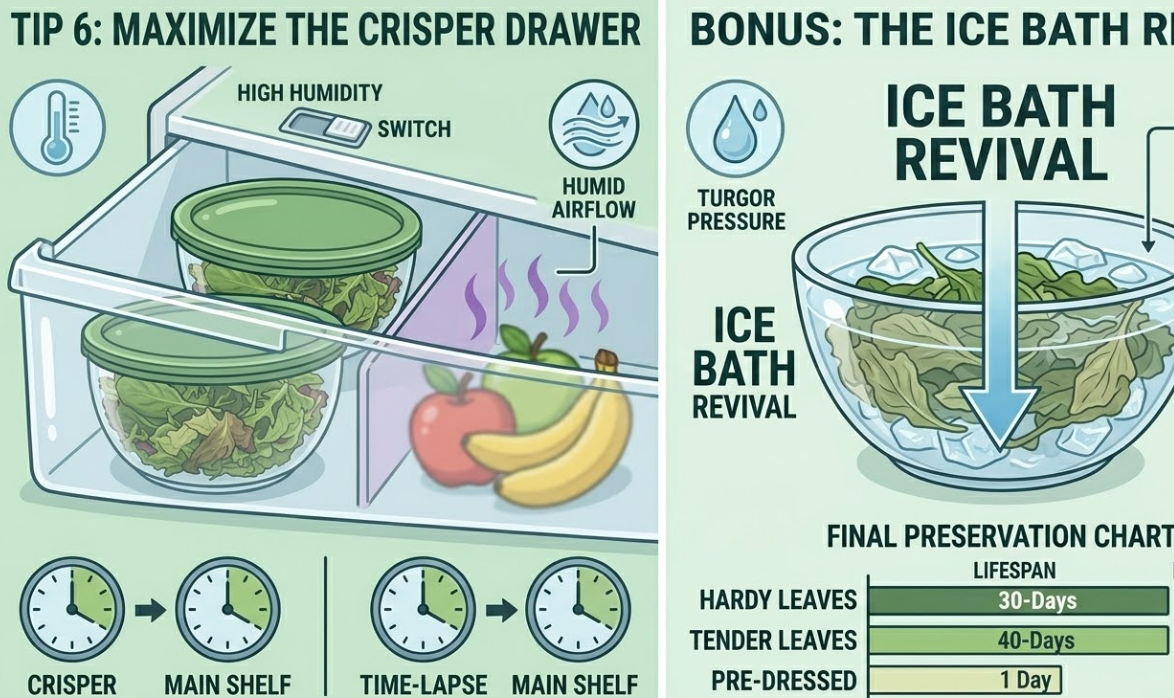
That drawer isn’t just an extra shelf; it’s a climate-controlled bunker. Most fridges have a humidity slider. For salad, you want “High Humidity” (vents closed). This keeps air moist enough to prevent leaves from turning into “green potato chips” while protecting them from the drying, circulating air of the main fridge.
Just keep the “gas emitters” away. If that drawer is full of apples, your salad is toast by Tuesday. For brands looking to scale, partnering with a customized plastic salad bowl manufacturer for branding to create drawer-optimized kits is a massive opportunity to solve this exact consumer pain point.
Tip 7: Orient Whole Heads for Natural Drainage
If you buy whole heads, you have a biological advantage: the root. Keeping it intact keeps it “alive” longer. Store them upright, like a bouquet in a tiny amount of water, or wrapped in a damp cloth.
If storing flat, make sure the “spine” is facing up. This lets condensation run off instead of pooling in the heart. For B2B buyers, a clear salad bowl supplier for eco-conscious brands helps show off this freshness to the customer, proving the product hasn’t been sitting in a warehouse for weeks.
How Long Can Stored Salad Actually Last?
Let’s be real. No matter the tricks, baby spinach won’t last a month.
-
Hardy Greens (Kale, Cabbage): 10–14 days.
-
Standard Heads (Romaine): About a week.
-
Tender Mixes (Arugula): You’ve got 3–5 days, tops.
The signs of “no return” are obvious: a vinegar smell or “glassy” leaves. When in doubt, throw it out.
Bonus: Storing a Pre-Dressed or Pre-Mixed Salad Bowl
The second you add dressing, salt pulls water out of the leaves. Within twenty minutes, it’s a soggy mess. If you’re a meal prepper, use the “Jar Method.” Put dressing at the bottom, “hard” veggies (carrots) next as a barrier, and greens at the very top.
And a pro tip: if leaves are just limp (not rotting), try an ice bath. Shocking them in ice-cold water for 15 minutes can “re-inflate” the cells, bringing back that crunch. It’s a game-changer for your budget.
Preserving salad is just about managing the transition from living plant to meal. Control the moisture and temperature, and you’ll stop throwing your grocery budget in the trash.