
Ever wonder why some plastic cups feel like flimsy toys while others are rock-solid and crystal clear? It’s not just the plastic used; it’s the high-speed dance of machinery happening on the factory floor. For anyone in the bulk procurement world, knowing the “how” behind the cup is the secret to avoiding cheap, brittle inventory. We’re moving past the surface-level stuff to look at the heat, the pressure, and the heavy iron that turns raw resin into a stack of coffee shop staples.
The Raw Truth About Resin and Blending
The process doesn’t start with a machine; it starts with a recipe. You’ve got your big players like Polypropylene (PP) and PET. If you’re looking for that premium, glass-like look for a cold brew, PET is the winner. If you need something that won’t melt in a microwave, PP is your go-to. But you can’t just throw raw pellets into a hopper and hope for the best.
When a brand works with a custom plastic cup manufacturer, the first conversation is always about the blend. Factories mix virgin resin with specific additives—stuff like “slip agents” so the cups don’t get stuck together in a dispenser, or “clarifiers” to get that diamond shine. Getting this mix right is a bit of an art form. If the ratio is off, the plastic gets “gummy” or, worse, too brittle to survive a shipping container. It’s this initial chemical handshake that sets the stage for everything else.
Turning Pellets into Plastic Sheets
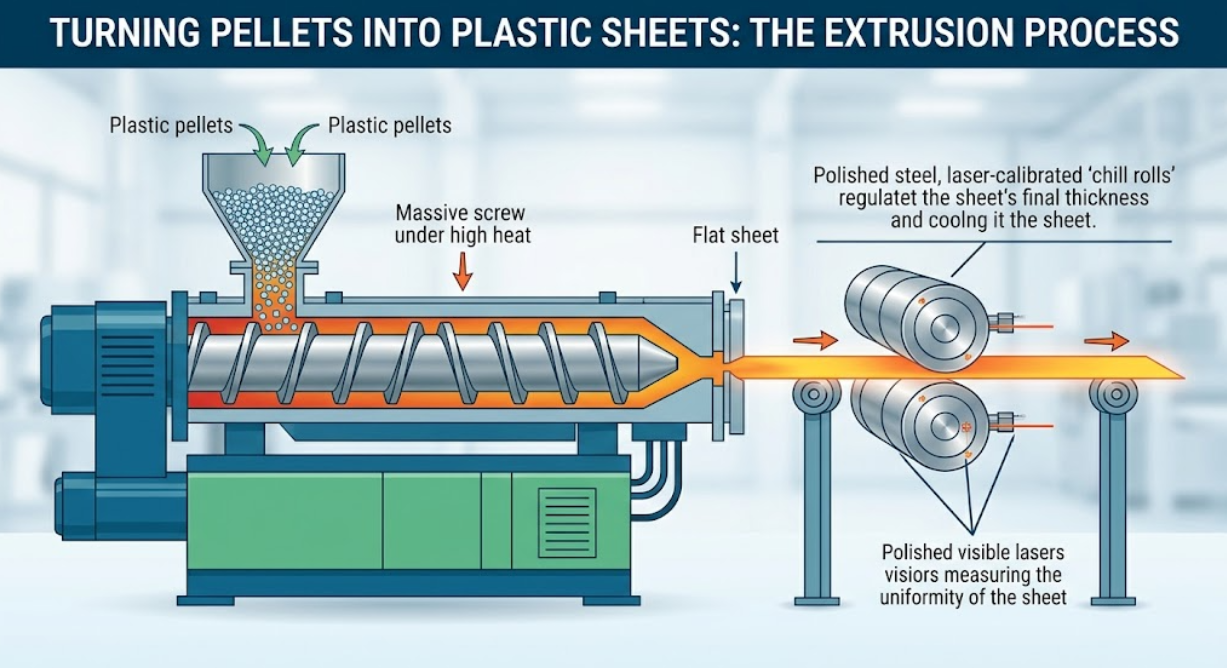
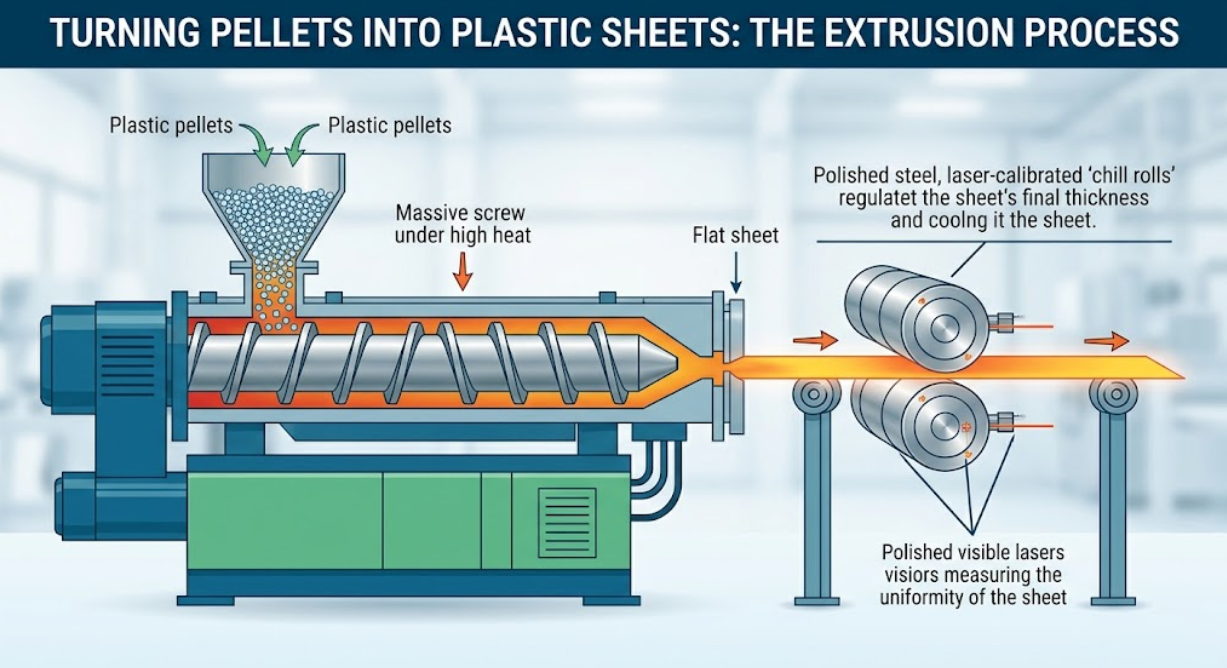
Once the pellets are mixed, they head into the extruder. Think of this like a giant, industrial-strength glue gun. A massive screw grinds the pellets down under intense heat until they turn into a thick, molten liquid. This liquid is forced through a flat die, coming out as a glowing, hot sheet of plastic.
This is where the precision kicks in. That hot sheet has to pass through a series of “chill rolls.” These aren’t just for cooling; they set the exact thickness of the plastic. Even a hair’s width of difference can ruin a whole batch. This is why many savvy buyers hunt for a reliable PET cup factory in China, as these high-output plants usually have the latest laser-calibrated rollers. If the sheet isn’t perfectly flat and consistent, you’ll end up with cups that have “weak spots” or thin walls that collapse the moment a customer grabs their drink.
The Heavy Lifting of Thermoforming
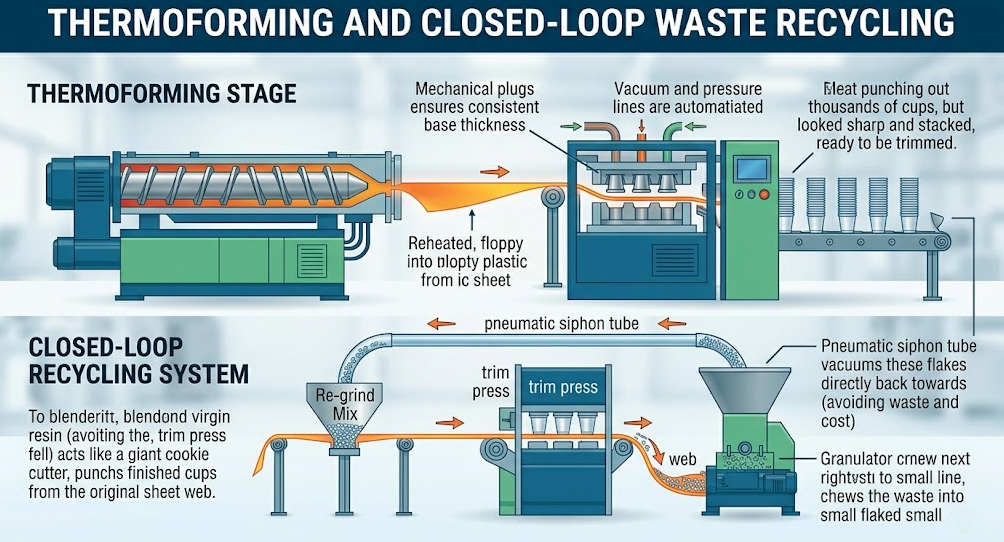
Now we get to the loud part: thermoforming. That plastic sheet we just made is reheated until it’s soft and floppy, then it’s slammed into a mold. But it’s not just air pushing the plastic. There are these mechanical “plugs” that shove the plastic down into the mold first. This ensures the bottom of the cup isn’t paper-thin while the top is thick.
It’s a violent, fast process. We’re talking thousands of cups an hour. If you’re sourcing from an experienced plastic cup supplier for bulk orders, you’re paying for the stability of this machine. If the timing of the vacuum or the pressure is off by even a fraction of a second, the cups won’t “set” right. You’ll get wonky rims or cloudy bases. High-speed production is all about that rhythm—heat, plug, vacuum, cool, repeat.
Cutting Out the Waste
After the cups are formed, they’re still stuck in the original plastic sheet, looking like a giant tray of ice cubes. A high-speed “trim press” acts like a massive cookie cutter, punching the cups out of the web at lightning speed. But what happens to all that leftover plastic “web”?
In a smart setup, that leftover material is chewed up immediately by a granulator sitting right next to the machine. It’s turned back into flakes and sucked right back into the start of the line. This is the “secret sauce” for an eco-friendly disposable cup manufacturer. They aren’t just saving the planet; they’re saving money by not wasting a single gram of resin. This “closed-loop” recycling keeps the costs down for the buyer and keeps the trash out of the landfill.
Getting the Rim Just Right
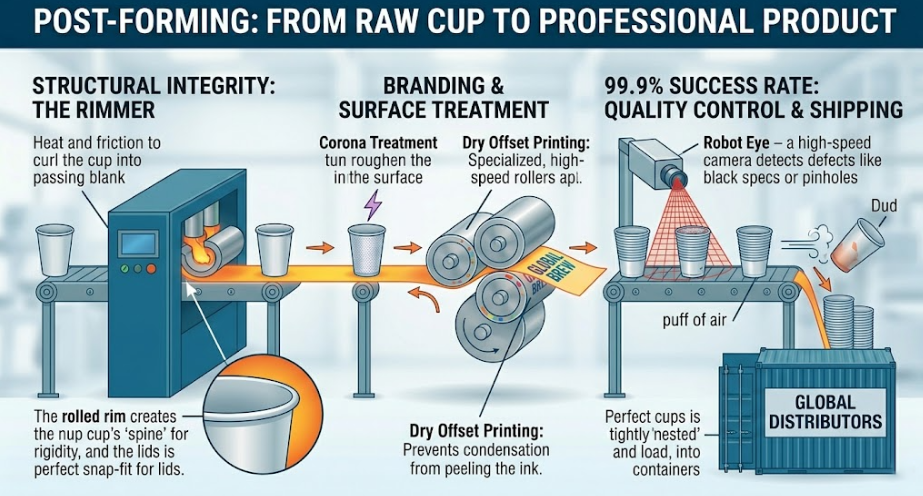
The difference between a “cheap” cup and a “pro” cup is the rim. If you’ve ever cut your lip on a sharp plastic edge, you know what I mean. After the cups are punched out, they go through a “rimmer.” This machine uses friction and heat to curl the top edge of the plastic over itself.
It sounds simple, but it’s a huge deal for structural integrity. A rolled rim acts like a spine for the cup, keeping it round even when you squeeze it. Plus, it’s what makes the lid “snap” on. A professional ODM cup factory will spend hours fine-tuning this machine so that their specific lids fit with a satisfying click every single time. Without a solid rim, you’ve just got a flimsy cone that’s a disaster waiting to happen for a delivery driver.
Printing and Making It Look Good
Most B2B buyers don’t want plain clear cups; they want their logo front and center. Printing on a round, tapered surface is a nightmare if you don’t have the right gear. Most factories use “dry offset” printing, where the ink is transferred from a series of rollers onto the cup while it’s spinning at high speed.
Before the ink even touches the plastic, the cup gets hit with a “corona treatment”—basically a tiny lightning bolt that roughens up the surface so the ink actually sticks. If a specialized plastic cup supplier for global distributors skips this step, that expensive logo will just peel off the moment the cup gets a little condensation on it. Quality printing is what separates the generic stuff from the brand-name gear you see in major franchises.
The Final Check and Shipping Out
Before these things get bagged, they have to pass the “robot eye.” High-speed cameras scan every single cup for tiny holes or black specs. If the machine sees a dud, a puff of air blows it off the line. It’s brutal, but it’s the only way to ensure a 99.9% success rate when you’re shipping millions of units.
Safety is the other big one. You can’t just use any old plastic for food. A certified plastic cup manufacturer for food service has to prove their stuff is BPA-free and won’t leach chemicals into your soda. Once the tests are done, the cups are “nested” (stacked tightly) to save space. Shipping air is expensive, so a high-volume plastic cup supplier for wholesale focuses on how many thousands of cups they can cram into a single shipping container. It’s the final piece of the puzzle in getting a product from a hot machine into a customer’s hand halfway across the world.