
In the gritty world of global food logistics, the humble plastic cup is often trashed as a mere commodity. But if you watch the operational pulse of a high-traffic transit hub or a minimalist urban cafe, you’ll see these vessels are the invisible lifeblood of the beverage economy. Today, with corporate ESG mandates and consumer health anxiety at a boiling point, the dialogue has turned aggressive. Are these containers actually the “villain,” or are they a functional necessity we can’t yet replace? To find a real answer, we have to push past the slogans and look at the raw data where material science meets procurement ethics.
Chemical Safety: The Post-BPA Reality
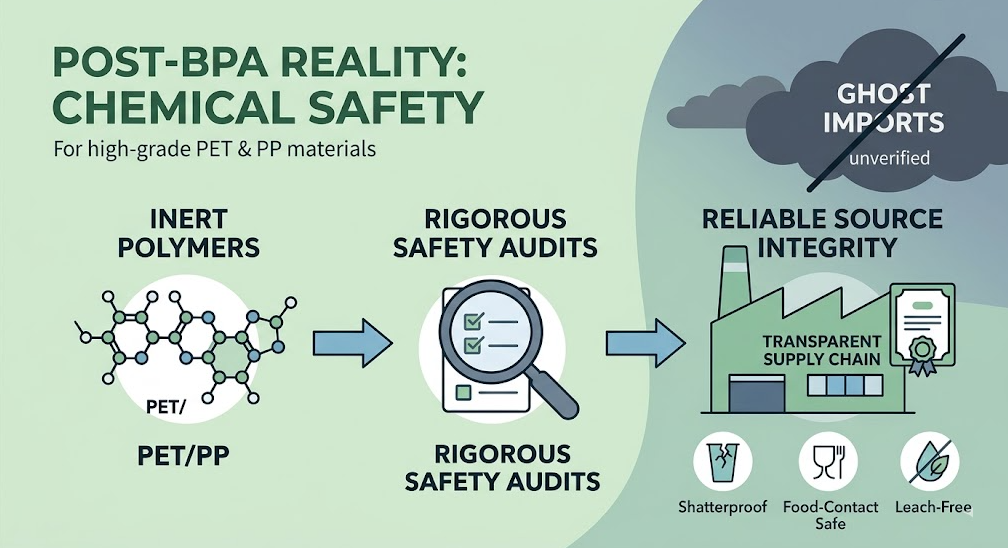
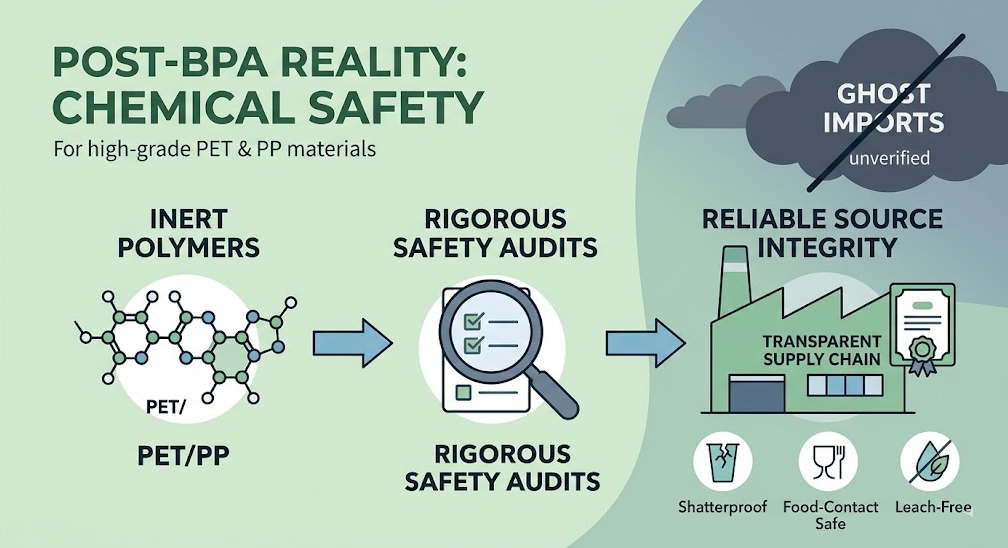
For nearly twenty years, the biggest “red flag” for plastic drinkware was Bisphenol A (BPA). Early manufacturing relied on this compound, which was later flagged for messing with human hormones. But the factory floor didn’t stay stuck in the past. Modern bulk disposable drinkware suppliers have almost entirely migrated to inert materials like high-grade PET and PP. These polymers aren’t just about being shatterproof; they are engineered to pass the most brutal food-contact safety audits without leaching chemicals into your cold brew.
That “toxic” reputation usually persists because of unverified, “ghost” imports that skip quality control. This is exactly why professional procurement teams now prioritize source integrity over a bottom-dollar price. Partnering with a reliable custom plastic cup manufacturer ensures that the resin is virgin-grade and handled in a facility that doesn’t cut corners on cross-contamination. For a scaling business, the mission isn’t just about avoiding plastic—it’s about ensuring the supply chain is transparent enough to provide documented safety guarantees for every single batch.
Balancing Logic with Green Accountability
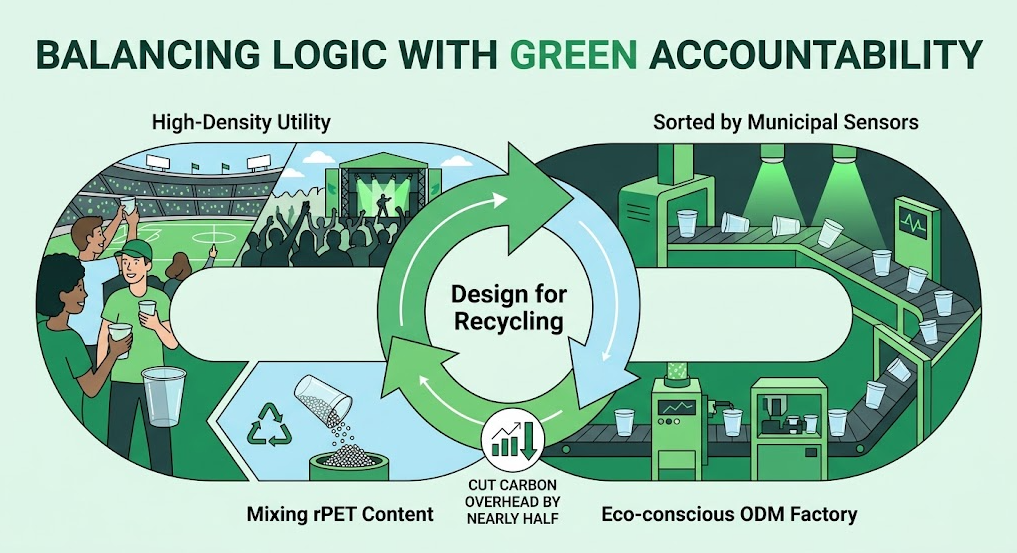
The ecological footprint of plastic is undeniable, but the industry’s response is shifting toward a “circular economy” rather than a total ban. In high-density settings like stadiums or massive music festivals, glass and ceramics are more than just expensive—they are a safety liability and a logistical nightmare to sanitize. This is where a sustainable plastic cup supplier for global distributors becomes a strategic asset. By mixing rPET (recycled PET) into the production cycle, companies are maintaining the utility of disposables while cutting their carbon overhead by nearly half.
A cup’s environmental impact is mostly about its “life after the drink.” PET is the most widely recycled plastic on the planet. When a brand sources from an eco-conscious ODM plastic cup factory, they are purchasing products designed to be detected and sorted by municipal recycling infrared sensors. This “Design for Recycling” approach proves that plastic can exist within a closed-loop system, provided the corporate willpower and local infrastructure are actually aligned.
The Financial Reality of High-Volume Service
From a hard-nosed financial perspective, plastic remains the most efficient medium for delivering a beverage at scale. For franchise owners, finding a wholesale plastic cup manufacturer for food chains is often the deciding factor between a viable profit margin and an unsustainable overhead. Unlike paper-based alternatives—which frequently collapse, leak, or require questionable chemical linings to stay waterproof—modern polymers offer a structural integrity that protects the product (and the customer’s clothes).
Efficiency doesn’t have to mean a “cheap” brand image, though. High-tier branding needs a crystal-clear canvas. A bespoke printed plastic cup supplier for coffee shops provides a level of visual precision that paper simply cannot match. When a customer sees the vibrant, layered colors of a fruit infusion through a high-clarity cup, the perceived value of that drink skyrockets. This aesthetic “wow factor” is why plastic still dominates the specialty beverage sector, where the “eyes eat first.”
Hygiene: The Non-Negotiable Barrier
If the last few years taught us anything, it’s that hygiene is a requirement, not a luxury. In clinics, schools, and crowded public venues, single-use items are a frontline defense against cross-contamination. This is a specialized niche where a medical-grade plastic cup factory for clinical use provides a service that reusables simply cannot mimic without a massive, water-intensive sterilization process.
The debate over whether plastic is “bad for you” often ignores this sanitation factor. When you use a vessel sourced from a reputable plastic cup supplier for hospitality groups, you are using a sterile product that has never been touched by another consumer. In an age of heightened public health awareness, the physical security offered by high-quality plastics remains a fundamental pillar of the service industry.
The Path Forward: Responsible Innovation

Looking ahead, the narrative is moving away from a binary “plastic vs. zero plastic” fight and toward “responsible innovation.” We are seeing a massive surge in bio-based materials and compostable resins like PLA. These technologies are being brought to market by a leading biodegradable plastic cup manufacturer for eco-brands, bridging the gap between functional B2B needs and the ethical demands of the modern consumer.
Ultimately, plastic cups are highly evolved tools, not inherently the problem. Their impact on our health and our planet depends entirely on the integrity of the production process and the responsibility of the disposal method. For businesses, the solution is “due diligence.” By selecting a premium plastic cup factory for international export that operates under strict ESG standards, companies can provide the convenience their customers crave without abandoning their commitment to safety. The current pressure on the industry isn’t a death knell—it’s the fuel for a smarter, safer future.