
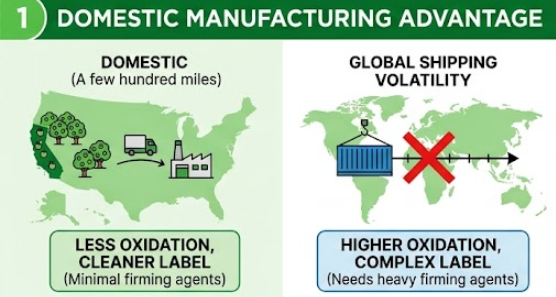
The snack industry in 2026 is no longer just about filling bellies; it’s about nutritional transparency and supply chain agility. For procurement managers and brand architects, the quest to find a reliable fruit cup supplier for bulk orders is fraught with technical hurdles, from SQF certification audits to ensuring the tensile strength of lidding films. The U.S. domestic manufacturing landscape has stepped up, offering advanced shelf-stable technologies that rival fresh-cut quality. Securing a partnership with a stateside facility isn’t just a logistics choice—it’s a move to safeguard your brand’s reputation against global shipping volatility.
The Shift Toward Domestic Manufacturing Excellence
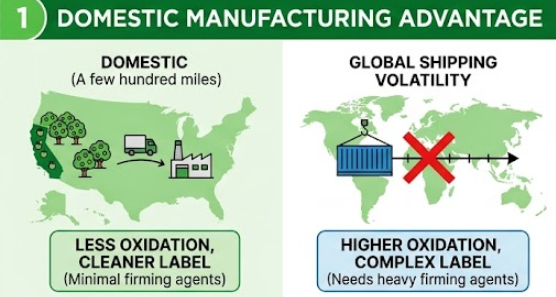
Why are B2B buyers pivoting back to American soil? The answer lies in the “Freshness-to-Seal” window. When a top-rated fruit cup factory for private labeling is situated within a few hundred miles of the orchards, the oxidation levels are significantly lower. This geographical advantage translates to a product that retains its cellular structure without relying on heavy chemical firming agents. For a wholesale buyer, this means a “cleaner” label that resonates with the current consumer obsession over ingredient lists.
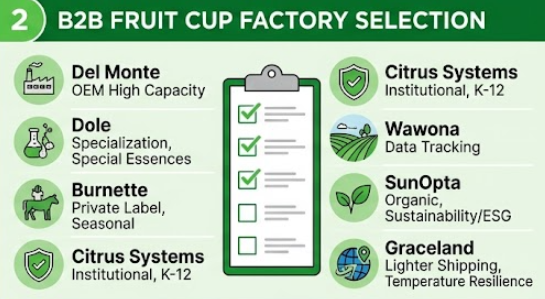
1. Del Monte Foods, Inc.
While many view Del Monte through a consumer lens, their B2B division is a powerhouse of industrial fruit processing. They operate as a high-capacity full-service fruit cup manufacturer for global distributors, capable of handling staggering volumes that smaller co-packers simply cannot touch. Their infrastructure includes proprietary thermal processing techniques that allow fruit to remain crisp even after months on the shelf. If you are looking for a partner with the financial “backbone” to support massive national launches, Del Monte’s OEM wing is the primary contender.
2. Dole Food Company
Dole’s expertise in tropical fruit provides a strategic edge for brands looking to move beyond the standard peach or pear cup. They have invested heavily in aseptic packaging lines that allow for fruit in coconut water or specialized fruit essences. For those seeking a specialized fruit cup producer for retail brands, Dole offers a collaborative R&D environment. They don’t just “pack” fruit; they help you engineer a flavor profile—such as low-glycemic syrups or vitamin-fortified bases—that caters to specific health niches like the diabetic-friendly or keto markets.
3. Burnette Foods
Located in the heart of the Michigan fruit belt, Burnette Foods is the “workhorse” of the private label industry. They have a reputation for being exceptionally “nimble,” a trait often lacking in larger conglomerates. As a custom fruit cup supplier for supermarket chains, they excel in shorter production runs that allow for seasonal flavors like spiced apple or summer berry mixes. Their ability to pivot production schedules quickly makes them an invaluable ally for retailers who need to react to sudden market trends without holding months of excess inventory.
4. Citrus Systems, Inc.
Specialization is the name of the game for Citrus Systems. Their focus is on the precision-engineered portion cup, often used in highly regulated environments. They act as a versatile fruit cup manufacturer for food service providers, with a heavy presence in the healthcare and K-12 education sectors. Their cups are designed with “easy-peel” technology—a minor detail that is a major requirement for elderly care facilities or elementary schools. Their rigorous adherence to microbial testing ensures that every batch meets the zero-tolerance safety standards required by institutional buyers.
5. Wawona Frozen Foods
Wawona bridges the gap between raw agriculture and finished consumer goods. By maintaining direct control over thousands of acres of fruit, they eliminate the “middleman” in the sourcing phase. This makes them a leading fruit cup supplier for school districts and large-scale government contracts where cost-per-unit and traceability are under constant scrutiny. Their “field-to-cup” data tracking is world-class, allowing B2B partners to verify the origin and harvest date of every ingredient—a critical feature for risk mitigation in today’s litigious food market.
6. SunOpta, Inc.
If your brand identity is built on sustainability and organic integrity, SunOpta is the logical choice. They have specialized in non-GMO and organic fruit processing long before it was a mainstream requirement. As a premium fruit cup factory for health-conscious brands, they offer specialized processing lines that prevent cross-contamination with conventional allergens. Their commitment to “upcycled” fruit—using perfectly nutritious but “ugly” fruit for dicing—aligns with the ESG goals of modern corporations, providing a compelling marketing story for your brand.
7. Graceland Fruit
Graceland Fruit is the innovator for those who want to disrupt the traditional wet-pack market. They specialize in infused fruits and moisture-controlled cups that offer a different mouthfeel and longer shelf stability without refrigeration. They function as a reliable fruit cup manufacturer for international exports, providing products that are lighter to ship and more resilient to temperature fluctuations during transit. For a brand looking to enter the “on-the-go” snack category with a premium, gourmet fruit product, Graceland’s technical capabilities are unmatched.
Technical Auditing: Beyond the Product
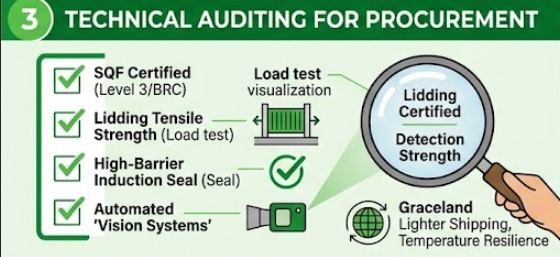
Choosing a partner is a technical exercise in risk management. A certified fruit cup supplier for bulk procurement must be able to present BRC or SQF Level 3 certifications upon request. But the audit shouldn’t stop at the fruit. You must evaluate the lidding technology. Is it high-barrier? Does the induction seal hold up under high-altitude shipping? Human professional buyers know that a 1% seal failure rate can destroy a brand’s reputation; therefore, looking for manufacturers who utilize automated “vision systems” for seal inspection is a non-negotiable requirement.
Navigating the 2026 Supply Chain

The logistics of food distribution have shifted toward “regionalized hubs.” By partnering with an oem fruit cup manufacturer for North American markets, you are effectively shortening your “carbon tail.” This isn’t just about saving the planet; it’s about saving on fuel surcharges and avoiding the 45-day lead times associated with overseas shipping. Domestic partners offer the “Agility Premium”—the ability to scale up or down based on real-time POS data from your retail partners.
The Evolution of Sustainable Packaging
In the current B2B climate, plastic is a dirty word unless it’s recyclable or bio-based. The industry is moving toward mono-material cups that can be easily processed in municipal recycling streams. When interviewing a professional fruit cup producer for wholesale distribution, push them on their “Post-Consumer Recycled” (PCR) content capabilities. Brands that can claim “30% PCR plastic” on their fruit cups are currently seeing a 12-15% higher velocity on retail shelves compared to traditional virgin-plastic competitors.
Customization: The Competitive Moat
The difference between a commodity and a brand is customization. A trusted fruit cup supplier for private label owners shouldn’t just offer you a “catalog” of options; they should offer a laboratory. Whether it’s experimenting with monk fruit sweetener to lower the calorie count or adding chia seeds for a “superfood” boost, these tweaks create your competitive moat. The goal is to develop a proprietary “spec” that you own, ensuring that consumers can only get that specific taste and texture from your brand.
Future-Proofing Your Fruit Line
As we look toward the end of the decade, the integration of AI in manufacturing—sorting fruit by color, sugar content, and firmness—is becoming standard. This ensures a level of consistency that was impossible five years ago. Working with a boutique fruit cup manufacturer for specialty stores that embraces this technology allows even small-scale brands to offer “Gold Standard” quality. Focus on partners who are transparent about their technology roadmap, as their efficiency will eventually become your margin.
Summary for Professional Buyers
The U.S. fruit cup manufacturing sector is currently in a state of high-tech revival. From the massive scale of Del Monte to the organic precision of SunOpta, the options for B2B buyers are diverse. The key to a successful partnership lies in the “Technical Fit”—ensuring their production minimums, safety certifications, and R&D spirit align with your brand’s trajectory. By prioritizing domestic sourcing and sustainable innovation, you aren’t just buying a snack; you are building a resilient, future-proof food business.