
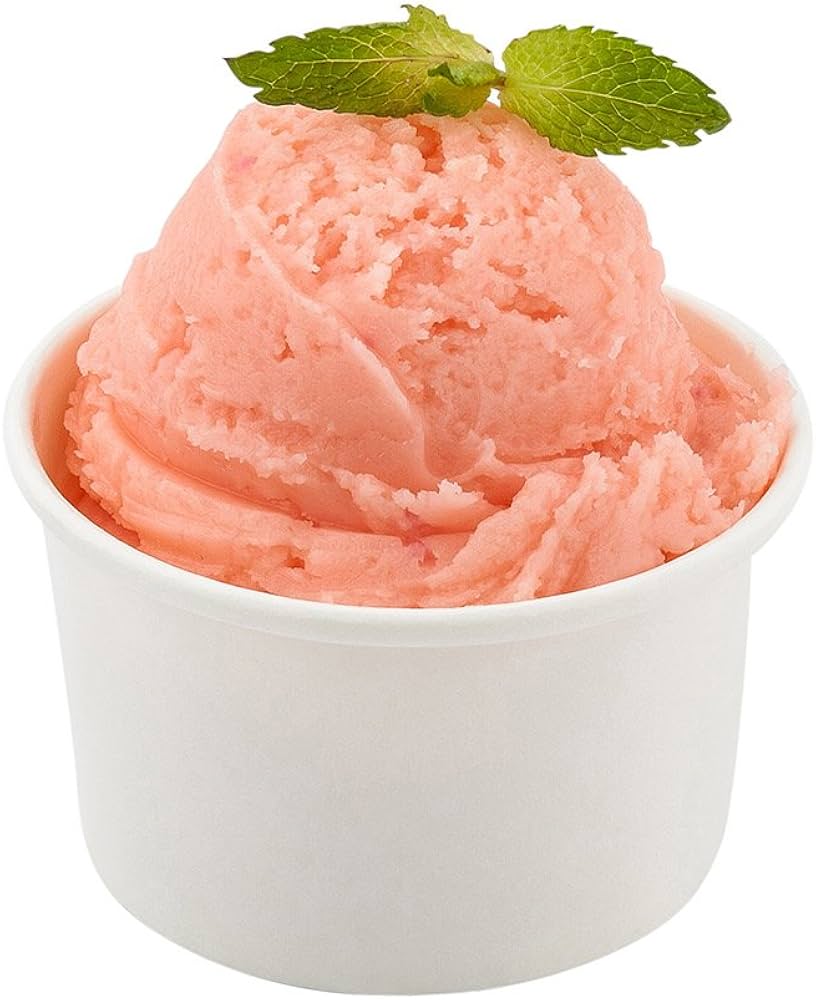
People usually ask this question when something already feels off.
Maybe a recipe says “2 cups of ice cream” and you’re staring at a pint in the freezer, wondering if that’s enough. Maybe you finished a pint faster than expected and started questioning whether the container was smaller than it used to be. Or maybe you’re just tired of Googling the same thing and getting answers that feel oddly mechanical.
So let’s slow it down and talk it through like a human would.
The Short Answer, Without the Drama

In the United States, one pint of ice cream equals two cups. That part is not flexible. It’s not a brand decision, and it’s not influenced by flavor or richness. A pint is defined as 16 fluid ounces, and a cup is 8 fluid ounces.
That relationship is baked into labeling law, which is why every custom ice cream cup manufacturer working in the U.S. follows the same volume logic, whether the product is premium, budget, or somewhere in between.
If the container says “1 pint,” the volume inside is two cups. Period.
Everything else people argue about comes after that.
Why Ice Cream Is Even Measured This Way
Here’s where it starts to feel strange. Ice cream doesn’t pour. You don’t drink it. Yet it’s measured as a liquid.
The reason is simple but unintuitive: ice cream begins as a liquid, and its final structure depends on air. During production, air is whipped into the base, increasing volume without adding mass. Two pints can weigh very differently and still be legally identical.
This is exactly why regulators focus on volume instead of weight, and why any ice cream container supplier for foodservice operations designs around fluid ounces rather than grams. Volume stays consistent. Weight doesn’t.
Why A Pint Often Feels Smaller Than Two Cups
If you’ve ever scooped ice cream into a measuring cup, you already know it doesn’t behave politely. Frozen ice cream resists settling. It bridges over empty space. It traps air.
So when someone hears “two cups,” they picture a full measuring cup of liquid. What they actually get is something closer to four uneven scoops that don’t look impressive once they hit the bowl.
That mismatch between expectation and reality is psychological, not mathematical. Still, it’s strong enough that brands account for it when working with a private label ice cream packaging manufacturer, because perception of portion size matters just as much as accuracy.
Scoops Are Where Confusion Really Starts
A standard ice cream scoop is roughly half a cup. On paper, that means one pint equals four scoops.
In real life, nobody scoops exactly half a cup. Some scoops are tight and compact. Others are fluffy and oversized. Some people scrape the container walls aggressively, others don’t.
This is why one person can finish a pint and feel guilty, while another feels like they barely had any. The measurement didn’t change. The scooping behavior did.
It’s also why foodservice brands rely on portion-controlled tools sourced alongside containers from an OEM frozen dessert cup manufacturer rather than trusting visual judgment alone.
The US Pint vs Everyone Else’s Pint

Another layer of confusion sneaks in when people read international sources.
In the UK, a pint is larger. It’s about 20 fluid ounces, which translates to roughly 2.4 U.S. cups. That difference is enough to throw off conversions if you’re not paying attention.
Ice cream sold in the U.S. does not use the imperial pint, even if the brand originated elsewhere. Packaging is localized, often with tooling adjusted by a food-grade ice cream container factory for bulk buyers to meet regional standards.
If your ice cream was bought in an American grocery store, the pint is two cups. No translation required.
Melted Ice Cream Messes With Your Head
One of the fastest ways to doubt the math is to let ice cream melt.
Pour melted ice cream into a cup and it looks disappointing. Thin. Flat. Smaller than expected. People assume something was missing from the start.
What actually disappeared was air. Frozen ice cream holds its shape because of structure. Once that collapses, the same ingredients occupy less space. The volume change feels dramatic, but it’s normal.
This behavior is closely studied during transit and storage testing by companies working with a sustainable ice cream packaging supplier, because temperature shifts can change consumer perception even when the volume is correct.
Why Recipes Prefer Cups Over Pints
Recipes are written for kitchens, not freezers.
When a recipe calls for two cups of ice cream, it’s quietly telling you to use one pint. When it calls for four cups, it wants a quart. Cups are easier to scale, easier to visualize in mixing bowls, and easier to convert when doubling or halving a recipe.
Once you internalize that one pint equals two cups, recipes stop feeling vague. This consistency is one reason standardized pint formats are favored by brands working with a custom frozen dessert packaging manufacturer—it keeps the consumer math simple even when the usage context changes.
Ice Cream vs Other Pint Foods
Dairy products behave nicely in pints. Yogurt, sour cream, and cottage cheese all convert cleanly to two cups.
Produce does not. A pint of berries is a container description, not a volume guarantee. The same pint can yield more or fewer cups depending on size and packing.
Ironically, ice cream—despite all the confusion—ends up being more predictable than most foods sold by the pint.
Why This Question Never Goes Away

The reason people keep asking how many cups are in a pint of ice cream isn’t because the answer is unclear. It’s because eating ice cream is rarely a neutral act.
It’s emotional. It’s impulsive. It happens late at night or during celebrations or when someone says “just one more scoop.” Measurement logic collides with experience, and experience usually wins.
Once you accept that disconnect, the math stops feeling slippery.
The One Conversion You Actually Need
So here it is again, without embellishment.
In the U.S., one pint of ice cream equals two cups. That conversion is fixed, regulated, and universal.
Everything else—scoop size, melt, density, air, perception—is context. Useful context, but still secondary.
If you remember the conversion, you’re grounded. If you forget it, you’ll keep second-guessing a container that was never lying to you in the first place.