
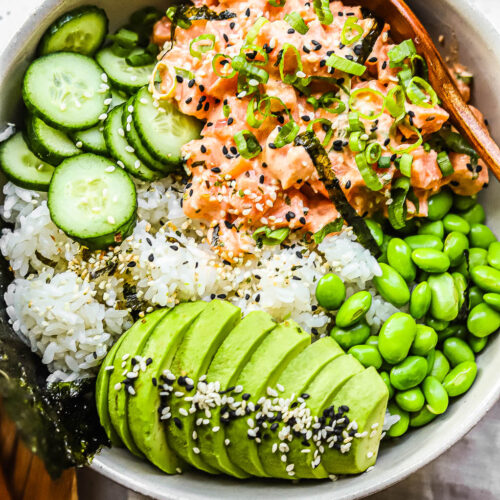
If you ask ten people how many calories are in a sushi bowl, you’ll probably get ten different answers. Some think it’s automatically light because it involves raw fish and vegetables. Others assume it’s just rice in disguise and avoid it entirely. The truth sits somewhere in between, and it depends far more on how the bowl is built than on the name printed on the menu.
Comparing homemade sushi bowls with takeout versions makes this gap especially obvious. On paper they look similar. In practice, they often live in completely different calorie worlds.
What a “Standard” Sushi Bowl Usually Includes
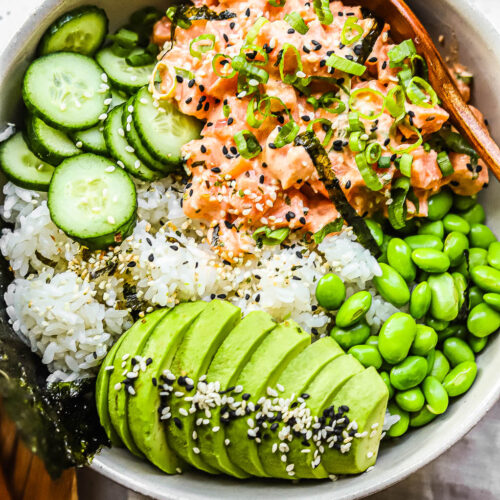
Most sushi bowls follow a familiar structure, even if restaurants describe them differently. There’s a rice base, some form of protein, vegetables for color and texture, and a sauce that ties everything together. That combination alone already explains why calorie counts swing so widely.
Rice is usually the quiet foundation. A reasonable portion of cooked rice can sit under 200 calories, but many takeout bowls go far beyond that without advertising it. Protein adds another layer of variability. Raw salmon, tuna, or tofu behave very differently from tempura shrimp or seared fish brushed with oil. Vegetables rarely add much energy, yet they often create the illusion that the entire bowl must be light.
Sauce is where things quietly change direction. A thin soy-based dressing barely registers. A creamy or sweet sauce can rival the rice itself in calorie contribution. This balance isn’t accidental. Many brands rely on flavor consistency, especially those sourcing containers from a custom sushi bowl manufacturer that designs bowls around generous, repeatable builds.
How Bowl Size Changes the Calorie Math
One reason sushi bowls confuse people is portion perception. A “regular” bowl isn’t a fixed measurement across restaurants. Some small bowls barely hold a cup of rice. Others labeled as standard easily fit twice that amount once toppings are layered in.
Smaller bowls tend to land in the 400 to 500 calorie range when built conservatively. Medium bowls drift upward fast, especially when sauces are pre-mixed. Large bowls, which are common in delivery apps, often push past 800 calories without looking excessive. The container itself plays a role here. Deeper bowls encourage heavier bases, a detail well understood by any sushi bowl supplier working with high-volume takeout brands.
Why Takeout Sushi Bowls Are Usually Higher in Calories
Takeout sushi bowls are optimized for speed, taste, and customer satisfaction. Calorie control rarely tops the priority list. Rice is scooped quickly, sauces are applied generously, and proteins are often handled with oil to maintain texture during service.
Chain restaurants show clear patterns. Salmon bowls usually rank higher than tuna bowls when everything else stays the same. Fried options cluster at the top of the calorie scale. Tofu swings wildly depending on whether it’s raw, baked, or crispy. Even bowls marketed as “clean” or “balanced” can surprise people once sauces and rice portions are factored in.
From an operational standpoint, this makes sense. Consistency matters. Many brands rely on packaging solutions from an OEM sushi bowl factory that supports uniform portioning across locations, even if that portion runs larger than what someone might serve themselves at home.
Building a Sushi Bowl at Home: Where Calories Drop Naturally
Homemade sushi bowls don’t automatically become low-calorie. The difference is that every choice becomes visible. Measuring rice once or twice permanently changes perception. A single cup looks smaller than expected, especially compared to takeout bowls.
Protein control follows the same logic. Weighing fish sounds obsessive until you realize how often restaurant portions exceed what you assumed was normal. Sauces also behave differently at home. When they’re not already mixed in, it’s much easier to stop before they dominate the bowl.
This level of control is one reason health-focused meal prep brands often design packaging differently, sometimes working with a sushi bowl manufacturer that prioritizes portion clarity over maximum volume.
Same Ingredients, Different Outcome: A Direct Comparison
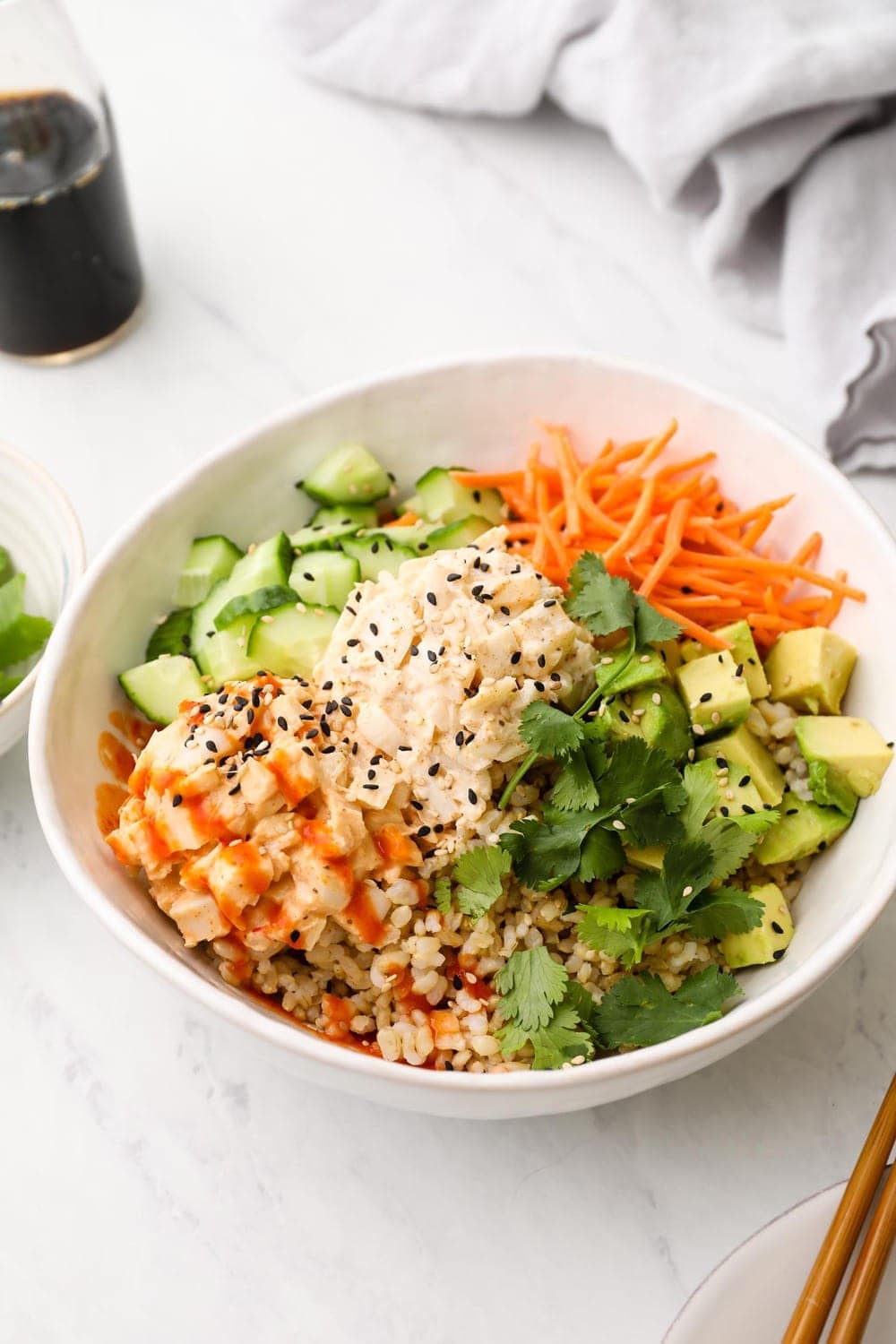
Put the same sushi bowl concept side by side and the difference becomes clearer. A salmon and avocado bowl prepared at home with measured rice, fresh vegetables, and a light sauce usually stays around 500 calories. Order the same idea from a takeout spot, and it’s not unusual to see numbers climb by 200 calories or more.
The gap comes from small details adding up. Extra rice at the base. Oil used during protein handling. Sauces applied for flavor insurance. None of these choices ruin the bowl, but together they change its nutritional profile.
Home cooking isn’t automatically better tasting, but it allows adjustment. Less rice here, more vegetables there. Sauce stays optional rather than structural. These same principles increasingly influence food businesses designing better-for-you concepts with the help of a custom food bowl factory.
Reducing Calories Without Making the Bowl Sad
Lower-calorie sushi bowls work best when they don’t feel like compromises. Slightly less rice paired with more vegetables changes texture rather than satisfaction. Leaner fish keeps protein high without dragging fat along. Sauce works best when it enhances rather than coats.
Ingredients like seaweed, cucumber, ginger, and wasabi do more than add color. They sharpen flavors and slow eating, which makes lighter bowls feel complete. These components are common in traditional sushi for a reason, even if modern bowls sometimes bury them.
Packaging design quietly supports these strategies. Some operators deliberately choose formats from a disposable sushi bowl supplier that encourage layering instead of dumping everything into a deep container.
Ordering Takeout Smarter Without Feeling Difficult
Ordering a lower-calorie sushi bowl doesn’t require a lecture at the counter. Asking for sauce on the side and half rice is increasingly normal. Avoiding menu descriptions that lean heavily on “creamy,” “crispy,” or “special sauce” removes many calorie traps upfront.
Customizable chains make this easier than fixed-menu restaurants. Their modular approach often pairs with bowls designed for ingredient separation, a detail many sushi bowl factories for wholesale buyers now build into their product lines.
Nutrition information in delivery apps helps, but it’s best treated as a guideline rather than a guarantee. Portion variation still exists, even with numbers on screen.
Calories vs. Nutrition: The Part People Skip
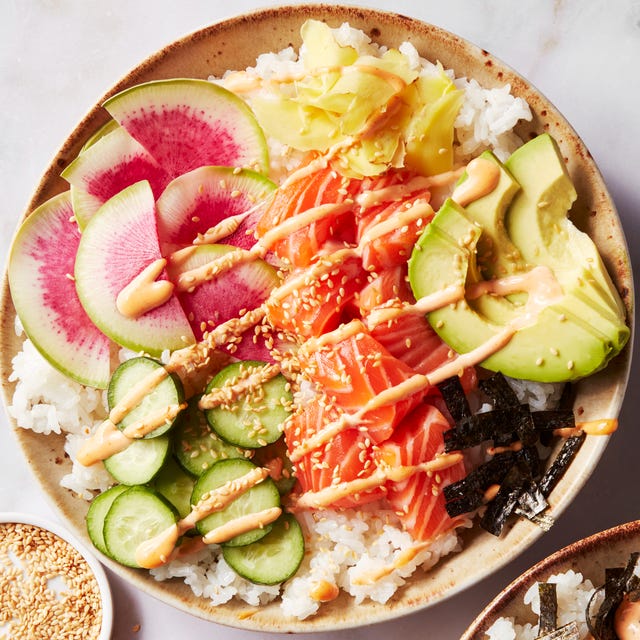
Calories dominate the conversation, but nutrition differences matter too. Homemade bowls usually contain less sodium because sauces aren’t pre-loaded. Omega-3 fats remain higher when fish isn’t heavily cooked. Vegetable variety tends to increase at home simply because there’s no upcharge for extra cucumber or greens.
That doesn’t make takeout bowls bad. It just means their priorities differ. Understanding those trade-offs helps people decide when convenience is worth it and when control matters more.
So, How Many Calories Are in a Sushi Bowl—Really?
There isn’t a single number that fits every sushi bowl. Homemade versions usually come in lower because portion control is built into the process. Takeout bowls skew higher because consistency, speed, and flavor take precedence.
Once you understand where calories actually come from, sushi bowls stop being confusing. They become flexible. Sometimes they’re a light, balanced meal. Other times they’re closer to comfort food in disguise. The difference isn’t sushi. It’s structure.
And that structure, whether at home or at scale, always tells the real story.