
Let’s be honest: planning a party menu is usually a massive headache. You want food that looks like it belongs on a Pinterest board, but you also don’t want to be stuck in the kitchen peeling a mountain of fruit while your guests are out there having a great time. This is exactly why the fruit cup has become the “holy grail” of modern catering. It’s clean, it’s vibrant, and it solves about a dozen logistical problems at once. Whether you’re a DIY host or a professional event planner, shifting your focus to individualized portions is the smartest move you can make this year.
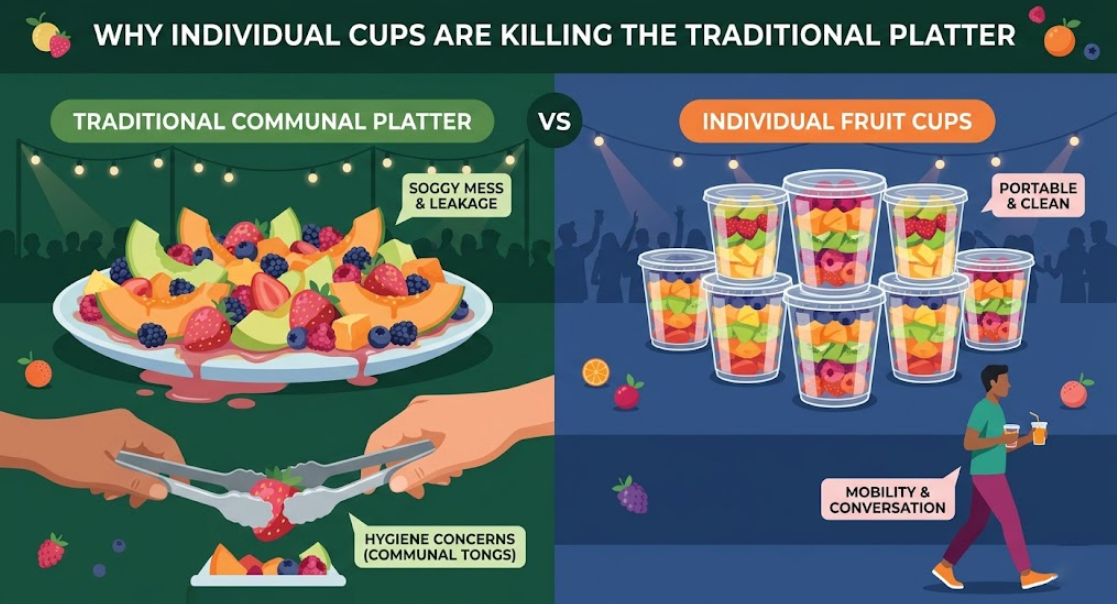
Why Individual Cups are Killing the Traditional Platter

We have all seen the classic fruit platter at a wedding or a corporate lunch. By the time the party is an hour in, the watermelon has leaked juice all over the grapes, and the whole thing looks like a soggy mess. Not to mention, communal tongs are just… a bit gross these days. People want their own portion. They want to grab a cup, walk around, and keep the conversation going without being tethered to a buffet table.
For those of you running massive events—think 500+ people—trying to hand-cut fruit on-site is a nightmare. The labor costs alone will eat your budget alive. That is why industry pros almost always work with a specialized fruit cup manufacturer for bulk orders. It takes the guesswork out of the equation. You get a consistent product that looks identical across every single table, which is vital if you’re trying to maintain a high-end brand image.
Picking Fruits That Won’t Turn Into Mush
The biggest rookie mistake? Choosing fruit based only on flavor and ignoring “shelf life.” If you put bananas, pears, or apples in a cup, they’re going to be brown and unappealing by the time the first guest walks in. You need what I call “sturdy” fruits. We’re talking about thick-skinned grapes, pineapple, blueberries, and cantaloupe. These are the workhorses that can sit out for two hours and still look like they were just cut.
If you’re tired of the same old “honeydew and cantaloupe” mix, you’ve got to think bigger. I always suggest looking for a reliable fruit cup supplier for international exports. When you tap into a global supply chain, you can get your hands on things like dragon fruit, kiwi, or even rambutan. These exotic additions don’t just taste good; they look like edible jewelry. A few slices of starfruit on top of a cup can change the entire “vibe” of your event from basic to gourmet instantly.
Making the Flavor Pop (The “Secret Sauce”)

A plain cup of fruit is fine, but it’s not exactly a conversation starter. If you want to impress, you need to add a “finishing touch.” Think about a light drizzle of honey-lime glaze or a sprig of fresh Thai basil. Some of the coolest parties I’ve seen recently used a “spice station” where guests could sprinkle a bit of chili-lime salt (like Tajin) on their watermelon cups.
For the catering companies out there, this is where you can really make a name for yourself. By partnering with a custom fruit cup factory for private labels, you can develop your own signature blends. You could market a “Sunrise Fusion” cup that’s exclusive to your service. That kind of branding is what allows you to charge premium prices instead of just being the “cheap fruit guy.”
Why the Container Actually Matters
I’ve seen great fruit served in cheap, flimsy plastic cups, and it just breaks my heart. If you want a high-end feel, the packaging has to be part of the design. You want something crystal clear so those natural colors really pop. But it also has to be functional. Can a guest hold it easily in one hand while holding a drink in the other? Is it stable enough that it won’t tip over on a cocktail table?
High-volume venues, like hotels or stadiums, usually don’t just buy whatever is at the store. They work with a professional fruit cup ODM service provider to design custom packaging. Whether it’s a stackable lid or a cup with a built-in fork slot, these tiny engineering details make a massive difference in the guest experience. Plus, it makes your cleanup at the end of the night way faster.
The Real Cost of “Doing It Yourself”

A lot of people think they’re saving money by having their staff cut fruit in the back. But have you actually looked at the numbers? Between the labor hours, the cost of the fruit you throw away (all those rinds and pits), and the risk of someone getting a nick on their finger, the “DIY” route is often a money pit.
It is almost always more efficient to source from a top-tier fruit cup exporter for retail chains. These facilities are basically high-tech labs. They use atmosphere-controlled packaging that keeps fruit crisp for days without using heavy syrups or chemicals. When you buy pre-portioned, you have zero waste. You pay for exactly what you serve.
The “Universal” Party Food
One of the hardest parts of hosting in 2026 is the dietary minefield. You’ve got the vegans, the keto crowd, the gluten-free folks, and people with nut allergies. It’s enough to make you want to just serve water. But fruit? Fruit is the one thing everyone can agree on. It’s the ultimate “inclusive” food.
To make sure you’re serving the best, you need to vet your sources. I always tell my clients to find a certified fruit cup wholesaler for catering businesses. You want to see the food safety certifications. You want to know that the fruit was handled in a temperature-controlled environment from the moment it was picked. When you can tell your guests that the food is safe and high-quality, it builds a massive amount of trust.
Color-Coding Your Event Decor
This is a pro-tip that many people overlook: use the fruit as part of your decor. If you’re doing a corporate launch and the company logo is green, load up on kiwi, green grapes, and honeydew. If it’s a Valentine’s event, go all-in on strawberries, raspberries, and pomegranate.
To pull this off for a massive, multi-city event, you need a partner with global reach. Many big firms use an experienced fruit cup OEM partner for global distribution. They can ship the exact same “color-coded” mixes to ten different cities at once, ensuring that the brand look is 100% consistent everywhere. It’s a subtle touch, but it makes the event feel incredibly polished.
Maximizing Your ROI
At the end of the day, a party is a business for some and a budget-stretch for others. You want the biggest “bang for your buck.” Fruit cups have a very high “perceived value.” They look expensive because they are colorful and fresh, but the actual cost per unit is usually much lower than heavy hors d’oeuvres or meats.
To keep your margins healthy, you have to cut out the middleman. Dealing with a direct fruit cup producer for high-volume procurement is the only way to go. You get a fresher product because it hasn’t been sitting in a distributor’s warehouse for three days, and you get it at a price that lets you spend more on the entertainment or the bar.
Closing Thoughts on Effortless Serving
If there is one thing I’ve learned in years of event planning, it’s that the best parties are the ones where the host is actually present. If you’re stuck in the back worrying about the fruit salad, you aren’t doing your job as a host. Fruit cups give you that “set it and forget it” freedom.
Whether you’re doing a small brunch for ten people or a massive festival for ten thousand, the goal is always the same: keep it fresh, keep it vibrant, and keep it easy. In a world full of processed party snacks, a cold, crisp cup of fruit is often the most popular thing on the table. It proves that you don’t need a complicated menu to make a huge impression—you just need the right ingredients and a smart way to serve them.