
In the high-speed chaos of a B2B kitchen or a stadium beverage operation, the dishwasher is a non-negotiable tool. But let’s be honest: it’s also where your profit margins go to disappear. You might spend weeks vetting a reliable plastic cup manufacturer, only to watch that premium inventory turn into warped, cloudy scrap within a month of service. The gap between “dishwasher safe” and “industrial-grade durability” is massive, and if you don’t close it, you’re just throwing money down the drain. Managing plastic assets in a commercial wash cycle isn’t just about hygiene—it’s about understanding the breaking point of the polymers you’ve invested in.
The Thermal Trap: Warping and “The Oval Effect”

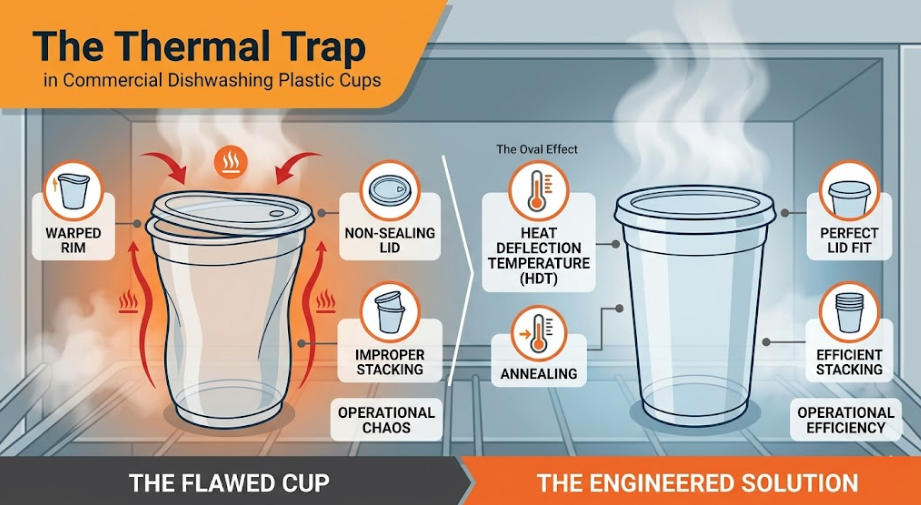
The most immediate killer of plastic drinkware is the heat. Commercial sanitization cycles aren’t gentle; they are designed to blast bacteria at temperatures that flirt with the melting point of common resins. If you haven’t discussed the Heat Deflection Temperature (HDT) with an experienced plastic cup factory for global distributors, you’re in for a rude awakening. I’ve seen countless “bargain” cups emerge from the tray with “the lean”—a permanent tilt or an oval-shaped rim that makes them useless.
When a cup warps, it’s not just an eyesore. It’s a functional failure. Lids won’t snap on, stacking becomes a nightmare, and your staff will waste time fighting with deformed inventory. This is why savvy procurement pros usually shift toward a customized plastic cup supplier for international brands that utilizes annealing. By slowing down the cooling process during production, the manufacturer “locks” the plastic’s memory, making it far more resilient when it hits the 180-degree wash cycle. If the cup fights the heat, you lose; if the material is engineered for it, you win.
Chemical Etching: Why Your Cups Look “Filthy” While Clean

There is nothing more frustrating than pulling a “clean” tray out and seeing cups that look milky or gray. This isn’t dirt—it’s chemical etching. Most commercial-grade detergents are highly alkaline, designed to strip grease and protein instantly. But for lower-grade plastics, these chemicals are essentially a slow-motion solvent. This is where your brand takes a hit. A cloudy cup looks old and unhygienic to a customer, regardless of how sanitized it actually is.
To prevent this “fogging,” you have to vet your materials at the source. Working with a premium plastic cup manufacturer for food service chains allows you to access high-performance resins like Tritan or heat-stabilized Polypropylene that won’t react with harsh surfactants. Then there is the “Environmental Stress Cracking” (ESC) problem. Certain rinse aids can settle into the stress points of the cup—usually at the bottom injection gate—and cause the cup to spontaneously crack during use. A trusted plastic cup manufacturer for wholesale buyers will provide the compatibility data needed to ensure your soap isn’t literally eating your cups from the inside out.
The Sensory Nightmare: Odor Absorption
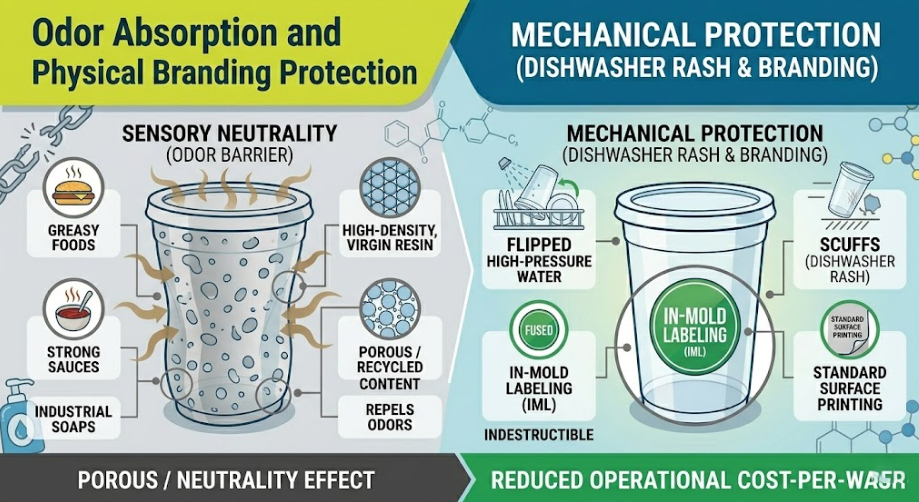
Plastic is a porous medium, and in a hot dishwasher, those pores act like a sponge. If you’re washing drinkware in the same machine as greasy plates or heavy sauces, the plastic can “remember” those smells. Serving a high-end cold brew in a cup that smells like lemon-scented industrial soap or yesterday’s lunch special is the fastest way to kill repeat business. This “ghosting” of odors is a major red flag for brand quality.
This absorption is usually a sign of low-density material or a high percentage of low-quality recycled content. To keep your sensory profile neutral, you need to partner with a dedicated plastic cup manufacturer for sustainable solutions that prioritizes high-density, virgin resins. These materials have a tighter molecular seal, meaning there’s nowhere for food particles or chemical fragrances to hide. In the B2B world, the neutrality of your vessel is just as important as the quality of the drink inside it.
Mechanical “Rash” and Branding Loss
Let’s talk about the physical violence of the wash cycle. High-pressure spray arms are strong enough to flip lightweight cups, turning them into dirty water buckets. Even when they stay put, the vibration causes them to rattle against metal racks or each other. This creates “dishwasher rash”—fine, ugly scuff marks that make the product look aged and cheap. If you’ve invested in custom branding, this mechanical friction is your enemy. Standard surface printing can be stripped off by the combination of high-pressure water and abrasive soaps.
To save your marketing ROI, I always recommend talking to a professional plastic cup factory for retail suppliers about in-mold labeling (IML). Because the graphics are actually fused into the plastic during the molding process, they are basically indestructible. The branding stays sharp and professional, even after hundreds of mechanical wash cycles. It’s an upfront cost that prevents you from owning a warehouse full of unbranded, scuffed-up scrap.
Operational Strategy and the “Cost-Per-Wash”
At the end of the day, you have to stop looking at the unit price and start looking at the “cost-per-cycle.” A cup that costs ten cents but fails after five washes is a terrible investment compared to a thirty-cent cup that survives a hundred. When you’re negotiating with a leading plastic cup manufacturer for international trade, the focus must be on technical transparency.
Ask for the lab results on chemical resistance. Ask about the cycle-life expectancy. By matching high-grade materials with the right wash protocols and proper rack loading, you can cut your replacement costs by 60% or more. In this industry, the quality of your plastic is a direct reflection of your operational discipline. Investing in better inventory isn’t just a purchase—it’s a long-term strategy to keep your overhead low and your customer experience at the highest possible level. If you want to stay in the game, you can’t afford to let your dishwasher dictate your margins.
Conclusion: Protecting the Asset
Ultimately, the common problems with washing plastic cups are entirely preventable with the right sourcing strategy. It starts with selecting a specialized plastic cup supplier for promotional events or high-volume daily service that understands the actual rigors of a commercial back-of-house environment. By treating your drinkware as a long-term asset rather than a disposable commodity, you protect your brand, your customers’ experience, and your bottom line. Don’t settle for “safe enough”—aim for industrial-grade resilience.