
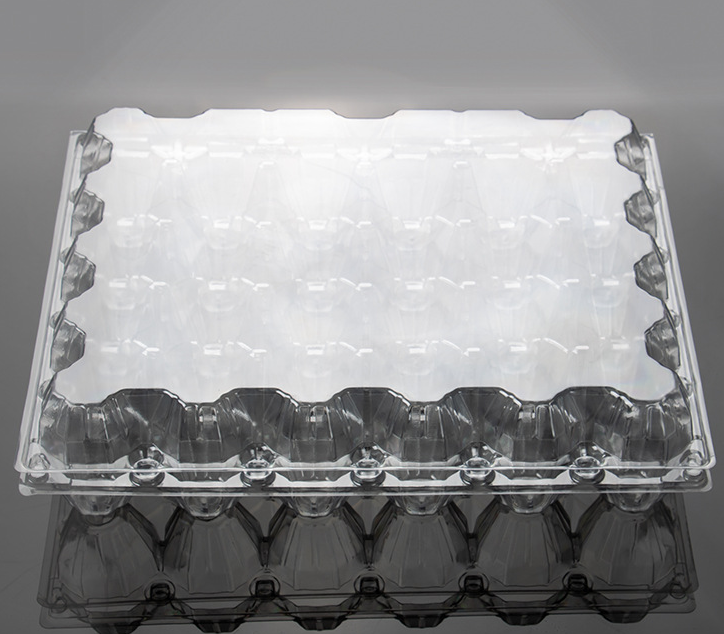
In egg tray procurement, the choice between custom and standard trays is often treated as a matter of preference or branding. In practice, it is a structural supply-chain decision. The tray itself influences transport efficiency, breakage rates, automation compatibility, compliance exposure, and long-term operating cost.
For buyers managing farms, packing stations, or distribution networks, this decision shapes cost stability far more than the visible unit price on a quotation.
This article breaks down when standard egg trays are the rational choice, when custom trays become economically justified, and how buyers should evaluate the trade-offs using real operational logic rather than assumptions.
What “Custom” and “Standard” Actually Mean in Egg Tray Procurement

Standard egg trays are not generic products. They are formats that have already passed through years of industry validation. Sizes such as 6-cell, 12-cell, 18-cell, 30-cell, and 36-cell trays exist because they fit common egg sizes, transport systems, cartons, pallets, and cold-chain equipment.
Custom egg trays are not simply modified versions of these standards. Customization usually affects at least one of the following:
-
Tray footprint or cell geometry
-
Structural reinforcement for stacking or long-distance transport
-
Material thickness or formulation
-
Compatibility with automation, washing systems, or traceability tools
Once any of these variables change, production requirements change with them. Mold design, MOQ, cycle time, and quality control parameters are all affected. This is why custom trays behave differently in pricing and supply reliability.
Business Scale as the First Decision Filter
The most reliable way to determine whether standard or custom trays make sense is not cost comparison—it is business scale.
Small operations, typically producing fewer than 5,000 eggs per day, benefit most from standard trays. Inventory turnover is slow, demand fluctuates, and cash flow flexibility matters more than marginal efficiency gains. Standard trays minimize upfront risk and simplify sourcing.
Mid-scale operations, producing between 5,000 and 50,000 eggs per day, reach a decision threshold. At this level, tray performance starts affecting labor efficiency, transport density, and breakage rates. Custom trays may become economically viable if they reduce recurring losses or bottlenecks.
Large industrial producers, exceeding 50,000 eggs per day, often treat trays as logistics assets rather than consumables. Here, custom trays are frequently justified because small improvements in stacking efficiency, automation compatibility, or damage reduction scale rapidly across volume.
Breakage Economics: Where Custom Trays Begin to Pay for Themselves

Egg breakage is rarely caused by a single failure. It is the result of cumulative stress during loading, stacking, transport, and unloading.
Standard trays are designed to perform adequately across many scenarios. However, they assume average stacking heights, moderate transport distances, and mixed handling conditions.
Custom trays target specific weaknesses. Reinforced load paths, optimized cell depth, or modified stacking geometry can significantly reduce breakage under known conditions. The key question is whether those improvements offset their higher upfront cost.
For buyers, the comparison should not be tray price versus tray price. It should be annual breakage cost versus annual tray premium. When damage reduction saves more than the added cost of customization, the decision becomes straightforward.
Total Cost of Ownership: Why Unit Price Is Misleading
Unit price is easy to compare, but it rarely reflects the true cost of ownership.
Standard trays usually win on initial purchase price. They require no tooling investment, offer lower MOQs, and ship quickly. However, they may introduce hidden costs through higher breakage, lower stacking density, or manual handling inefficiencies.
Custom trays introduce visible upfront costs—molds, higher MOQs, longer lead times. What they offer in return is predictability. Optimized loading patterns, reduced labor intervention, and lower replacement rates can quietly outperform cheaper alternatives over time.
Buyers who evaluate trays purely by unit cost often miss these cumulative effects until operational friction becomes impossible to ignore.
Automation and Logistics Compatibility as a Differentiator
Standard trays are inherently flexible. They work with a wide range of cartons, conveyors, cold rooms, and transport setups. This makes them ideal for fragmented or rapidly changing supply chains.
Custom trays become powerful when operations are standardized. Automated graders, palletizers, washing lines, and tracking systems all benefit from consistent tray geometry. In these environments, customization is not about differentiation—it is about system stability.
The more automated a facility becomes, the more costly incompatibility becomes. Custom trays reduce those friction points, but only when the surrounding infrastructure is ready to support them.
Material Choice as a Constraint, Not a Preference
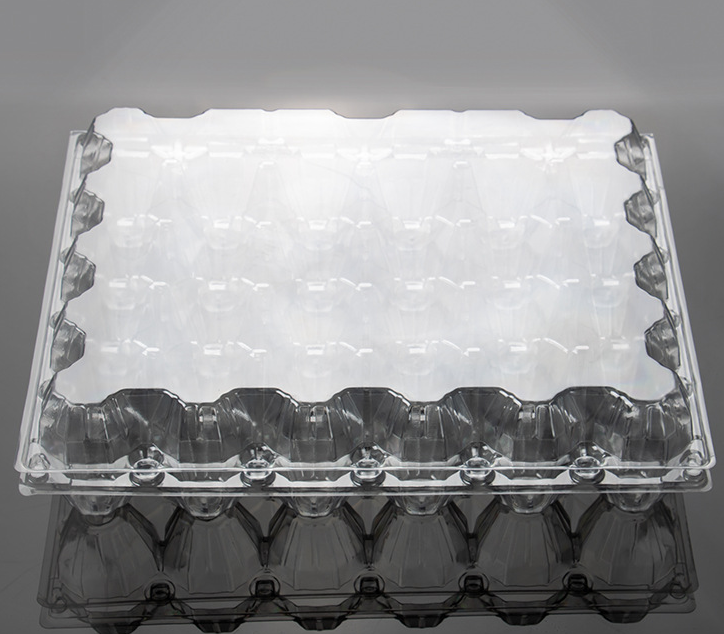
Material selection shapes what is technically and economically possible.
Pulp trays excel in low-cost, disposable, or short-cycle systems. They are widely accepted in regulated markets and offer straightforward compliance pathways. However, they limit customization depth due to moisture sensitivity and structural constraints.
Plastic trays allow deeper customization. Reinforcement features, repeated washing, long-term reuse, and automation integration are all easier to achieve. The trade-off is higher upfront investment and stricter compliance management in certain markets.
Material choice should therefore follow operational requirements, not aesthetic or trend considerations.
Production Reality and Supplier Constraints
Suppliers rarely advertise production limitations, but buyers feel them quickly.
Standard trays are easy to produce, stock, and replace. Suppliers can switch between orders with minimal disruption. Custom trays require dedicated molds, stable production schedules, and stricter quality control.
MOQ thresholds for custom trays reflect this reality. Color changes, logo embossing, or non-standard dimensions all increase setup cost and scrap risk. Suppliers price this risk into MOQ and unit cost.
Understanding these constraints helps buyers negotiate realistically rather than treating MOQ as an arbitrary barrier.
Building a Practical Decision Framework
The decision between custom and standard trays becomes clearer when buyers evaluate four dimensions together:
-
Cost structure – initial vs recurring
-
Breakage exposure – average vs optimized performance
-
Operational integration – manual flexibility vs automated efficiency
-
Compliance and risk – current requirements vs future exposure
For many buyers, the optimal path is not binary. Starting with standard trays, testing limited customization, and scaling gradually allows risk to be controlled while performance gains are validated.
Final Perspective
Custom and standard egg trays serve different roles in the supply chain. One offers flexibility and low commitment. The other offers control and long-term efficiency.
The mistake buyers make is treating this choice as a product comparison rather than a systems decision. When evaluated through business scale, operational intensity, and total cost logic, the answer usually becomes clear.
In egg tray sourcing, the right choice is not about paying more or less. It is about paying for what actually reduces friction in your supply chain—and ignoring what does not.