
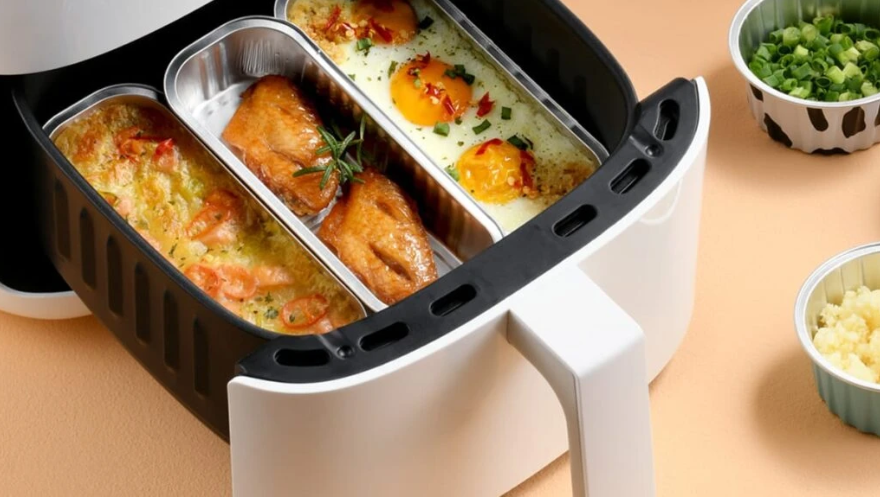
People often treat air fryers as smaller ovens. The comparison sounds reasonable, but it breaks down quickly once you start paying attention to how an air fryer actually behaves during use. Heat builds faster, airflow is more aggressive, and the distance between the heating element and the cookware is much shorter than in a conventional oven. These details change how a baking tray reacts under load.
In real kitchens, this difference shows up in subtle ways first. Food browns unevenly. Cooking times drift. Trays that once felt sturdy begin to discolor or flex. For home users, that may be an annoyance. For commercial kitchens, retailers, and baking tray manufacturers, it becomes a quality and safety issue. Products labeled as oven-safe are suddenly questioned when customers begin using them in air fryers.
Experienced baking tray suppliers tend to approach air fryer compatibility as a separate evaluation rather than an extension of oven performance. The decision is rarely about brand prestige. It usually comes down to whether the tray’s material, size, and interaction with airflow make sense inside a compact, high-velocity cooking chamber.
Material Check: Which Baking Tray Materials Work in an Air Fryer

Material behavior becomes more noticeable in an air fryer because there is less room for error. Aluminum baking trays generally respond well to this environment. They heat quickly, cool quickly, and do not trap excessive heat. That balance helps prevent scorching and promotes even results. It also explains why aluminum remains the dominant choice for many professional baking tray factories producing trays intended for modern countertop appliances.
Glass baking trays require more caution. Although many are rated for high temperatures, the way heat is delivered in an air fryer is less forgiving. Rapid airflow combined with direct radiant heat can stress glass, especially when temperature changes happen abruptly. For an OEM baking tray line, glass is not automatically unsuitable, but it assumes users will handle preheating and cooling with care. In practice, that assumption is not always safe.
Silicone trays and molds introduce a different challenge. Their appeal lies in flexibility and easy release, but flexibility can become a weakness under strong airflow. Lightweight silicone may sag or shift, subtly altering the cooking surface. That movement interferes with heat circulation and can affect results. As a result, reliable baking tray suppliers who develop silicone products for air fryer use often adjust thickness or geometry to compensate.
Ceramic and stoneware trays behave in a slower, heavier way. They absorb heat gradually and hold it longer, which can be useful in some cooking methods. Inside an air fryer, however, this stored heat can overwhelm the airflow system, particularly in smaller baskets. Cast iron shares similar heat-retention characteristics, but its weight adds mechanical concerns. In many basket-style air fryers, heavy trays sit closer to the heating element than intended. This is one reason cast iron appears less frequently among wholesale baking trays marketed for air fryer compatibility.
Materials That Should Be Avoided in an Air Fryer
Some materials consistently perform poorly, regardless of design or branding. Plastic trays and containers fall into this category. Even when labeled as heat-resistant, plastic was not developed for prolonged exposure to concentrated hot air. Deformation tends to appear quickly, and once a tray warps, airflow is disrupted even further.
Low-quality nonstick coatings also struggle in this environment. Constant air movement accelerates surface wear, especially near the upper temperature limits. For a trusted baking tray manufacturer, this means a coating that performs adequately in an oven may degrade faster in an air fryer. Containers designed for microwave reheating or cold storage face similar limitations. They lack the rigidity and thermal stability needed for sustained air fryer use.
Size and Depth: Will the Tray Fit and Still Cook Properly?
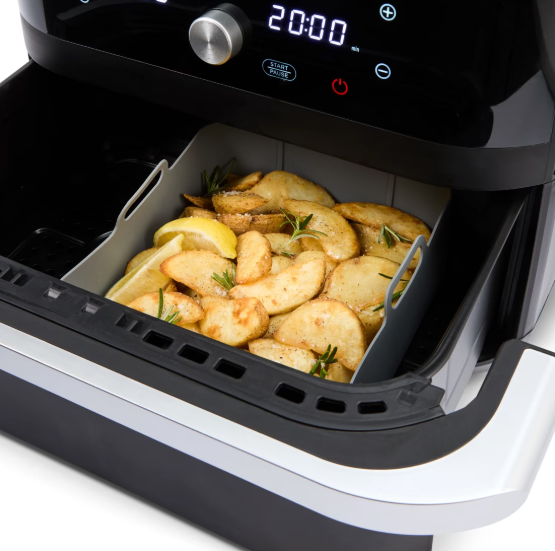
A tray fitting inside the fryer does not guarantee it will cook well. Basket-style air fryers rely on open space around the food to circulate hot air. When a tray presses tightly against the sides of the basket, airflow weakens and results become inconsistent. Oven-style air fryers provide more room, but airflow still follows defined paths that can be blocked by oversized cookware.
Capacity labels can be misleading. A fryer advertised as five or seven liters may have internal contours that reduce usable width or height. This variation matters for baking tray suppliers producing standardized dimensions for different markets. A tray that works perfectly in one model may perform poorly in another with the same capacity rating.
Depth often proves more important than surface area. Shallow trays allow heat to move freely across the food. Deeper trays tend to trap hot air, slowing circulation and extending cooking times. Once depth approaches or exceeds roughly two inches, uneven results become more likely. For OEM baking tray development aimed at air fryer users, depth control often determines success more than overall size.
Airflow and Cooking Results: How Tray Design Shapes Performance
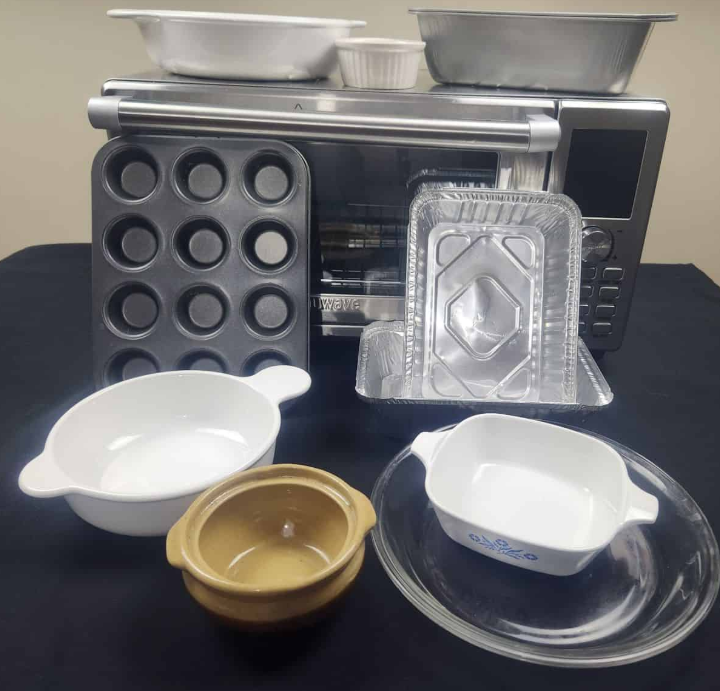
Air fryers are built around airflow efficiency. Every tray placed inside becomes part of that system. Flat, open designs support circulation, while tall sides and enclosed shapes interfere with it. Two trays made from the same material can behave very differently simply because of their shape.
Surface color adds another variable. Dark finishes absorb heat quickly and promote faster browning. Lighter finishes moderate exposure and can slow color development. Coatings influence both cooking and maintenance. While nonstick surfaces simplify cleanup, constant airflow shortens their lifespan. Many baking tray factories now prioritize finishes that tolerate airflow stress rather than focusing solely on release properties.
Special Cases: Trays That Require Extra Attention
Certain trays raise recurring questions. Cupcake trays, silicone molds, mini bundt pans, pizza pans, and racks can all work under the right conditions, but they demand closer attention to size and structure. Oversized or decorative designs often interfere with airflow, while simpler, lower-profile options perform more reliably. This is why wholesale baking trays designed for air fryers often favor practical geometry over visual complexity.
The 3-Step Safety Check Before First Use
Before regular use, a brief safety check helps avoid problems. The tray should sit securely without contacting the heating element or restricting basket movement. A short empty heating cycle reveals early signs of instability, odor, or deformation. The basket should then slide smoothly in and out, confirming that the tray does not catch or tip during handling.
Final Takeaway: How to Decide with Confidence
Not every baking tray belongs in an air fryer, even when labeled oven-safe. Material response, physical dimensions, and airflow interaction matter more than branding. For consumers, lighter and shallower trays usually deliver better results. For baking tray manufacturers, baking tray suppliers, and OEM baking tray programs, designing specifically for air fryer conditions is no longer optional. As demand grows, the next generation of wholesale baking trays will be defined by how well they adapt to the unique environment inside an air fryer rather than by traditional oven standards.