

Sugarcane bagasse egg trays are molded fiber packaging products manufactured from the fibrous residue left after sugarcane juice extraction. Unlike conventional recycled paper pulp trays, bagasse-based trays rely on agricultural by-products rather than post-consumer paper waste. For international buyers evaluating a sugarcane bagasse egg tray manufacturer, this difference directly affects material origin transparency, environmental positioning, and downstream compliance claims.
From a structural standpoint, sugarcane bagasse fibers tend to be longer and less degraded than recycled paper fibers. This gives bagasse egg trays improved compression strength and better shock absorption during stacking and transport. These characteristics are particularly relevant for buyers sourcing from a wholesale egg tray supplier serving export markets, where container loading pressure and long-distance logistics increase the risk of product deformation.
Vietnam enters the discussion not because it already dominates bagasse egg tray production, but because it combines agricultural output, cost-efficient manufacturing, and an export-oriented packaging industry. The country processes large volumes of sugarcane annually, generating substantial bagasse residue. At the same time, Vietnam has an established base of molded pulp factories operating as OEM egg tray manufacturers for global clients. This positions Vietnam as a potential growth hub for bagasse egg tray manufacturing rather than a fully mature one.
Current Market Reality: Paper Pulp vs Bagasse Egg Tray Production in Vietnam
Despite rising international interest in bagasse-based packaging, Vietnam’s egg tray industry remains largely centered on recycled paper pulp. Most factories operate pulp molding systems designed for newspaper and carton waste, producing standardized 30-egg trays at scale. For buyers working with a high-volume wholesale egg tray manufacturer, paper pulp remains the most accessible and price-stable option.
Bagasse egg tray production, however, presents a different reality. Processing bagasse fibers requires tighter control over pulping, screening, and moisture balance. These requirements often reduce production speed and increase energy consumption. As a result, factories positioning themselves as a custom sugarcane bagasse egg tray manufacturer typically face higher unit costs and longer lead times compared with conventional pulp products.
Pricing reflects these constraints. In wholesale transactions, bagasse egg trays usually carry a premium due to fiber sourcing complexity and lower yield efficiency. This reinforces their positioning as a value-added or sustainability-driven product rather than a cost-driven alternative. Buyers evaluating claims from any Vietnam-based sugarcane bagasse egg tray supplier should factor in this structural price gap rather than assuming direct substitution.
Can Vietnam Supply Sugarcane Bagasse Egg Trays at Scale?
At present, Vietnam cannot supply bagasse egg trays at the same scale or consistency as recycled paper pulp trays. The limitation is not raw material availability but industrial readiness. Most existing egg tray lines require equipment modification or partial replacement to handle bagasse fiber effectively.
For buyers searching for an experienced custom sugarcane bagasse egg tray manufacturer, this means that many suppliers operate in a semi-transitional state. Pilot production and small-batch OEM projects are feasible, but sustained mass production typically requires longer development cycles. Understanding this distinction helps buyers avoid unrealistic expectations when negotiating with a Vietnam OEM egg tray manufacturer claiming bagasse capability.
Top Wholesale Egg Tray Manufacturers in Vietnam with Bagasse Potential
Rather than focusing solely on factories already producing bagasse trays, it is more practical to assess export-oriented molded pulp manufacturers with strong process discipline. These companies already function as wholesale egg tray manufacturers for international markets and possess the operational foundation to adopt bagasse materials when demand justifies investment.
Phong Nguyen Plastic Manufacturing Trading Co., Ltd.
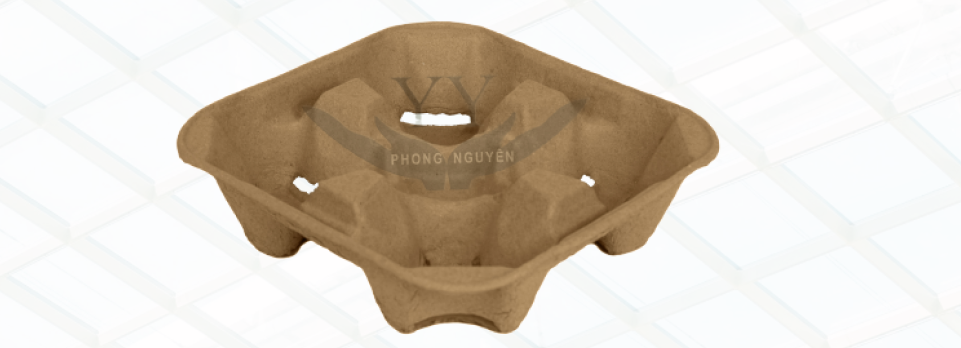
Phong Nguyen operates as a scale-focused egg tray manufacturer supplying standardized tray formats to domestic and overseas buyers. Its production emphasizes cavity consistency and stacking stability, making it suitable for high-volume logistics environments. While current output is paper pulp–based, its production discipline makes it a realistic candidate for future bagasse conversion under a custom molded pulp egg tray manufacturer model.
Techper Vietnam Technology Joint Stock Company

Techper distinguishes itself through multi-site operations and higher automation levels. The company’s internal technical resources allow it to adjust fiber processing parameters more flexibly than smaller workshops. For buyers seeking a technically capable OEM egg tray manufacturer, Techper represents one of the stronger platforms for gradual bagasse integration.
Le Thanh Import Export Service Trading Production Co., Ltd.
Le Thanh positions its molded pulp products within the eco-packaging segment, emphasizing compliance and export readiness. Although bagasse is not yet a core material, the company’s experience with environmentally positioned products aligns well with buyers seeking a sustainability-focused egg tray manufacturer prepared for future material shifts.
Van Nam Trading and Import Export Service Joint Stock Company
Van Nam’s competitive advantage lies in cost efficiency and throughput optimization. The company operates as a volume-oriented wholesale egg tray supplier, serving buyers who prioritize pricing and container efficiency. For bagasse applications, Van Nam is more suited to blended-fiber or transitional solutions offered by a contract-based molded pulp egg tray manufacturer.
Anh Phat Green Technology Joint Stock Company

Anh Phat emphasizes sustainability credentials and environmental audits across its product lines. While large-scale bagasse egg tray production remains in development, its ongoing material research makes it attractive to buyers seeking a forward-looking sugarcane bagasse egg tray manufacturing partner for pilot programs and phased sourcing strategies.
How Buyers Actually Source Sugarcane Bagasse Egg Trays via Vietnam
In practice, many buyers sourcing “Vietnam bagasse egg trays” rely on hybrid procurement models. These may include sourcing bagasse trays from India or China while using Vietnam-based companies for trade coordination, or commissioning blended fiber trays from local factories. For buyers working with a custom sugarcane bagasse egg tray supplier, transparency around production origin and fiber composition is critical.
Quality verification plays a central role in these arrangements. Buyers often request compression testing, material breakdowns, and third-party inspections to validate performance claims. Working with an export-qualified OEM egg tray manufacturer significantly reduces compliance and consistency risks.
Wholesale Procurement Strategy: MOQ, Pricing, and Export Logistics
Bagasse egg trays generally involve higher MOQs due to setup costs and lower molding efficiency. Pricing structures often reflect FOB terms, with landed costs influenced by moisture protection, container density, and port handling. Buyers familiar with sourcing from a wholesale egg tray manufacturer in Vietnam should expect longer planning horizons for bagasse projects.
Payment terms frequently follow staged T/T structures, especially for first-time orders. Established factories with export track records are more open to negotiation, reinforcing the value of partnering with an experienced molded pulp egg tray manufacturer rather than opportunistic intermediaries.
Future Outlook: When Will Vietnam Become a True Bagasse Egg Tray Manufacturing Hub?
Vietnam’s transition toward large-scale bagasse egg tray production will depend on regulatory pressure, export demand, and technology transfer. As sustainability requirements tighten across global markets, demand for agricultural-fiber packaging will continue to grow. When investment and policy alignment converge, Vietnam’s molded pulp sector is well positioned to evolve into a competitive sugarcane bagasse egg tray manufacturing base.
For buyers planning long-term sourcing, early engagement with capable Vietnamese partners offers strategic flexibility. Today’s paper pulp egg tray manufacturer may become tomorrow’s preferred sugarcane bagasse egg tray supplier, provided expectations are aligned with production realities.