
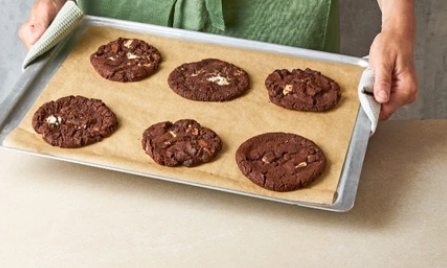
In sourcing discussions, the question of whether an oven tray and a baking tray are the same tool often comes up far earlier than it should. The confusion usually does not come from technical ignorance, but from habit. Many buyers have seen both trays used in ovens, stacked on racks, or listed under similar catalog categories. Over time, the visual similarity replaces functional understanding.
In commercial food production, central kitchens, and bakery manufacturing, that assumption quietly creates friction. Output becomes less predictable, cleanup time increases, and equipment wear accelerates. For a baking tray manufacturer or oven tray supplier, these are not abstract issues. They appear later as complaints, replacement requests, or redesign discussions that could have been avoided at the sourcing stage.
The two trays solve different problems. Treating them as identical tools simply delays the moment when those differences surface.
Understanding What a Baking Tray Is Actually Built For
A baking tray is best understood not as a container, but as a surface. Its defining feature is not the rim, but the absence of depth. The low edge exists only to prevent food from shifting during handling. It is intentionally insufficient for holding liquid.
That choice reflects the role a baking tray plays in heat transfer. Baking depends heavily on airflow. When hot air moves freely across and around the food, moisture escapes at a controlled rate, surfaces dry evenly, and browning develops without localized overheating. Shallow rims allow that process to happen without obstruction.
From the perspective of a commercial baking tray factory, performance consistency matters more than versatility. A tray that performs predictably for thousands of identical products is more valuable than one that claims to handle every scenario. This is why bakeries, snack producers, and frozen food processors rely so heavily on flat, shallow trays.
Standard sheet formats reinforce this logic. Quarter-sheet, half-sheet, and full-sheet trays align with oven cavities, rack spacing, and conveyor dimensions already standardized across the industry. For wholesale baking tray buyers, that alignment reduces friction in storage, transport, and line integration. The tray becomes part of the system rather than a variable within it.
Material choice influences durability and response time, but it does not change the core role of the baking tray. Whether aluminum or stainless steel, its purpose remains exposure, not containment.
What Makes an Oven Tray a Different Tool, Not a Variant
An oven tray starts from a different assumption. Instead of asking how heat should circulate, it asks what must be controlled. Liquids, weight, and stability are the primary concerns.
This is why depth defines the oven tray. High sidewalls are not added for convenience; they exist to manage rendered fat, marinades, and juices released during cooking. Without that depth, the tray fails its core task. Spillage, oven contamination, and uneven cooking follow quickly.
For an oven tray manufacturer serving foodservice or institutional clients, strength and rigidity matter as much as thermal behavior. Large cuts of meat, whole poultry, and high-moisture vegetables place stress on the tray that a baking tray is not designed to handle repeatedly. Reinforced corners and thicker gauges are functional necessities, not premium features.
Terminology varies across markets. Some buyers refer to these products as roasting pans or roasting tins. Others use oven tray as a broader category. From a B2B sourcing standpoint, the name matters less than the role. These trays are designed to hold volume and retain liquids under sustained heat.
Why the Difference Becomes Obvious Only in Daily Use

On paper, the distinction between shallow and deep trays appears simple. In practice, it reveals itself through outcomes rather than specifications. A baking tray encourages evaporation. An oven tray slows it down. That single difference affects texture, color, and cooking time.
Heat behaves differently as well. Baking trays depend on the oven environment. Oven trays create their own microclimate. One favors speed and surface development, the other favors control and moisture retention. Neither approach is wrong, but confusing them produces inconsistent results.
Handling and workflow add another layer. Baking trays are lighter and easier to move in fast-paced environments. Oven trays carry more mass, which improves stability but slows handling. In high-volume operations, these small differences accumulate into measurable labor costs.
Cleaning exposes the contrast even further. Flat trays release residue easily. Deep trays trap grease in corners and seams. For buyers working with a custom oven tray factory, these realities influence coating choices, edge design, and maintenance expectations long after the initial purchase.
Where Baking Trays Perform Best
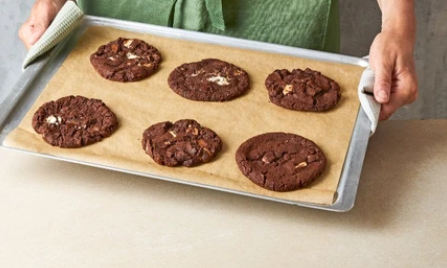
Baking trays excel when products are spread out, exposed, and expected to finish evenly. Cookies, pastries, flat breads, and many roasted vegetables benefit from open airflow and rapid moisture release. In these cases, shallow rims are not a limitation; they are the reason the product performs as expected.
Vegetable roasting illustrates this clearly. When vegetables are crowded into a deep tray, they steam before they brown. On a baking tray, moisture escapes quickly, allowing caramelization to begin earlier. For food manufacturers focused on texture consistency, this difference directly affects consumer perception.
Problems arise when baking trays are asked to perform tasks they were never designed for. High-fat meats and heavily marinated foods exceed the tray’s ability to contain liquids. The resulting spills are often blamed on the tray itself rather than on improper tool selection.
Where Oven Trays Justify Their Design
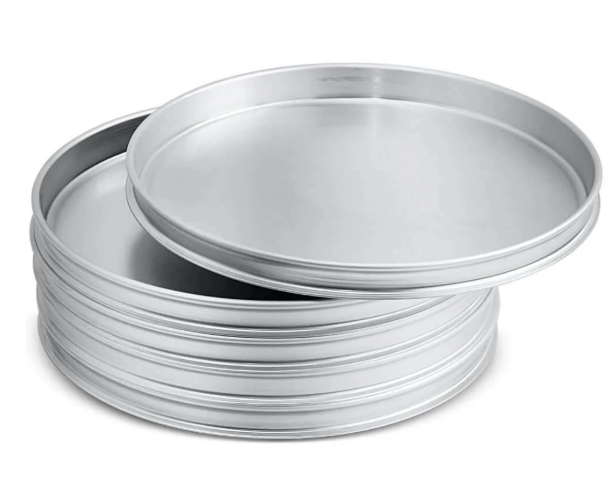
Oven trays dominate in roasting applications precisely because they control what baking trays release. Whole chickens, large roasts, and sauced vegetables produce liquids that must be managed throughout the cooking cycle. Depth provides safety, cleanliness, and predictability.
Those collected juices are often reused, adding value rather than waste. In professional kitchens, the oven tray becomes part of the process, not just a passive surface. This is why wholesale oven tray suppliers emphasize durability and volume capacity over lightweight handling.
There are situations where oven trays are used for baking-style products. Thick breads or dense items may tolerate reduced airflow without compromising quality. The result, however, is never identical. Browning patterns shift, and moisture retention increases. For operations seeking uniform output across locations or production lines, these differences matter.
How Material Choice Supports, but Does Not Replace, Design
Material performance shapes how each tray behaves under heat, but it does not redefine its role. Aluminum responds quickly, making it popular among custom baking tray manufacturers serving high-throughput bakeries. Its weakness lies in rigidity, especially under uneven loading.
Stainless steel prioritizes strength and longevity. It heats more slowly and can develop hot spots, but it withstands repeated high-temperature cycles. This makes it a common choice for oven tray factories supplying catering and institutional markets.
Carbon steel occupies a middle ground, offering improved heat performance with higher strength, at the cost of maintenance. Silicone and glass remain niche options, rarely replacing metal trays in OEM or wholesale production environments.
Interchangeability Has Limits That Cost Money
Baking trays and oven trays overlap only within narrow margins. Light roasting may work on a baking tray. Shallow baking may succeed in an oven tray. Outside those margins, performance degrades.
Most costly mistakes come from ignoring those limits. Liquid-heavy foods overflow shallow trays. Delicate baked goods lose texture in deep trays. Coatings fail when exposed to inappropriate temperatures. These issues surface later as complaints, replacements, or lost efficiency.
Experienced tray suppliers and manufacturers see these patterns repeatedly. They are rarely caused by defects, but by mismatched expectations.
Choosing Based on Function, Not Assumption
The decision between a baking tray and an oven tray should begin with process, not appearance. Operations centered on baking benefit from flat, shallow trays designed for airflow and speed. Operations centered on roasting require depth, strength, and containment.
For buyers working with a baking tray manufacturer, oven tray supplier, or custom tray factory, clarity at this stage simplifies everything that follows. Specifications align more easily. Materials are chosen for the right reasons. Replacement cycles become predictable.
The trays may look similar when stacked on a pallet. In daily use, they solve very different problems. Recognizing that difference early is what separates efficient operations from expensive compromises.