
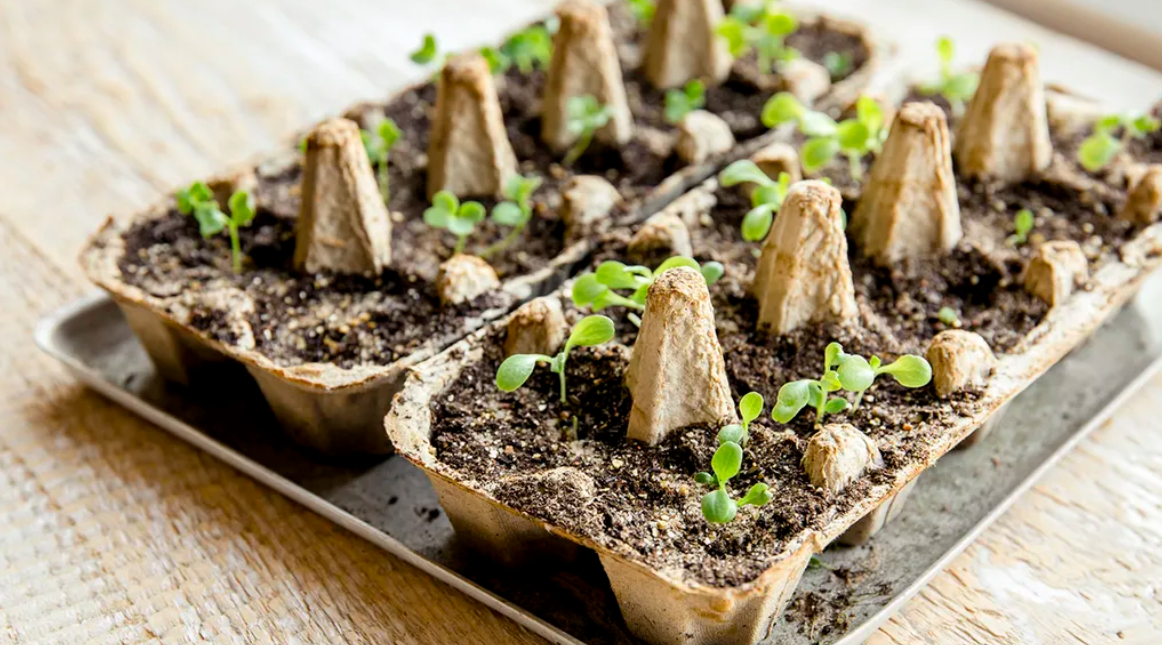
Egg trays are not something most people intentionally look for when preparing to grow plants. They tend to enter the conversation almost by accident, usually because they are already sitting in the kitchen. Their shape suggests order, their compartments imply purpose, and the paper surface gives the impression that they belong somewhere between waste and usefulness. For someone approaching gardening without much experience, that combination feels persuasive enough to try.
What often goes unnoticed is that this assumption comes from visual familiarity rather than growing logic. Egg trays resemble planting tools, but resemblance alone does not determine suitability. Whether they work depends less on what they look like and more on how plants behave during their earliest stages. When those two ideas are confused, expectations rise faster than results.
Looking at egg trays as a planting option only makes sense when they are evaluated for what they can realistically support, not for what people hope they might replace.
Quick Verdict: Can Egg Trays Be Used as Seedling Trays?

Egg trays can support seedlings briefly, but they are not designed to carry them very far. They function during germination and early emergence, then quickly begin to restrict growth. Used past that stage, they often slow development rather than support it.
The deciding factor is not creativity or sustainability, but duration. Egg trays help only when their role is short and clearly defined. Once seedlings begin to demand space and stability, their limitations become obvious.
Why Egg Trays Can Work for Seed Starting
At the start of a plant’s life, its needs are surprisingly simple. Seeds rely on stored energy, roots remain short, and growth is cautious rather than aggressive. During this phase, the environment matters more than the container itself. Moisture must be available but not trapped, and oxygen must circulate freely around the root zone.
Paper egg trays unintentionally meet these requirements for a limited time. Molded pulp absorbs water without sealing it in, allowing excess moisture to escape rather than stagnate. Air moves through the soil more easily than it would in non-porous containers, reducing early-stage rot. The shallow compartments also prevent seeds from clustering, which helps maintain separation during sprouting.
This alignment explains why egg trays often seem successful at first. They are compatible with seeds at rest and seeds just waking up. Once growth shifts from emergence to expansion, the balance changes.
Where Egg Trays Fall Short
As soon as seedlings begin to establish themselves, egg trays start to show their constraints. The most obvious issue is volume. Each cup holds only a small amount of soil, limiting how far roots can extend before encountering resistance. Restricted roots lead to weaker plants that struggle to adapt once moved.
Water management also becomes more difficult. Paper trays release moisture quickly, especially in warm or dry indoor conditions. Soil that appears adequately damp in the morning may be dry by afternoon. Maintaining consistency often requires repeated attention, increasing the risk of uneven watering.
Physical stability adds another layer of difficulty. Prolonged moisture softens paper trays, causing them to bend, tear, or collapse. Handling seedlings becomes awkward, and transplanting can disturb roots that have already been stressed by limited space. At the same time, egg trays compress the timeline. Seedlings must be moved early, and delaying transplanting often causes damage that cannot be fully corrected later.
When Egg Trays Make Sense—and When They Don’t
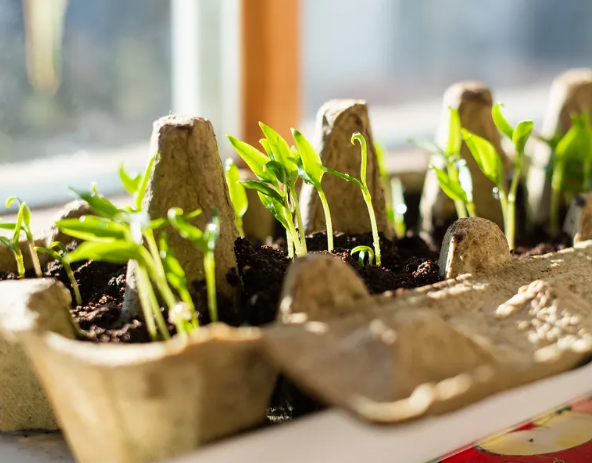
Egg trays make sense when the goal is modest and temporary. They work best in situations where seedlings are expected to move quickly into larger containers or outdoor soil. For casual home projects, seed testing, or short-term experiments, they can serve as a starting surface rather than a growing system.
They are most suitable for plants that germinate rapidly and develop shallow roots. In these cases, seedlings can be transferred before the container becomes restrictive. Egg trays may also appeal to growers who prefer close observation and do not mind frequent adjustment.
They are far less effective for plants that grow slowly or require stable conditions over time. Crops with deeper root systems tend to struggle almost immediately. For gardeners who value predictability and efficiency, egg trays often complicate rather than simplify the process.
How to Use Egg Trays Properly for Seedlings
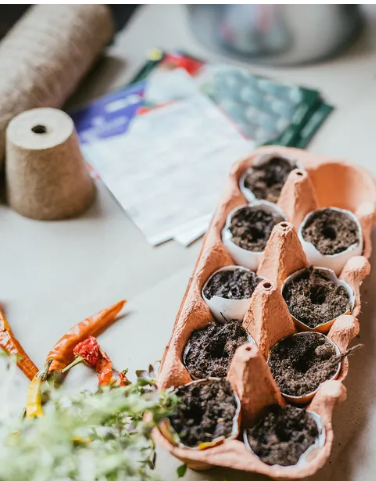
Using egg trays successfully requires restraint more than technique. Plain paper trays without coatings or heavy printing are essential, as treated surfaces can interfere with moisture movement and material breakdown. Supporting the tray from underneath reduces deformation and makes watering more manageable.
The soil used should remain light and aerated. Dense mixes compress easily in shallow spaces, limiting airflow and root movement. Even with careful preparation, timing remains critical. Once seedlings produce true leaves or roots reach the bottom of the tray, they need to be moved.
Egg trays tolerate attention but offer little forgiveness. They assist with starting growth, not extending it.
Safety and Material Risks to Consider
Not all egg trays are made the same way. Some contain inks, dyes, or surface treatments intended for brief food contact rather than prolonged exposure to moisture and soil. When saturated, these materials may degrade unpredictably.
For ornamental plants, this is usually a minor issue. For edible crops, it deserves more consideration. Using unprinted trays and limiting contact time reduces potential risk. Early transplanting further minimizes exposure to materials that were never designed for growing environments.
Better Alternatives for More Serious Growing
As gardening becomes more consistent, the limitations of egg trays become harder to ignore. Containers designed for seed starting offer greater control with less effort. Soil blocks remove container boundaries entirely and encourage healthier root structures. Standard seed trays provide uniform depth, predictable drainage, and durability across multiple seasons. Even improvised containers with greater volume often outperform egg trays once seedlings move beyond emergence.
Knowing when to move on from egg trays is part of developing experience. They can introduce seeds to soil, but they are not intended to guide plants through early development.
Final Takeaway
Egg trays can be used as seedling trays, but only within a narrow window. They function as a temporary surface for germination rather than a replacement for proper planting tools. When expectations remain realistic and transplanting happens early, they can serve a purpose. When relied on for too long, they often limit growth instead of supporting it.
Understanding where egg trays fit in the growing process helps prevent frustration and sets clearer expectations for results.