
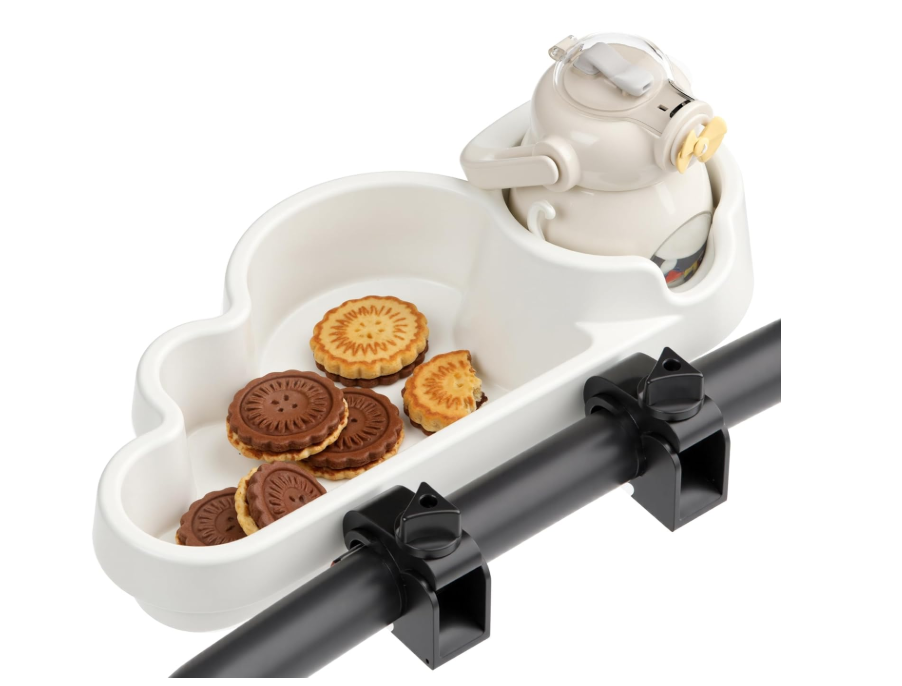
Snack trays sit in an odd place among stroller accessories. They are neither essential nor purely decorative, yet they show up in product images so often that many parents assume they are part of the standard setup. A flat surface in front of a child feels intuitive. Food goes there. Drinks stay upright. Fewer crumbs end up on the ground. At least, that is the expectation.
In reality, snack trays tend to divide parents more than most stroller add-ons. Some consider them indispensable after a few weeks of use. Others remove them almost immediately and never look back. The difference is rarely about build quality or brand. It usually comes down to how a stroller fits into daily life.
The question is not whether snack trays work. It is whether they work for you.

What People Mean When They Talk About a “Snack Tray”
A stroller snack tray is usually a rigid attachment that sits where a child’s bumper bar would be. Some replace the bar entirely, while others clip onto it. Most designs include a shallow eating surface and at least one cup holder. A few models add removable snack cups or textured areas meant to reduce sliding.
From a distance, many trays look interchangeable. Up close, differences start to matter. Brand-specific trays tend to feel more stable because they are designed around a particular stroller frame. Universal trays rely on adjustable clamps, which makes them easier to reuse but also more likely to shift under pressure.
Materials are almost always plastic, marketed as BPA-free and easy to clean. That part is largely true. What varies is how well the tray holds up to repeated removal, leaning, and the kind of rough handling toddlers are known for. A tray does not need to break to become annoying. A slight wobble is often enough to discourage regular use.
Why Snack Trays Feel Like a Good Idea at First
The appeal of snack trays is strongest during a specific parenting phase. Once children can feed themselves but lack patience, having food within reach changes the tone of an outing. Instead of stopping to open bags or negotiate snacks mid-walk, parents can keep moving while the child eats.
This matters most during longer outings. Walks that stretch past thirty minutes, errands that involve waiting, or trips where sitting down is inconvenient all benefit from a stable eating surface. In these situations, a snack tray can reduce stress for both parent and child.
There is also a sense of order that trays introduce. Snacks placed in front of a child tend to stay there longer than snacks handed over one piece at a time. Spills still happen, but they are more contained. For parents already juggling multiple things, that containment can feel like a small win.
When these conditions line up, snack trays quickly justify themselves.
Where Expectations Start to Clash With Reality

Problems usually appear when snack trays are expected to do more than they realistically can. One common issue is space. Adding a tray changes the stroller’s footprint, sometimes in ways that are only noticeable after repeated use. Tight aisles, crowded sidewalks, and folding mechanisms can all become less forgiving.
Food type matters as well. Snack trays work best with dry, simple foods. Once liquids, sauces, or full meals enter the picture, the tray’s limitations become obvious. No tray eliminates mess entirely, and relying on it as a substitute for supervision often backfires.
Another friction point is convenience. Some trays must be removed before folding the stroller. Others stay attached but make the fold bulkier. Over time, even minor inconveniences can lead to a tray being left off “just for today,” which often turns into permanent removal.
These drawbacks do not mean snack trays are poorly designed. They simply reflect the fact that not every accessory fits every routine.
How Different Parents End Up Judging Them
Parents who love snack trays tend to share a few traits. They walk often, spend time outdoors, and rely on strollers as more than just transport between car and door. For them, the tray becomes part of the stroller’s normal configuration, not something to think about each time.
Parents who feel neutral usually use trays occasionally. The tray is helpful during zoo visits, long shopping trips, or travel days, but unnecessary the rest of the time. It might stay attached for a while, then disappear into storage.
Those who regret buying a snack tray often discover that their child eats better with direct help, or that snacks are rarely needed during stroller time. In these cases, the tray solves a problem that barely exists. Once the novelty wears off, it has little reason to stay attached.
Age plays a role too. Snack trays often peak in usefulness during early toddlerhood and decline quickly after that. What feels essential at one stage can feel pointless six months later.
Thinking Through Whether One Makes Sense for You

The most reliable indicator of snack tray value is outing length. If your stroller time regularly overlaps with snack time, a tray has a clear role. If snacks usually happen before leaving or after arriving, the tray may see little use.
Travel style matters as well. Urban parents who walk everywhere tend to get more out of snack trays than those who rely on cars. The more often a stroller replaces seating, the more a tray earns its place.
It also helps to consider how much effort you are willing to invest. Snack trays reward routines. Parents who prefer flexibility or minimal setup may find simpler solutions easier to manage.
Choosing One Without Overthinking It
If you decide to buy a snack tray, compatibility should come first. A tray designed for your stroller model will almost always feel more secure than a universal option. That stability affects daily satisfaction more than extra features.
Ease of attachment is another factor that becomes more important over time. Trays that clip on smoothly are more likely to stay in use. If removal feels awkward, the tray may spend more time off than on.
Layout matters in subtle ways. Cup holders that fit common child cups, surfaces that are easy to wipe, and edges that prevent constant spills all contribute to whether a tray feels helpful or frustrating. More compartments do not always mean better design.
Cleaning should be simple enough that it does not become a deterrent. A tray that is technically washable but annoying to clean will quickly lose favor.
When Skipping the Tray Is the Better Choice
Many parents find that alternatives cover their needs more effectively. Snack catcher cups reduce spills without adding bulk. Sealed containers keep food under adult control. Handlebar organizers allow parents to manage snacks without giving full access.
These options adapt more easily as children grow. While snack trays are often outgrown, containers and organizers remain useful longer. For families who prefer flexibility, this matters.
Skipping a snack tray is not a compromise. In many cases, it is simply a better match.
The Bottom Line
Snack trays are not universally useful, but they are not unnecessary either. Their value depends on timing, routine, and expectations. Used in the right context, they make outings smoother and calmer. Used in the wrong one, they add bulk without solving a real problem.
Understanding how you actually use your stroller is far more important than any feature list. For some families, a snack tray quietly becomes part of everyday life. For others, leaving it off feels like the smarter decision.
That difference is normal—and it is exactly why opinions on snack trays vary so widely.