
A Buyer-Oriented View on Materials, Compliance, and Supply Stability
The United States continues to be a key sourcing origin for disposable baking trays, particularly for foodservice chains, institutional kitchens, and retail meal programs. What distinguishes the US market is less about sheer volume and more about process discipline—from material specifications to regulatory enforcement and supply continuity expectations.
For B2B buyers, decisions rarely hinge on unit price alone. Once programs move beyond pilot volumes, material reliability, audit readiness, production scalability, and delivery consistency become decisive factors that directly affect operational risk.
This article reviews eight representative US-based manufacturers and sourcing platforms from a procurement-oriented standpoint, focusing on how suppliers perform in real purchasing scenarios, rather than how they position themselves commercially.
How Disposable Baking Trays Are Manufactured in the USA
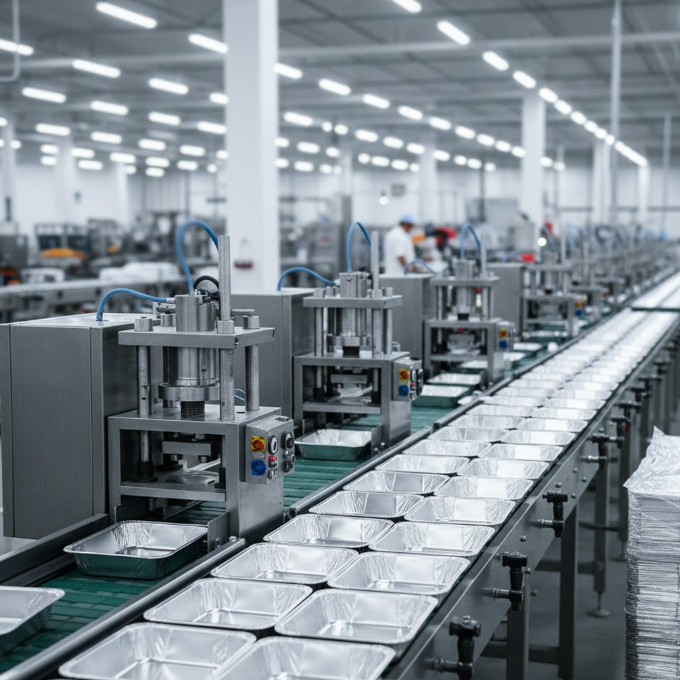
From 2020 to 2024, the US disposable baking tray market showed stable, capacity-driven growth. Demand expansion was largely tied to structural shifts—growth in ready-to-eat foods, bakery chains, healthcare catering, and supermarket deli programs—rather than short-term consumption trends.
Material selection across the market is relatively concentrated. Aluminum foil trays remain the default choice for foodservice and institutional kitchens due to predictable heat resistance, rigidity, and compatibility with existing workflows. Dual-ovenable paperboard trays, while still representing a smaller share, have gained adoption in retail programs where branding, shelf appearance, and recyclability influence purchasing decisions.
On the compliance side, FDA food-contact approval is a baseline requirement, not a differentiator. Larger buyers frequently require additional system-level certifications such as SQF, BRC, or GFSI-aligned standards, particularly when suppliers support multi-site or national distribution networks.
Procurement feedback consistently points to similar friction points: maintaining supply during seasonal demand spikes, managing price exposure tied to aluminum and paperboard inputs, preserving batch-to-batch consistency, and avoiding lead-time volatility during peak production periods.
Key Evaluation Factors for B2B Buyers

In practice, supplier evaluation centers on a limited number of operational criteria.
Pricing is assessed as total cost exposure, not headline unit price. Freight sensitivity, tooling and sampling costs, inventory commitments, and administrative overhead often outweigh nominal price differences.
Quality evaluation prioritizes measurable performance—foil gauge consistency, load-bearing behavior, deformation during baking cycles, and defect tolerance—rather than cosmetic appearance.
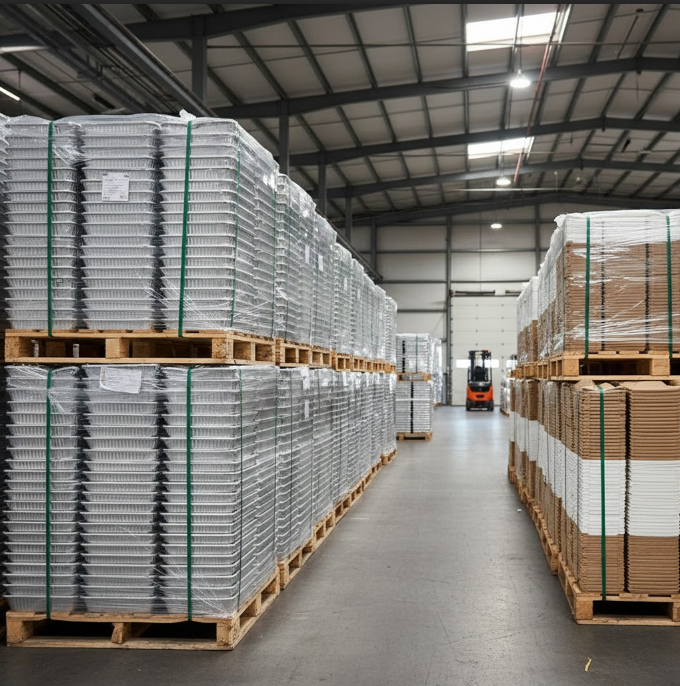
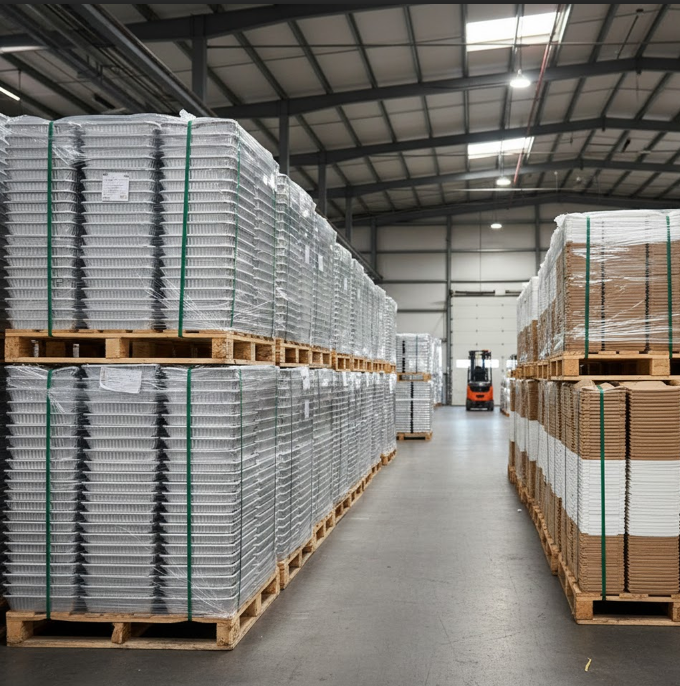
Capacity is judged by resilience, not maximum output. SKU coverage, safety stock policies, and the ability to absorb volume swings without service degradation are often more important than published monthly capacity figures.
Certifications act as proxies for process control, especially for institutional buyers subject to audits. At the same time, service factors such as response speed, MOQ flexibility, and issue resolution frequently determine whether a supplier can support long-term growth.
Supplier Landscape: Eight Representative Companies
Handi-foil of America, Inc.
Handi-foil is best known for its vertically integrated aluminum foil operations, with a strong emphasis on heavy-gauge trays designed for demanding foodservice environments.
Its products are widely used across hospitals, chain restaurants, and large catering systems. Inventory-backed nationwide distribution makes it suitable for high-volume, standardized programs.
The primary limitation lies in flexibility. While performance and scale are clear strengths, customization options are more constrained than those offered by smaller specialists.
Reynolds Consumer Products
Reynolds operates at the intersection of consumer and commercial packaging. Its commercial baking tray range appeals to foodservice and deli operations that value brand familiarity and consistency.
Highly standardized sourcing and quality control systems reduce perceived risk for consumer-facing businesses. Pricing structures, however, are not always optimized for very large institutional volumes.
Pactiv Evergreen Inc.
Pactiv Evergreen serves some of the largest foodservice and institutional buyers in the US. Baking trays represent one category within a broad, multi-material packaging portfolio.
For centralized procurement teams, the advantage lies in scale efficiency and one-stop sourcing. Smaller or highly customized programs may encounter higher entry thresholds.
D&W Fine Pack
D&W Fine Pack focuses on catering-oriented packaging, where presentation and form factor play a critical role. Its baking trays are commonly used in hotels, conference venues, and premium catering environments.
Customization capabilities exceed industry averages, typically accompanied by longer development timelines and higher unit costs.
Durable Packaging International
Durable Packaging positions itself around speed and availability. By maintaining extensive inventories of standard aluminum trays and ovenable containers, it supports rapid order fulfillment.
This makes it a practical option for buyers prioritizing responsiveness over design flexibility.
Penny Plate, LLC
Penny Plate operates primarily as a regional supplier, serving Pennsylvania and surrounding states. Its aluminum trays are known for consistent quality and short regional lead times.
For local bakeries and foodservice operators, delivery measured in days rather than weeks can be a decisive advantage.
SOLUT!
SOLUT! specializes in dual-ovenable paperboard trays developed as alternatives to aluminum in selected applications. Its products are widely used in retail programs emphasizing sustainability and branded presentation.
Supported by SQF certification and a clear environmental positioning, SOLUT! is typically selected for retail-facing concepts rather than cost-driven institutional kitchens.
Foil-Pans.com
Foil-Pans.com operates as a wholesale e-commerce platform, aggregating hundreds of aluminum tray SKUs from multiple sources.
It is particularly effective for spot purchases, assortment expansion, and replenishment. For long-term contracts, many buyers still prefer direct manufacturer relationships, but the platform serves as a useful supplementary sourcing channel.
Aligning Suppliers with Procurement Scenarios
Large-scale, standardized aluminum tray programs tend to align best with suppliers such as Handi-foil or Pactiv Evergreen. Retail-driven or sustainability-focused initiatives often favor Reynolds or SOLUT! Buyers requiring fast turnaround or flexible replenishment frequently rely on Durable Packaging, Penny Plate, or Foil-Pans.com.
Customization-intensive catering programs are generally better matched with specialists such as D&W Fine Pack.
Final Note
The suppliers outlined above represent different sourcing models rather than a quality ranking. Each performs best under specific conditions—whether scale, speed, customization depth, or sustainability alignment.
This article is intended to support early-stage evaluation and shortlist development, not to replace direct supplier qualification. Final decisions should be grounded in sample testing, compliance verification, communication effectiveness, and alignment with forecasted demand.
In practice, successful procurement outcomes depend on balancing cost efficiency with supply-chain resilience—a balance driven as much by supplier fit and execution capability as by negotiated price.