
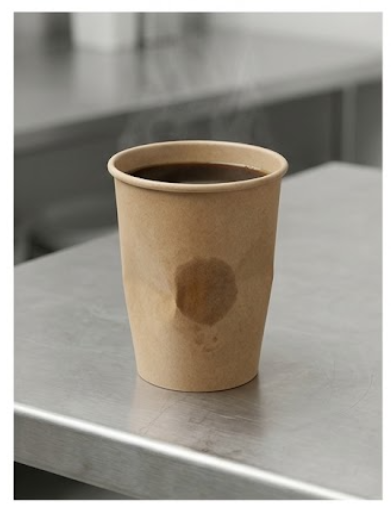
Most compostable cups perform just fine—until they don’t. And that breaking point usually shows up at the worst possible time: a lunch rush, a weekend surge, or a high-traffic event where every second counts. What looks reliable in a calm setting can quickly turn into a bottleneck when orders stack up and speed becomes the priority.
For buyers and operators, the challenge isn’t simply choosing a “sustainable” option. It’s making sure that choice holds up when the pace accelerates. In high-volume service, small inefficiencies don’t stay small—they multiply.
Heat Exposure Isn’t the Problem—Duration Is

A cup might handle hot liquid for a few minutes without any issue. But in real operations, drinks don’t always move that quickly. Orders get queued, packed, or delivered, which means heat exposure lasts longer than expected.
That’s when subtle weaknesses begin to show. The sidewalls may lose firmness, or the base might feel slightly unstable when lifted. Staff don’t usually notice it at first—but over time, handling becomes less confident, especially during fast-paced service.
This is where working with a custom compostable cup manufacturer makes a noticeable difference. Instead of focusing only on material type, experienced partners consider how the cup behaves over time under heat. That difference isn’t obvious in a sample—it shows up in daily use.
Leaks Often Start Before You See Them
When a drink leaks, it feels like a sudden failure. In reality, the issue often starts earlier, during filling or sealing. High-volume environments put constant pressure on the cup’s weakest points, especially the base seam.
A cup that performs well in static conditions might struggle once it’s filled to the brim, sealed quickly, and moved along a busy workflow. Add delivery into the mix—vibration, tilting, temperature changes—and small flaws become visible.
Choosing a reliable oem compostable cup supplier helps reduce that risk, but only if testing goes beyond basic checks. What matters is how the cup performs when it’s handled repeatedly, not just when it’s sitting still.
Lid Fit Isn’t Just About Spillage

A poorly fitting lid doesn’t just increase the chance of spills—it slows everything down. When staff have to adjust, press harder, or double-check each cup, the delay adds up quickly.
During peak hours, even a one-second delay per order becomes noticeable. Multiply that across hundreds of drinks, and the impact is real.
This issue is common when cups and lids come from different sources. Even slight variations in size or flexibility can affect the fit. A coordinated system from an odm compostable cup factory avoids that mismatch and keeps operations smoother.
Stacking Problems Show Up at the Worst Time
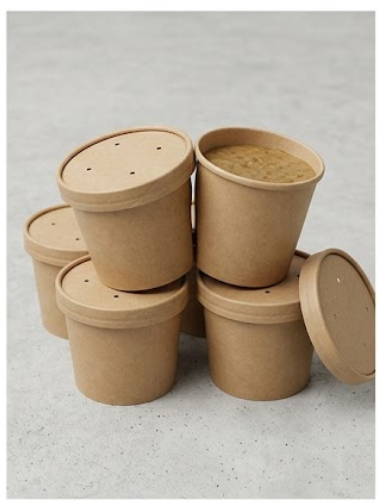
In theory, stacked cups should separate easily. In practice, that’s not always the case—especially when speed matters most. Cups that stick together force staff to pause, adjust their grip, or use extra effort just to separate them.
It’s not a dramatic failure, but it disrupts rhythm. And in a busy environment, rhythm is everything.
This usually comes down to design details that aren’t obvious at first glance. Rim structure, surface texture, and mold precision all play a role. A dependable compostable cup manufacturer for bulk orders will factor this in, ensuring that cups behave consistently when stacked and handled quickly.
Cold Drinks Create Their Own Set of Complaints
Hot beverages aren’t the only challenge. Cold drinks bring a different issue—condensation. From the customer’s perspective, moisture on the outside of the cup can easily be mistaken for leakage.
In delivery scenarios, this becomes even more noticeable. Drinks sit longer, temperature differences increase, and the outer surface collects more moisture.
A knowledgeable private label compostable cup supplier won’t treat this as a material flaw alone. Instead, they’ll look at how the cup is used—whether adjustments in structure, layering, or even packaging accessories can improve the experience.
Sometimes the fix isn’t changing the cup entirely, but adapting how it’s used in real conditions.
Supply Gaps Hurt More Than Product Flaws
Even a well-performing cup can become a liability if supply isn’t stable. Running out of stock during peak periods forces businesses to switch products quickly, often without proper testing.
That’s when new problems appear—unexpected leaks, lid mismatches, or inconsistent quality between batches.
Working with a scalable compostable cup factory for foodservice brands reduces that risk. Consistency across shipments matters just as much as performance in a single batch. For growing operations, reliability in supply is part of the product itself.
Testing Should Feel Uncomfortable—That’s the Point
Many buyers rely on controlled testing environments, which makes sense at the early stage. But those conditions rarely reflect what happens in real service.
A more useful approach is to test cups in a way that mirrors actual operations. Fill them continuously, stack them quickly, move them around, and see how they hold up over time.
Collaborating with a custom printed compostable cup manufacturer for chain stores allows for this kind of practical evaluation. It’s less about checking boxes and more about identifying weak points before they become costly problems.
The Right Choice Is About Stability, Not Perfection
There’s no such thing as a flawless cup. Every material and design comes with trade-offs. The goal isn’t to eliminate every possible issue—it’s to minimize disruptions when demand is high.
A reliable eco friendly compostable cup supplier for large scale distribution understands that balance. They don’t just offer products; they provide solutions that align with how businesses actually operate.
In high-volume service, performance isn’t measured by how a cup looks on day one. It’s measured by how consistently it supports your workflow when everything is moving fast.