
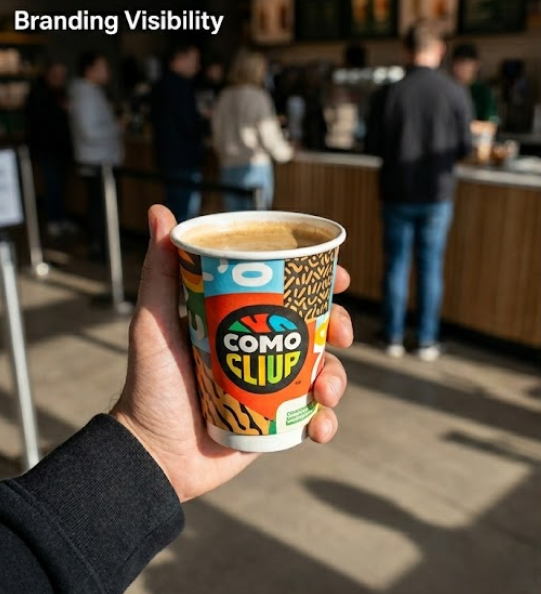
For many operators, compostable cups are still treated as a necessary upgrade rather than a strategic one. The conversation usually revolves around compliance, sustainability goals, or customer expectations. Cost comes up quickly, and once it does, branding is often pushed aside.
But that trade-off isn’t as fixed as it seems.
A compostable cup doesn’t have to be just a better material choice—it can also be a more efficient branding tool. The key is not increasing your packaging budget, but making each unit work harder for your brand.
Why Most Cups Fail to Contribute to Branding
In busy operations, packaging decisions are often made wit
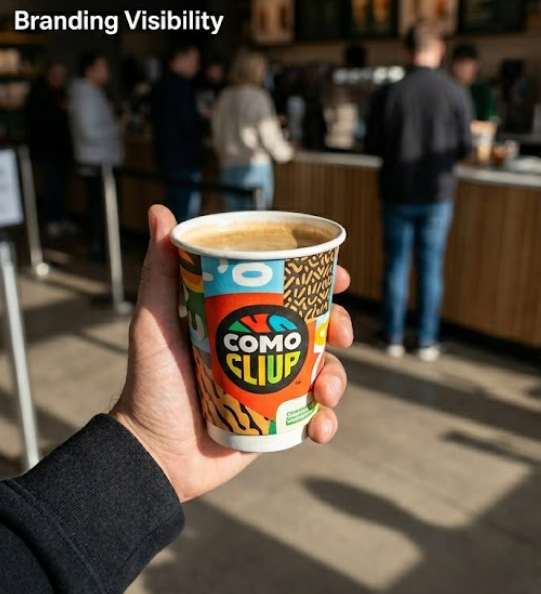
h speed and cost in mind. As long as the cup does its job—holding liquid, fitting a lid, stacking properly—it’s considered “good enough.”
The problem is that “good enough” rarely builds recognition.
Customers interact with your cup every time they place an order. It’s one of the most consistent touchpoints you have, yet many businesses leave it visually underutilized. A blank or generic design doesn’t just look neutral—it actively misses an opportunity.
Brands that partner with a custom compostable cup manufacturer tend to approach this differently. Instead of asking, “How do we keep costs down?” they also ask, “How do we make this visible?” That shift alone changes how the product is specified.
Using Design Restraint to Control Costs

There’s a misconception that stronger branding requires heavier design—more colors, more elements, more coverage. In reality, that often leads to higher printing costs without improving recognition.
Simpler designs are not just cheaper; they’re usually more effective.
A focused visual system—clear logo placement, controlled color use, and consistent spacing—creates a recognizable identity without increasing production complexity. This approach is commonly seen when working with an oem compostable cup supplier for beverage chains, where scalability and consistency matter as much as aesthetics.
Reducing visual noise also makes it easier to maintain quality across large production runs. The result is a cleaner look and a more predictable cost structure.
Letting the Cup Carry Part of Your Marketing Load
Most brands invest separately in packaging and marketing, even though the two often overlap. A compostable cup sits right at that intersection.
Instead of adding new campaigns, some businesses shift part of their messaging onto the cup itself. Not in a loud or intrusive way, but through subtle, repeatable elements that customers begin to recognize.
Working with an odm compostable cup factory for quick service restaurants allows for these adjustments to be built into production from the start. Whether it’s a small visual cue, a short phrase, or a consistent design motif, the goal is to create familiarity over time.
This doesn’t increase marketing spend—it redistributes it.
Structural Consistency as a Branding Signal
Brand perception isn’t only visual. Customers also notice how a product feels, even if they don’t articulate it.
A cup that feels sturdy, balanced, and consistent across visits builds trust. One that varies slightly in shape or rigidity can create the opposite effect, even if the difference is subtle.
That’s why some businesses choose to work with a private label compostable cup manufacturer for cafe brands that can maintain tight production standards. Consistency in structure reinforces consistency in brand experience.
It’s not about making the cup stand out dramatically. It’s about making sure it never feels out of place.
Aligning Product Range to Avoid Hidden Costs
Another overlooked factor is product variety. Offering too many cup sizes or specifications can quietly increase costs—more molds, more inventory complexity, and less efficient production runs.
Streamlining the range often leads to better pricing and easier operations.
A bulk compostable cup supplier for multi-location businesses can help identify where consolidation makes sense without affecting service. Standardizing sizes where possible doesn’t limit flexibility—it improves efficiency.
When fewer variations are produced at higher volumes, both cost control and quality consistency improve.
Making Sustainability Part of the Brand—Not an Add-On

Simply switching to compostable materials doesn’t automatically translate into customer awareness. If the sustainability aspect isn’t communicated clearly, it remains invisible.
At the same time, overemphasizing it can feel forced.
The balance comes from integration. A small, well-placed indicator or a concise message can signal intent without overwhelming the design. Brands working with a printed compostable cup supplier for sustainable packaging projects often embed these cues directly into the visual layout.
This way, sustainability becomes part of the brand language rather than a separate statement.
Planning Ahead to Protect Margins
Short-term decisions often lead to higher long-term costs. Urgent orders, last-minute design changes, or switching suppliers mid-cycle can all disrupt pricing and consistency.
Forward planning helps avoid these issues.
A compostable cup factory for international distributors typically operates on structured production schedules, which rewards predictability. Businesses that align with this approach benefit from more stable pricing and fewer unexpected adjustments.
Consistency in ordering leads to consistency in cost.
When Branding and Operations Support Each Other
Branding doesn’t have to compete with operational efficiency. In fact, the two can reinforce each other when approached correctly.
A well-designed cup is easier to recognize, easier to standardize, and easier to reproduce at scale. That alignment reduces friction across both marketing and procurement.
Companies that collaborate with a branded compostable cup supplier for takeaway chains often find that once the right balance is achieved, fewer adjustments are needed over time. The product becomes part of a stable system rather than an ongoing experiment.
Choosing Partners That Think Beyond the Product
Not every supplier approaches compostable cups in the same way. Some focus strictly on production, while others look at how the product fits into a broader business context.
Working with an eco friendly compostable cup manufacturer for retail groups that understands both branding and operations can make a noticeable difference. The conversation moves beyond specifications to practical outcomes—how the cup performs in real use, how it supports brand identity, and how it fits within cost targets.
That perspective often leads to better decisions early on, before inefficiencies are built into the system.
Final Perspective
A compostable cup will always be part of your cost structure. That doesn’t change. What can change is how much value you get from it.
When design, material choice, and supply strategy are aligned, the cup stops being just a container. It becomes a consistent, visible extension of your brand—without requiring additional budget.
The opportunity isn’t in spending more. It’s in making what you already spend work harder, more consistently, and with a clearer purpose.