
Let’s be honest: in the high-stakes world of institutional catering, a tray isn’t just a tray. It’s a logistical tool. If you’re overseeing a massive kitchen in a hospital, a school district, or a correctional facility, you know that the wrong material choice can blow your budget on replacements within six months. You need something that survives the “industrial gauntlet”—high-heat dishwashers, aggressive chemical sanitizers, and the occasional drop on a concrete floor.
This guide skips the fluff and gets into the grit of the seven materials dominating the market today, helping you decide where to put your money for the best long-term return.
1. Stainless Steel: The “Buy It Once” Solution

If your facility is a high-abuse environment—think prisons or high-volume urban schools—stainless steel is the undisputed heavyweight. Usually crafted from 304-grade steel, these trays are essentially immortal. They don’t crack, they don’t melt, and they don’t harbor that funky “old plastic” smell that ruins a meal’s presentation.
When you sit down with a reliable stainless steel compartment tray factory, focus on the gauge. A 20-gauge tray is the sweet spot; it’s thick enough to resist warping in a 180°F commercial dishwasher but light enough for staff to stack without throwing out their backs. It’s a steep upfront investment, but when you calculate the cost-per-use over ten years, steel usually wins the ROI battle.
2. Melamine: Heavyweight Aesthetics Without the Breakage

Melamine is the industry’s trick for making a cafeteria feel like a restaurant. It has the “clink” and weight of ceramic but can handle being dropped. It’s the favorite for nursing homes because it doesn’t look institutional, which helps with patient appetite. It also acts as a natural heat barrier, keeping the entrée hot while remaining comfortable to carry.
However, here’s the kicker: melamine hates microwaves. It’ll “pit” and eventually snap if it’s nuked repeatedly. Most savvy buyers will contact a custom compartment tray manufacturer to get specific textured finishes or wood-grain patterns that hide the inevitable scratches from steak knives. It’s about balancing “the look” with the reality of daily wear and tear.
3. Polycarbonate (PC): The Transparency Play
In security-sensitive zones, visibility is everything. Polycarbonate is clear, allowing guards or nurses to see exactly what’s on (or under) the tray. It’s often marketed as “shatter-proof,” and for good reason—you can practically drive a truck over these things.
If you’re pulling from a massive budget, you’ll want to vet a professional food tray supplier for institutional use to ensure the resin is high-grade and BPA-free. While PC is tough, be careful with your chemicals. Using high-alkaline detergents will turn your crystal-clear trays cloudy and brittle over time. It’s a material that requires the right “washing chemistry” to last.
4. Polypropylene (PP): The King of “Heat and Serve”
PP is the workhorse for modern “cook-chill” operations. If your workflow involves plating food cold and then reheating the whole tray in a microwave or steamer, PP is your only real choice. It’s incredibly lightweight and chemically inert, meaning it won’t stain when it hits acidic tomato sauces.
Many procurement teams look for a wholesale compartment tray distributor to buy PP in massive volumes. It’s the most affordable rigid plastic option, making it perfect for operations with high “shrinkage” (a polite way of saying the trays tend to disappear). It might feel a bit “floppy” compared to steel, but its versatility in the microwave is its killer feature.
5. Fiberglass: Designed for the Dishroom Grind
Fiberglass trays (SMC) are the unsung heroes of the high-speed buffet. They are reinforced with glass fibers, making them incredibly stiff. They won’t sag under the weight of a heavy 12-ounce beverage and a full plate of food.
The real magic is in the drying. Most high-end fiberglass models have molded-in lugs that allow air to circulate even when they are stacked 50-high. When you’re talking to an OEM compartment tray factory for catering businesses, ask about “anti-skid” coatings. A rubberized surface can cut your glassware breakage by 30%—a huge win for the bottom line.
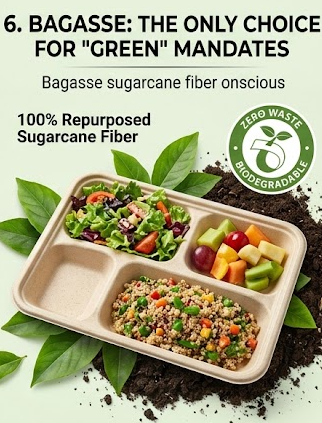
6. Bagasse: The Only Choice for the “Green” Mandate
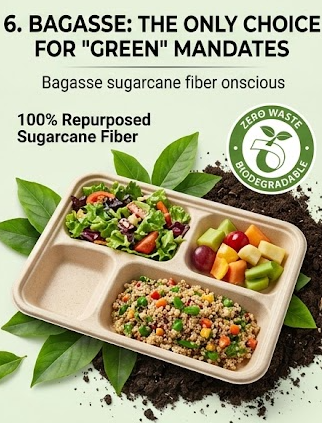
If your corporate office or university is pushing a “Zero Waste” initiative, plastic is out and bagasse is in. Made from repurposed sugarcane fiber, it’s fully compostable. It handles grease and heat surprisingly well, but unlike the other materials on this list, it’s a one-and-done deal.
Sourcing from a sustainable compartment tray supplier for eco-friendly brands is now a requirement for many government and tech-sector contracts. You lose the durability of a permanent tray, but you save thousands in dishwashing labor and water costs. It’s a different financial model—trading capital expenditure for a recurring operational cost.
7. Aluminum: The Airline and Industrial Specialist
Aluminum is a niche player but vital for specific heat-transfer needs. It’s 100% recyclable and handles extreme temperature swings—from flash-freezing to convection ovens—without breaking a sweat. It’s the gold standard for airline meals because every gram saved in weight is a dollar saved in fuel.
A specialized aluminum food tray manufacturer for wholesale buyers can provide various gauges depending on whether the tray is meant to be tossed after one use or cleaned and reused in a specialized industrial setting. It’s lightweight, rigid, and safe for high-heat environments where plastic would simply puddle.
The Bottom Line: How Do You Actually Choose?
Don’t just look at the price per unit. You need to look at your “Cost per Serving.”
-
The “Slam” Test: If your users are rough, ignore the cheap PP and go for Stainless Steel or Polycarbonate.
-
The Heat Factor: If you microwave, PP is your only friend. If you have a high-temp dishwasher, Fiberglass or Steel are the survivors.
-
The Brand Image: If you want to look high-end, go Melamine. If you want to look eco-conscious, go Bagasse.
Always demand a spec sheet from a qualified compartment tray exporter for global markets before you sign off on a bulk purchase. Check for FDA, NSF, or LFGB compliance. If they can’t produce the paperwork, keep looking. Your tray choice is the foundation of your food service logistics—choose the material that fits your specific “war zone.”