
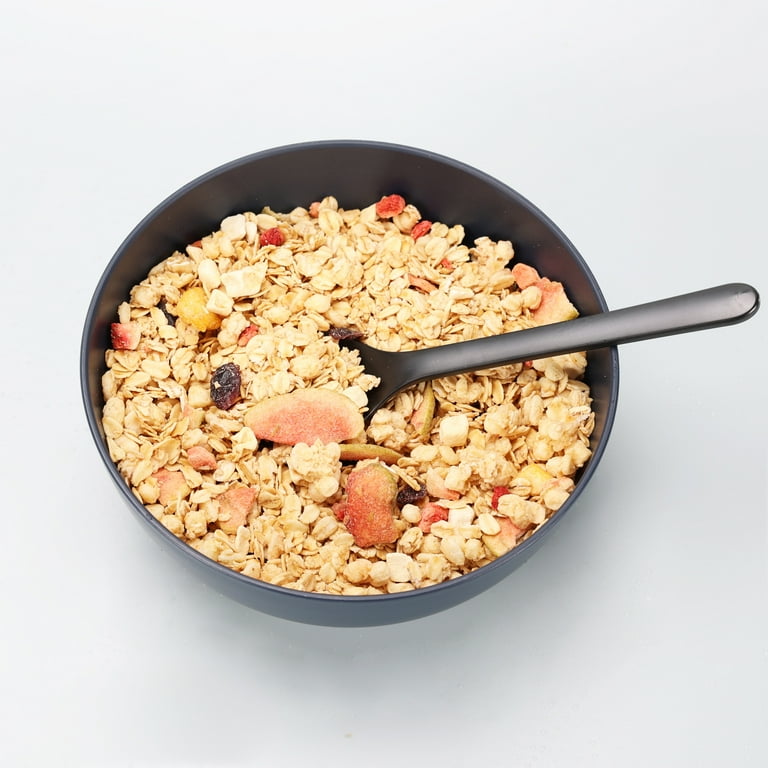
If you walk into most kitchens, the cereal bowls all look vaguely familiar. Different colors, different finishes, but roughly the same presence in the hand. Nobody talks about why they are that size. They just are.
The strange thing is that the moment a bowl feels wrong, people notice immediately. Milk creeps toward the rim. Cereal piles too high or spreads too thin. Breakfast becomes slightly annoying for reasons that are hard to explain. That is usually when the question appears: what size is a standard cereal bowl, anyway?
The Idea of “Standard” Comes From Repetition, Not Rules

There is no official authority defining a standard cereal bowl. No household guide, no universal rule. The standard exists because millions of people repeat the same action every morning and gradually settle on what feels easiest.
Most people do not measure cereal. They pour until it looks right, stop, and then add milk until the cereal shifts and floats. When a bowl allows that sequence to happen without thought, it earns its place. Over time, bowls that fail this test get pushed aside.
That process has quietly shaped the market. Designs that survive year after year, including those produced by a custom cereal bowl manufacturer supplying mainstream tableware lines, almost always land in a similar size range. Not because of theory, but because anything else feels inconvenient.
Where the Numbers Start to Matter
If you do measure, a pattern shows up quickly. Bowls that feel “normal” usually hold somewhere between 16 and 24 ounces at maximum capacity. More interestingly, the bowls people actually use every day tend to cluster between 16 and 20 ounces.
That range leaves room for movement. A full serving of cereal plus milk sits comfortably below the rim. You can stir, scoop, and tilt without adjusting your posture or slowing down. Smaller bowls interrupt that rhythm. Larger bowls stretch it.
This is why suppliers working with an OEM cereal bowl supplier often default to this capacity even when styles change. The number itself is not the selling point. The behavior it supports is.
Why Shape Quietly Decides Everything
Capacity is only half the story. Shape does the rest. A bowl that holds 18 ounces can feel generous or cramped depending on how those ounces are distributed.
Most cereal bowls that people instinctively like measure around five to seven inches across and sit roughly two to three inches deep. These proportions guide how cereal settles and how milk pools. Too wide, and cereal looks sparse. Too deep, and everything sinks too fast.
Manufacturers know this, even if buyers do not articulate it. Teams at a private label cereal bowl factory rarely experiment far outside these proportions because consumer rejection tends to be immediate, even if customers cannot explain why.
How the 16–20 oz Bowl Became Invisible
The most popular cereal bowls share one trait: they disappear during use. You do not think about them while eating. That invisibility is the real reason the 16–20 ounce range dominates.
Most adults pour between one and one and a half cups of cereal without realizing it. Add milk, and that volume naturally fills a bowl around 18 ounces. The bowl neither resists nor encourages more. It simply accepts the habit.
Collections from a ceramic cereal bowl manufacturer aimed at daily use often avoid dramatic sizes for exactly this reason. The goal is not to impress, but to stay out of the way.
Living With Smaller Bowls Feels Different
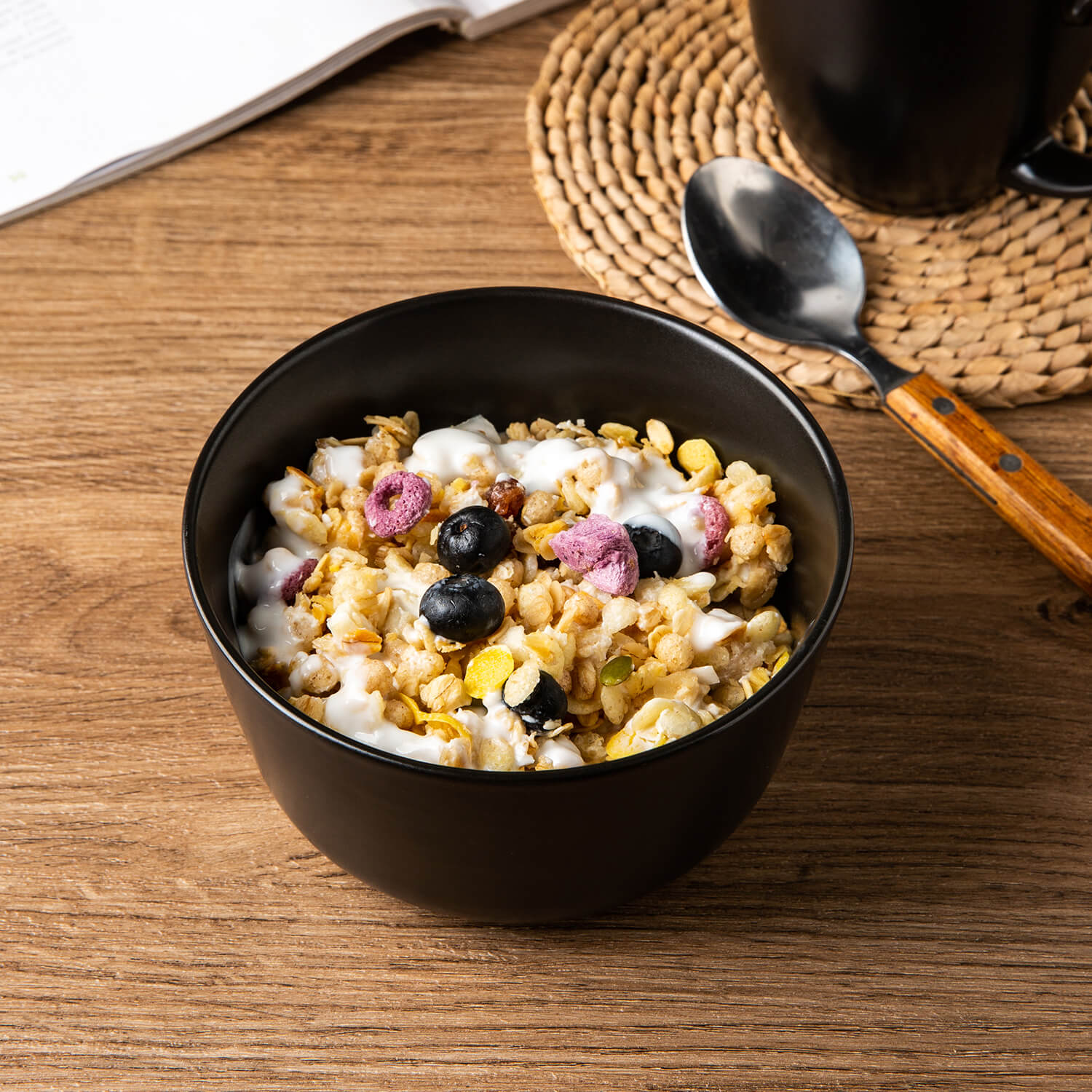
Small cereal bowls, usually under 16 ounces, are not wrong. They just demand attention. You have to pour carefully. Milk reaches the edge quickly. For children or intentionally small portions, that is useful. For autopilot mornings, it can feel restrictive.
People who switch to smaller bowls often report feeling “done” sooner, not because they ate less, but because the bowl signals completion earlier. That psychological effect is subtle but real, and it explains why small bowls tend to stay in rotation only for specific users.
Large Bowls Change Expectations Over Time
Large cereal bowls feel generous, even indulgent. They are excellent for layered breakfasts with fruit, yogurt, and toppings. Used occasionally, they are enjoyable. Used daily, they quietly reset what looks normal.
Because the surface area is larger, cereal spreads out and appears insufficient until more is added. Over weeks, portions drift upward. This effect is one reason institutions pay close attention to capacity when sourcing from a sustainable cereal bowl manufacturer where consistency matters.
The bowl does not force overeating. It simply removes friction.
Shape Details People Notice Without Naming
Certain design choices create immediate comfort. A slightly flared rim keeps milk from dribbling down the side. A rounded bottom gathers the last spoonful cleanly. These features rarely appear in marketing copy, but people notice when they are missing.
Designers at a glass cereal bowl manufacturer often prioritize these subtleties because they influence whether a bowl feels pleasant after months of use, not just on the shelf.
When these elements work, the bowl fades into the background. When they do not, irritation accumulates quietly.
Portion Size Is Often Set by the Bowl, Not the Person
People tend to believe they control their portions consciously. In reality, the bowl provides a visual frame. Larger bowls invite more cereal without effort. Smaller bowls signal restraint without instruction.
Standard cereal bowls operate in the middle. They provide a boundary that aligns with habitual portions. This is one reason buyers evaluating products from a bulk cereal bowl supplier often test bowls in real meal settings rather than relying on specifications alone.
The bowl teaches the eye what “enough” looks like.
Finding Out What You Already Own
:max_bytes(150000):strip_icc()/VWH-GettyImages-477566457-86290c5326ad4cfeb97987a2dbc89b1f.jpg)
Many people already own a standard cereal bowl without knowing it. Filling a bowl with water and measuring the volume reveals the truth quickly. Ordinary-looking bowls often hold far more than expected.
Width and depth matter just as much as capacity. A shallow bowl with a wide opening behaves like a larger bowl, even if the ounce count is similar. This is exactly the kind of detail procurement teams examine when working with a foodservice cereal bowl factory, where daily repetition magnifies small differences.
Why Cereal Bowls Refuse to Disappear
Cereal bowls sit in an awkward space between other bowl types. Soup bowls are deeper and heavier. Salad bowls prioritize surface area. Rice bowls focus on compact portions. General-purpose bowls try to do everything and often fail at cereal.
This is why cereal bowls remain their own category. Even minimalist kitchens tend to keep at least one bowl that fits this role. Buyers looking for flexibility often start with cereal-friendly proportions and branch outward.
Choosing a Standard That Actually Fits Your Life
For most routines, a bowl between 16 and 18 ounces feels effortless. It supports common habits without encouraging excess. Larger bowls suit slower, more elaborate breakfasts. Smaller bowls serve intention and control.
Material shifts perception. Heavier bowls feel grounding. Lighter ones feel more expansive. Brands developing collections with an ODM cereal bowl manufacturer often adjust material weight before changing size, knowing that feel shapes satisfaction as much as volume.
In the end, a standard cereal bowl is not defined by numbers printed on a box. It is defined by how little you think about it. When breakfast flows without adjustment, the size is doing exactly what it should.