
Whether you’re a startup founder or a procurement manager for a massive dessert chain, the choice of a paper vessel is never just about volume. It’s about the “sweet spot” where customer perception meets your bottom line. In the commercial world, “standard” is a moving target that depends on whether you’re serving a dense gelato or a fluffy soft serve. However, if you are currently vetting a reliable custom ice cream cup manufacturer for dessert franchises, you need a concrete understanding of the industry benchmarks—measured in fluid ounces and milliliters—to maintain a consistent brand across all locations.

The 4 oz Threshold: Why It Rules the Market

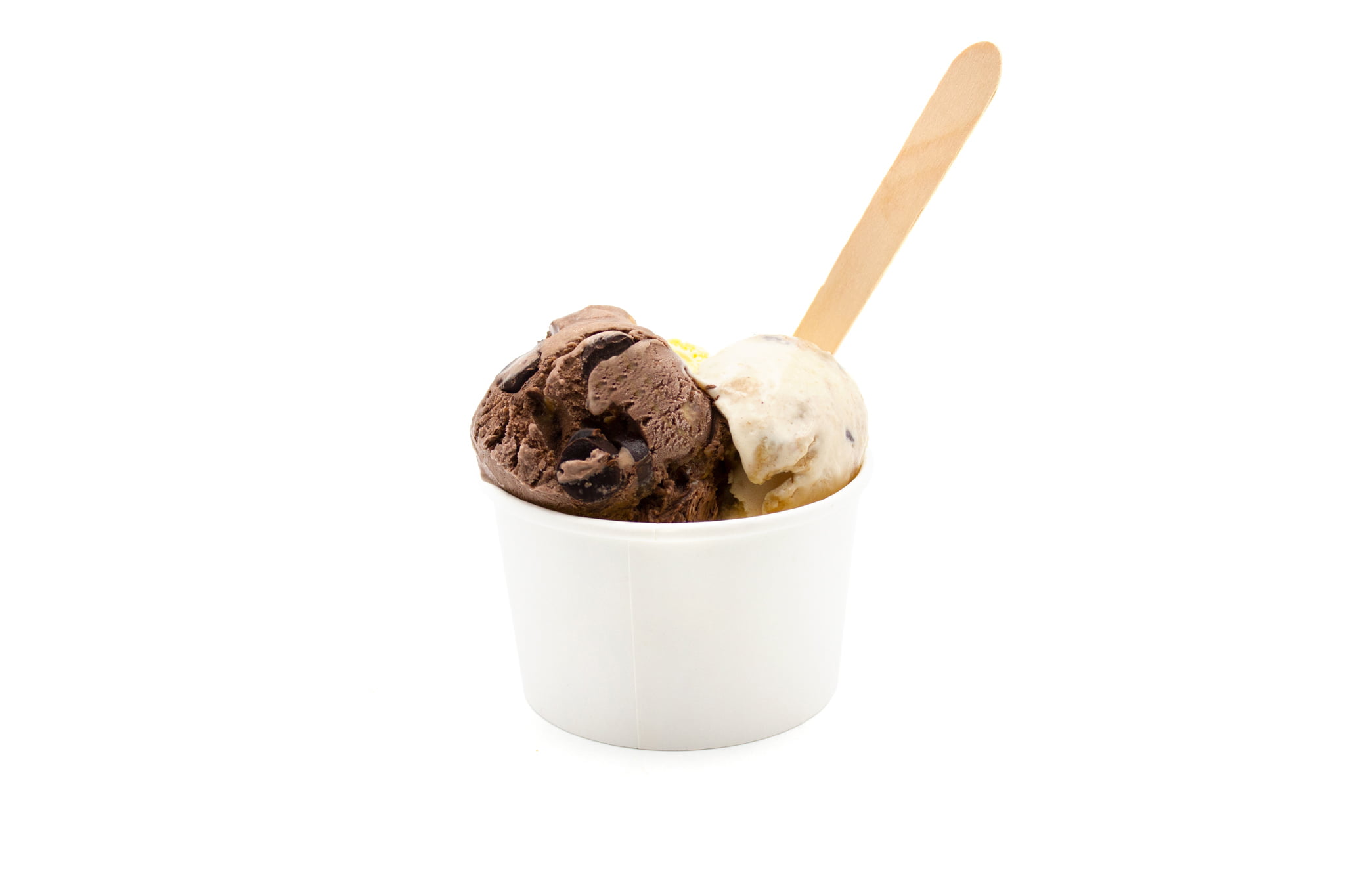
If you walk into any high-traffic creamery and ask for a “small,” you’re almost certainly holding a 4 oz container. At roughly 120 ml, the 4 oz cup is the undisputed king of single-scoop servings. It provides exactly enough space for a standard #16 disher scoop while leaving a tiny bit of “breathing room” to prevent a sticky mess as the product melts.
From a logistics standpoint, this is the bread and butter for any leading paper ice cream cup factory for bulk distributors. They prioritize the 4, 8, and 12 oz trio because these three sizes cover nearly every retail scenario. While health authorities like the FDA might suggest a 5.3 oz serving for nutritional labels, most shop owners stick to 4 oz to keep food costs tight and calorie counts manageable for the average diner.
The Breakdown: Oz to Ml Conversion Chart
Building a menu requires precision. Most US-based buyers think in ounces, but the rest of the world (and your shipping manifests) will talk in milliliters. A 3 oz cup (90 ml) is essentially for “tastings” or high-end flight menus. It’s also popular for children’s portions where a full 4 oz might be too much.
Moving up, the 5 oz and 6 oz sizes are often used as a “premium small.” These are great for businesses that want to stand out from the 4 oz crowd by offering a bit more perceived value. Then comes the 8 oz (240 ml), the gold standard for double scoops. When a chain partners with a specialized plastic ice cream cup supplier for international franchises, they typically look for 12 oz or 16 oz options for sundaes or “loaded” shakes. For the “to-go” market, the 32 oz quart remains the heavy hitter, built with double-poly coating to survive the trek in a customer’s freezer.
Physics of the Scoop: Density and Dessert Types
Not all frozen treats behave the same way in a cup. Hard-pack ice cream is dense. It requires a wider brim so the server can press the scoop against the wall of the cup to release the product. Gelato, however, is often served with a paddle in smaller, 3.5 to 5 oz shallow cups. This is traditional—gelato is richer and served slightly warmer, so smaller portions feel just as satisfying.
Soft serve is another beast entirely. It’s pumped full of air (overrun), making it physically tall but surprisingly light. If you’re a business looking for a professional eco-friendly ice cream cup wholesaler for sustainable brands, you might want to consider taller, narrower 8 oz cups for soft serve. This architecture supports the “swirl” and makes the portion look massive even if the weight is relatively low.
The “Overrun” Trap: Volume vs. Weight
New shop owners often make the mistake of equating fluid ounces with weight. They aren’t the same. A 4 fl oz cup measures space, not gravity. Because ice cream is aerated, 120 ml of product might only weigh 80 or 90 grams. If you sell a “super-premium” pint with low overrun, your food cost per cup will be much higher than a competitor selling a “standard” airy product.
A top-tier disposable ice cream cup manufacturer for global wholesale orders will usually provide “brim-full” specs versus “functional” specs. This helps you figure out exactly where to stop scooping so that the lid actually snaps on. Understanding this displacement is the secret to protecting your margins.
Operational Savvy: The “Universal Lid” Strategy

In a rush, nobody has time to hunt for three different types of lids. Smart operators try to source 8 oz and 12 oz cups that share the same rim diameter (often 95mm). This reduces your back-of-house SKU count and speeds up service.
Material also matters for the “hand-feel.” While double-poly paper is the classic choice, the industry is pivoting fast. Many forward-thinking brands are now sourcing from an innovative biodegradable ice cream cup factory for eco-conscious buyers. These cups handle moisture just as well but align with the “zero-waste” branding that modern customers crave.
The Psychology of “Visual Overflow”
How a cup is shaped changes how a customer feels about the price. A wide, flat cup can make a scoop look small. A narrower, taller cup can make the same scoop look like it’s bursting out of the top. This “visual overflow” is a powerful trick—it makes the customer feel they’ve gotten a bargain, even if the gram weight is identical.
Custom branding helps here, too. Partnering with a premium printed ice cream cup supplier for boutique creameries allows you to use bold colors or color-coding to help customers distinguish sizes. A brightly colored 4 oz cup makes the portion look intentional and “gourmet” rather than just small.
Securing Your Supply Chain
Picking a size is easy; keeping it in stock is the hard part. For long-term growth, skipping the middleman and going to a specialized custom-made ice cream cup factory for restaurant supply chains is the move. This direct line ensures you get the specific “rim fit” you need and can negotiate better pricing as your volume scales.
In the end, the “standard” size is whatever makes your business profitable while keeping the customer’s spoon happy. Whether you’re staying with the 4 oz classic or going big with a 32 oz quart, knowing your oz and ml specs is the foundation of a successful creamery.