
When people ask about the best cooling rack for a baking tray, they are often looking for a simple answer. In practice, especially within commercial baking tray procurement, the issue is rarely that straightforward. Cooling happens in the middle of a workflow, not at the end of one, and the rack only performs well if it matches how trays are baked, moved, and handled every day.
For bakeries and food brands working with custom baking tray manufacturers, the concern is not theoretical performance. What matters is how consistently a rack supports a hot tray, how it behaves under repeated use, and whether it creates friction in routine operations. These details tend to surface only after weeks of use, not during initial setup.
What Makes a Cooling Rack “Best” for Baking Trays?

A cooling rack is often judged by material or size, but that approach misses how baking trays behave immediately after leaving the oven. At that moment, heat, steam, and weight all interact at once. How the rack responds during that short window largely determines whether cooling is effective or problematic.
Airflow Clearance and Moisture Control
If a baking tray sits too close to a work surface, steam has limited room to escape. Over time, this shows up as damp bottoms or uneven texture, particularly with metal trays that cool slowly. In kitchens supplied by commercial baking tray accessory providers, an elevation close to one inch has proven practical. It allows airflow without making the tray feel unstable when it is shifted or rotated during cooling.
Load Capacity and Structural Stability
Baking trays vary widely in weight. A tray of cookies behaves very differently from a tray holding bread dough or roasted proteins. Buyers sourcing for heavy-duty baking tray applications tend to notice that lighter wire racks may hold up initially but slowly lose shape after repeated cycles. Rigid frames and welded joints generally age more predictably under continuous load.
Oven-Safe Temperature Range
Some racks are expected to do more than cool. In operations using OEM baking tray systems, racks that tolerate higher temperatures allow trays to move directly from oven to rack without switching tools. This reduces handling steps and, in busy kitchens, lowers the chance of damage or misplacement.
Grid Density and Tray Support
Grid spacing becomes relevant once baking trays carry smaller or more fragile items. Wider spacing can lead to uneven support, which affects surface finish and consistency. This is often a deciding factor for buyers supplying bakery brands using small-format baking trays, where appearance and yield are closely monitored.
Best Single-Layer Cooling Racks for Daily Baking and Oven Use
Professional-Grade Pick
KITCHENATICS Professional Cooling and Roasting Rack

This rack is frequently paired with stainless steel and aluminum baking trays in professional kitchens. Its welded construction supports fully loaded trays without noticeable flex, even when weight is concentrated toward the center.
For buyers coordinating with commercial baking tray manufacturers, the consistent 1-inch elevation helps maintain airflow under heavier loads. The high heat tolerance also allows the rack to be used during roasting, not just cooling. In practice, this reduces the number of accessories needed around the oven and keeps workflows simpler.
Dense Grid Alternative for Small Bakes
Ultra Cuisine Baking and Cooling Rack
Rather than targeting maximum weight, this rack focuses on even support. Its tighter grid spacing works well with baking trays holding cookies, macarons, or items finished with glaze.
When paired with quarter-sheet trays, the lower elevation keeps trays steady on crowded prep surfaces. This makes it a common match for brands running private label baking tray programs, where uniform results matter more than multi-purpose use.
Best Multi-Tier Cooling Racks for Batch Baking and Space Efficiency
Best Space Efficiency Design
Wilton 3-Tier Collapsible Cooling Rack
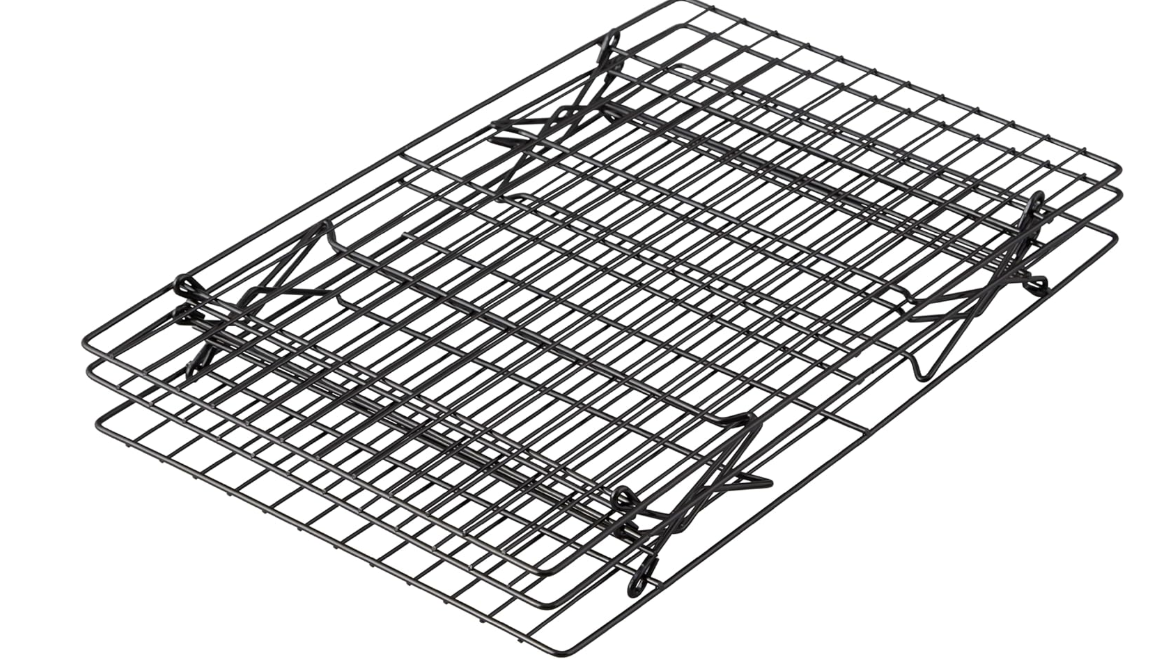
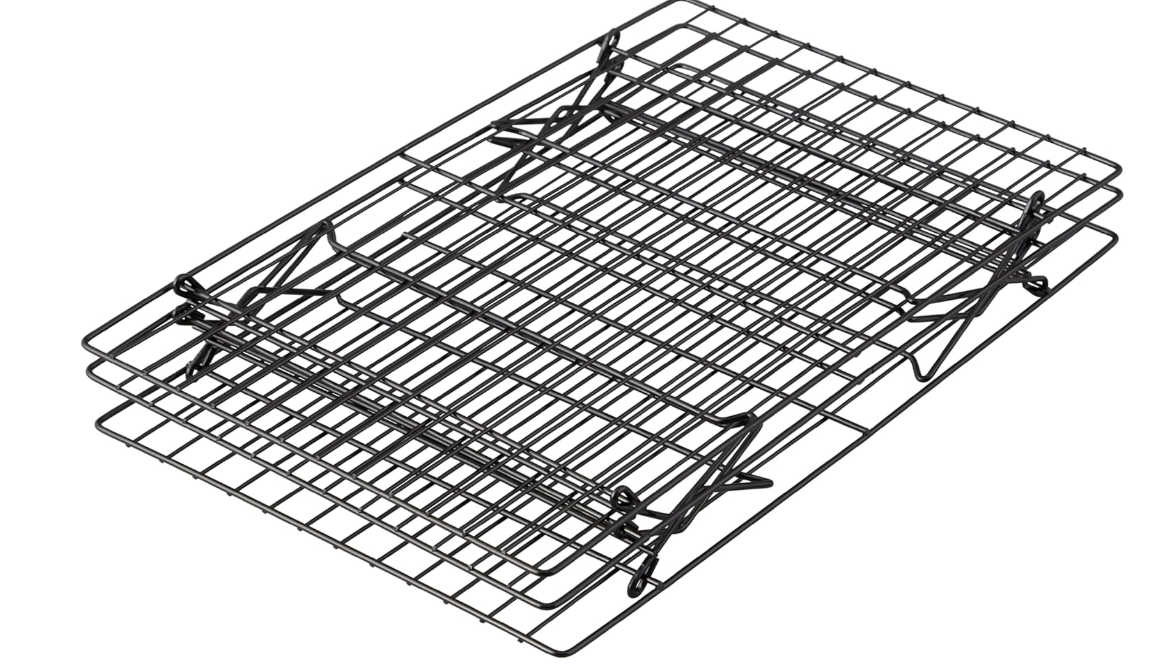
As output increases, flat cooling space becomes harder to manage. Multi-tier racks allow several baking trays to cool at the same time without taking over the counter. This is particularly noticeable in operations placing bulk baking tray orders for continuous production.
The vertical spacing between tiers is sufficient for taller items, and airflow remains reasonably consistent across levels. When cooling is finished, the rack folds down, which helps in kitchens where storage space influences purchasing decisions as much as performance.
Flexible High-Volume Option
Wilton 3-Tier Folding Cooling Grid
This version is often chosen for its adaptability. Baking trays can be cooled individually during slower periods or stacked during peak output. Among buyers sourcing wholesale baking tray accessories, this flexibility tends to outweigh the inconvenience of manual cleaning.
Specialty Cooling Racks for Specific Baking Needs
Best for Round Cakes
Nordic Ware Round Cooling Grid
Round baking trays introduce different stresses once a cake is released. Standard rectangular racks can create pressure points that lead to cracking, especially with cheesecakes or layered sponges.
This round grid provides even support along the edge of the tray and maintains its shape under concentrated weight. Because it is not oven-safe, it usually appears in specialty baking tray assortments rather than general-purpose setups.
Best for Decorating and Presentation
Williams Sonoma Goldtouch Pro Nonstick Rack
In premium baking environments, cooling racks sometimes double as display surfaces. When products move directly from baking tray to presentation, release quality becomes noticeable.
The nonstick surface helps protect icing and decorative finishes, while the gold-toned appearance fits front-of-house use. It is often paired with coated trays in premium baking tray collections where visual consistency supports branding.
Best Budget-Friendly Cooling Rack Options
Best Value Multi-Pack
Hiware 2-Pack Stainless Steel Rack
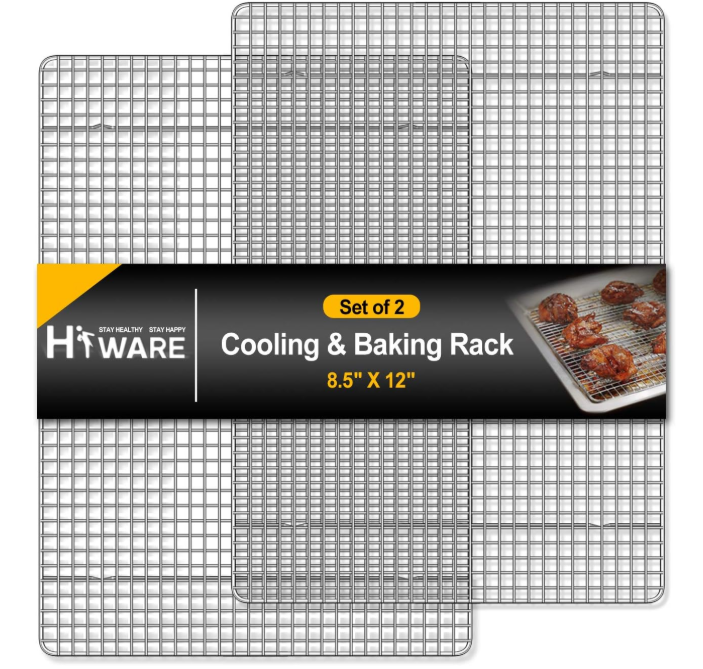
For cost-focused buyers, the goal is usually coverage rather than specialization. This two-pack option is commonly sourced alongside standard stainless steel baking trays for routine cooling tasks.
While it does not aim for the lifespan of professional-grade racks, it meets everyday needs for budget-oriented baking tray sourcing, particularly where multiple trays are rotated through short runs.
Final Perspective: Choosing the Best Cooling Rack for Baking Tray Systems
In real kitchens, the “best” cooling rack is rarely universal. Heavy trays and high temperatures reward rigidity and heat tolerance. High-output workflows benefit from vertical capacity and faster tray turnover. Specialty trays demand shape-specific support, while presentation-driven setups pay closer attention to surface finish.
Looking at cooling racks as part of the baking tray system, rather than as standalone tools, tends to lead to better sourcing decisions and fewer adjustments once production is underway.