
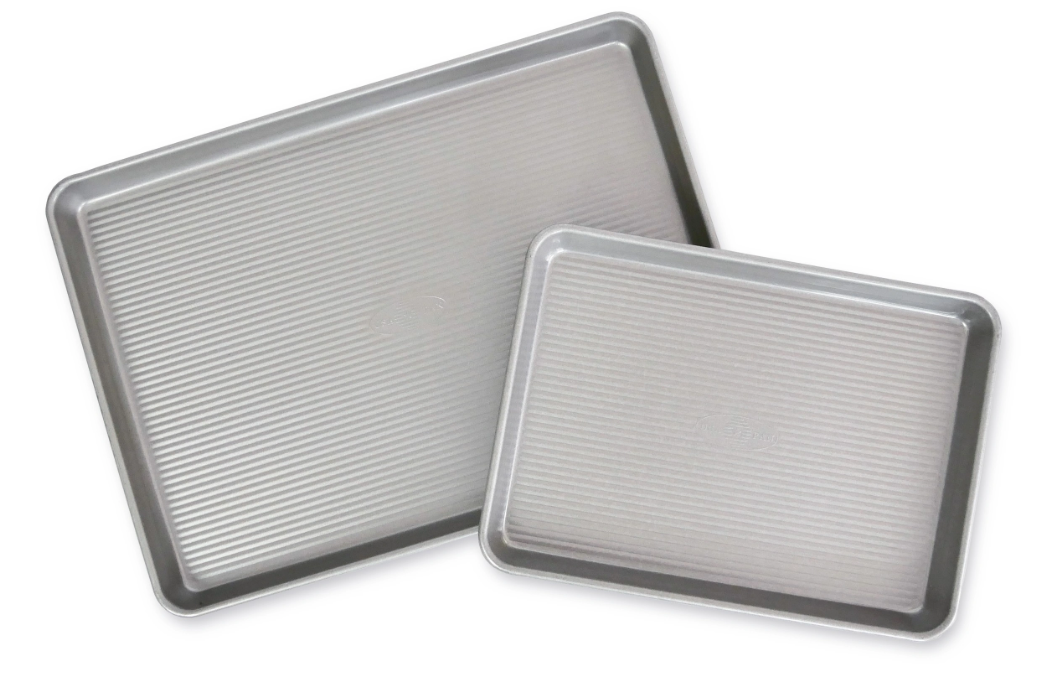
For commercial buyers sourcing stainless steel baking trays, the United States remains a strategic manufacturing destination. Whether the goal is brand control, shorter lead times, or compliance-driven procurement, many foodservice brands and equipment distributors actively look for USA-based stainless steel baking tray factories for OEM & ODM orders.
However, not every “Made in USA” bakeware brand operates as a true OEM manufacturer. Some focus on finished consumer products, while others provide limited customization that does not meet the needs of B2B procurement teams. This article identifies six U.S.-based factories and manufacturers that are frequently evaluated by buyers seeking custom stainless steel baking tray manufacturing with varying levels of OEM and ODM capability.
Rather than treating these suppliers as interchangeable, this guide explains where each factory fits within the broader OEM landscape, and which types of buyers they are realistically suited for.
How This Supplier List Was Evaluated
Before reviewing individual factories, it is important to clarify what qualifies a manufacturer for inclusion in a B2B stainless steel baking tray OEM list.
The following criteria were applied consistently:
-
Evidence of U.S. domestic manufacturing or substantial in-house processing
-
Ability to support OEM or ODM stainless steel baking tray projects, not only off-the-shelf sales
-
Familiarity with commercial foodservice or industrial baking applications
-
Transparent communication channels for bulk order inquiries and long-term contracts
-
Compliance with relevant food-contact and quality standards where applicable
Factories that primarily focus on consumer retail without meaningful customization pathways are clearly labeled as conditional or limited-fit options.
Hickoryware
Lancaster County, Pennsylvania
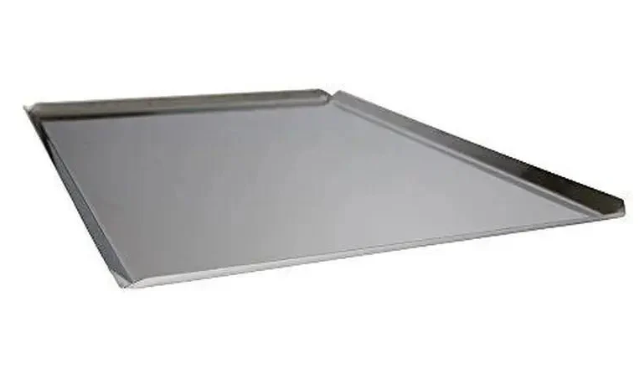
Hickoryware represents a smaller-scale but highly controlled manufacturing model. Operating in Pennsylvania, the company emphasizes domestic production and hands-on process control, which appeals to buyers seeking U.S. stainless steel baking tray OEM partners capable of moderate-volume customization.
From a production standpoint, Hickoryware is well-suited for brands that require flexibility rather than extreme scale. Typical OEM discussions focus on tray dimensions, steel thickness, surface finish, and structural edge design. Buyers exploring custom stainless steel baking tray manufacturing in the USA often value this level of direct factory engagement, particularly during early-stage product development.
OEM and ODM services generally include size adjustments, logo marking, and packaging coordination. While Hickoryware is not positioned for very large-volume commodity contracts, it aligns well with mid-sized foodservice brands, specialty equipment distributors, and private-label programs that prioritize manufacturing transparency.
American Pan
Multi-State Manufacturing Operations
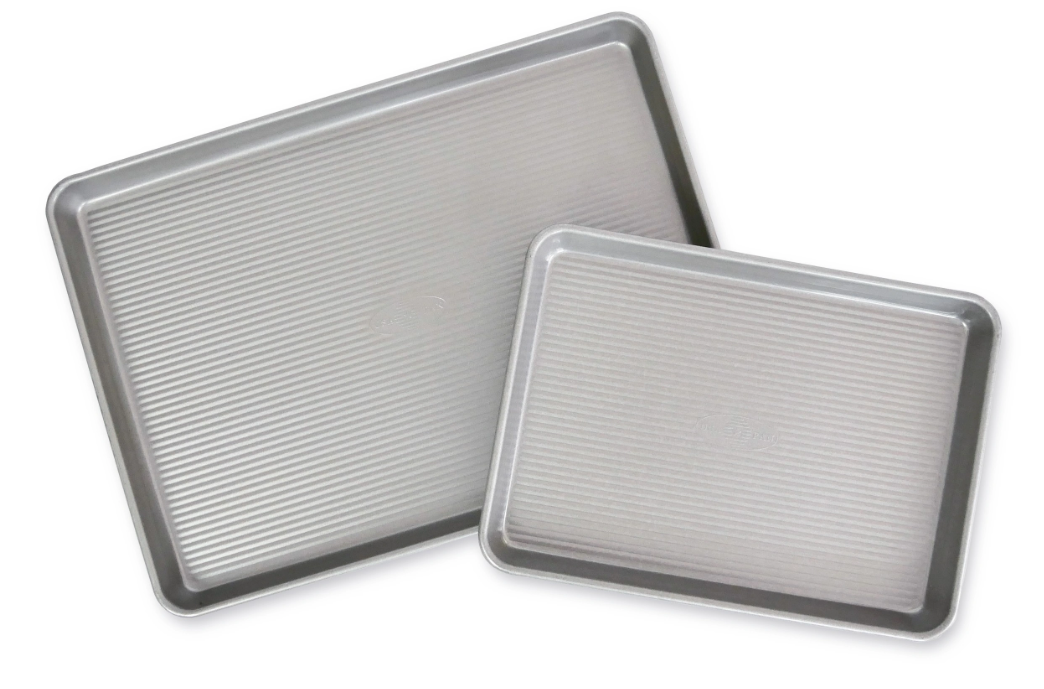
American Pan operates on a fundamentally different scale. With multiple facilities across the United States, the company is deeply embedded in the industrial baking sector and is widely recognized among buyers sourcing commercial baking tray factories for OEM supply.
Although American Pan is best known for its aluminized and coated steel solutions, it is frequently evaluated by procurement teams seeking engineered stainless steel tray projects for specialized applications. The company’s strength lies in its engineering-driven approach. OEM clients typically engage through CAD-based design processes, structured sampling stages, and formal production timelines.
For buyers managing large-volume stainless steel baking tray OEM orders, American Pan offers stability, technical support, and long-term manufacturing continuity. However, minimum order quantities and tooling commitments are usually higher than those required by smaller factories, making this supplier more appropriate for established bakery chains and food processing groups.
Heritage Steel
Domestic Manufacturing Focus
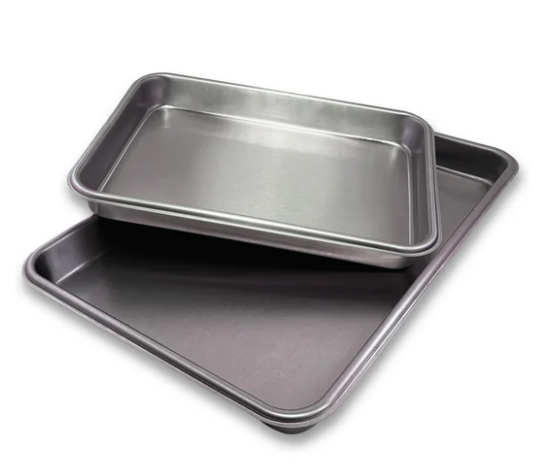
Heritage Steel occupies a premium niche within U.S. stainless steel manufacturing. Known for its multi-layer stainless steel construction, the company prioritizes material performance and craftsmanship over high-volume output.
From an OEM perspective, Heritage Steel is not a traditional mass-production factory. Instead, it functions as a potential partner for brands exploring high-end stainless steel baking tray ODM collaboration. Its expertise in bonded stainless steel structures, often incorporating aluminum cores for heat distribution, can be adapted to specialized baking tray designs under the right conditions.
Buyers considering Heritage Steel typically value domestic sourcing, material traceability, and brand association. OEM projects are feasible but tend to involve higher unit costs, defined design parameters, and selective production volumes. As such, this factory is best suited for premium brands rather than cost-driven bulk sourcing programs.
American Kitchen Cookware
U.S.-Based Multi-Category Manufacturer
American Kitchen Cookware offers a broader manufacturing portfolio that includes various stainless steel kitchen products. For B2B buyers, the company is often assessed as a flexible option when sourcing OEM stainless steel baking tray suppliers in the USA alongside other cookware categories.
The advantage of working with a multi-category manufacturer lies in procurement efficiency. Buyers managing diverse product lines may benefit from consolidated OEM discussions covering trays, pans, and related accessories. Customization options generally include dimensional changes, branding, and packaging adjustments.
American Kitchen Cookware is particularly relevant for distributors and private-label brands seeking mid-volume stainless steel baking tray manufacturing without the complexity of industrial-scale contracts. Sample policies and production timelines are typically more accommodating than those of larger industrial suppliers.
Nordic Ware
Minnesota – Conditional OEM Evaluation
Nordic Ware is widely recognized for its aluminum bakeware and strong “Made in USA” branding. However, it is important to clarify its position in the context of stainless steel baking tray OEM sourcing.
The company’s primary production focus is not stainless steel, and dedicated stainless steel tray production lines are limited. That said, Nordic Ware may still be considered in specific scenarios, such as collaborative commercial projects, brand-led customization, or non-standard baking formats.
For procurement teams, Nordic Ware should be viewed as a conditional ODM partner, rather than a conventional stainless steel baking tray factory. It may suit buyers prioritizing brand alignment or specialty projects, but it is generally not optimized for large-scale stainless steel OEM manufacturing.
USA Pan
Bundy Family Enterprise – Conditional Inclusion
USA Pan is another manufacturer frequently referenced in U.S. bakeware sourcing discussions. The company is best known for coated steel products and proprietary surface technologies. Stainless steel, however, is not its core material focus.
In OEM evaluations, USA Pan may be relevant for buyers exploring commercial baking tray manufacturing partnerships that emphasize ready-made solutions rather than ground-up ODM development. Customization is typically limited to branding, packaging, or minor structural variations.
As with Nordic Ware, USA Pan is best positioned as a supplementary supplier rather than a primary stainless steel baking tray OEM factory. Buyers seeking deep material or structural customization should assess this limitation early in the sourcing process.
Key OEM & ODM Evaluation Factors for Stainless Steel Baking Trays
Across all six manufacturers, several recurring decision points consistently influence procurement outcomes.
Certification and compliance remain foundational. Buyers sourcing food-grade stainless steel baking tray factories expect clear documentation and traceable material standards. Communication efficiency is equally critical, particularly when engineering revisions or sampling iterations are required.
Hidden costs also play a significant role. Tooling fees, design adjustments, and quality validation steps can materially affect total project cost, especially in ODM-driven programs. Understanding these factors upfront helps buyers compare USA stainless steel baking tray manufacturers on more than just unit price.
Why Many Buyers Still Choose USA-Based Factories
Despite higher labor costs, U.S. manufacturers continue to attract OEM buyers for several reasons. Shorter lead times, reduced geopolitical risk, and easier quality oversight are frequently cited advantages.
For brands testing new products, small-batch stainless steel baking tray OEM production in the USA allows faster iteration without committing to large overseas orders. Many procurement teams now adopt hybrid sourcing strategies, combining U.S.-based OEM partners with high-volume offshore suppliers to balance speed and cost.
Conclusion: Matching the Right Factory to the Right OEM Strategy
There is no single “best” stainless steel baking tray factory in the USA. Instead, the optimal choice depends on order volume, customization depth, brand positioning, and risk tolerance.
Hickoryware and American Kitchen Cookware serve buyers seeking flexibility and direct factory engagement. American Pan supports industrial-scale OEM contracts with strong engineering backing. Heritage Steel caters to premium, material-driven projects. Nordic Ware and USA Pan remain conditional options, valuable in specific collaboration-driven scenarios but less suitable for core stainless steel OEM programs.
For procurement teams evaluating stainless steel baking tray factories in the USA for OEM & ODM orders, clarity on internal priorities is essential. When supplier capabilities align with operational reality, domestic manufacturing can become a long-term competitive advantage rather than a short-term sourcing experiment.