
Look, if you’re managing procurement for a global food service brand or a massive wholesale operation in 2026, you’ve probably realized that “eco-friendly” is no longer just a marketing buzzword—it’s a survival requirement. For those of us on the B2B side, understanding the literal “guts” of your inventory isn’t just about being green; it’s about material performance and avoiding the nightmare of a failed shipment. When you’re staring at a spec sheet, you need to know exactly what’s going into that vessel. You aren’t just buying a container; you’re buying a complex bio-polymer or a processed plant fiber that has to survive everything from a 40-foot shipping container to a customer’s steaming hot double-shot latte.
Finding a reliable custom compostable cup manufacturer is usually the first real hurdle. You’re looking for a partner that understands the chemistry of the material, not just someone who can mold a shape. The “recipe” behind these products dictates whether they’ll hold up for an hour or turn into a soggy mess in ten minutes. Let’s break down the actual feedstocks that are dominating the market right now.
PLA: The “Corn Plastic” Powerhouse
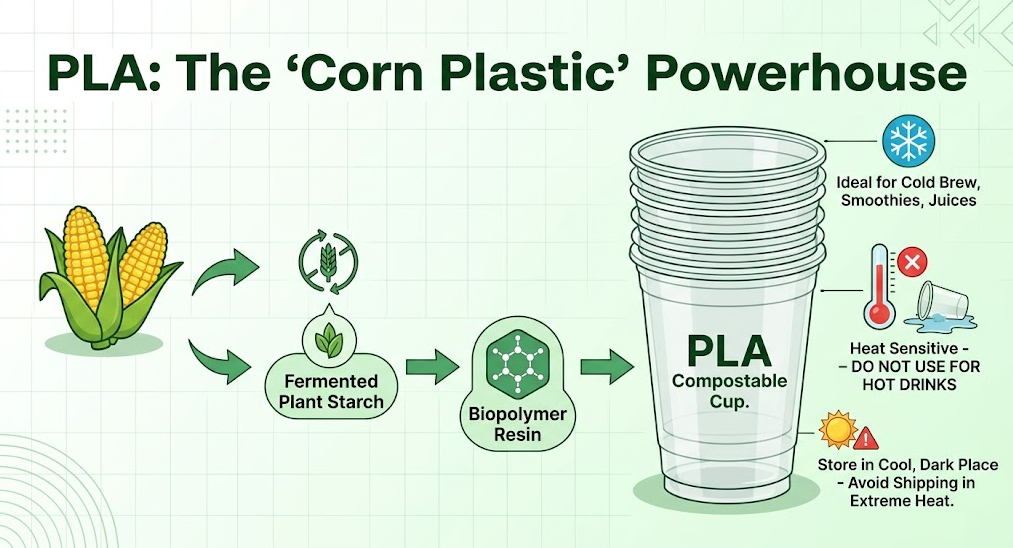
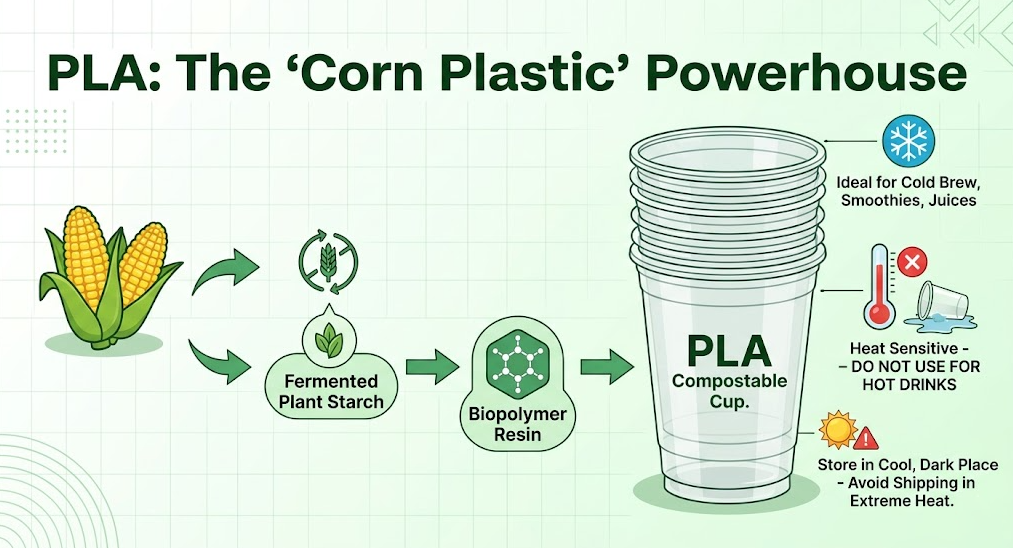
The most common suspect in the eco-cup world is Polylactic Acid (PLA). To the untrained eye, it looks and feels exactly like the petroleum-based PET plastic we’re all trying to ditch. It’s clear, it’s rigid, and it’s got that high-gloss finish that makes iced coffees look great. Under the hood, however, PLA is essentially fermented plant starch—usually derived from corn, but sometimes cassava or beets depending on where the biodegradable cold compostable cup supplier is located.
But here’s the kicker: PLA is notorious for being “temperature-sensitive.” Because it’s a thermoplastic with a low melting point, it absolutely hates heat. If your warehouse isn’t climate-controlled or your delivery truck sits in the sun for two hours in July, you’re going to end up with a pallet of warped, useless plastic. This is exactly why a specialized PLA compostable cup factory for bulk orders will emphasize that these are “Cold Use Only.” If you try to serve a hot drink in a standard PLA cup, it’s a disaster waiting to happen. For the cold-brew and smoothie market, it’s the gold standard, but you’ve got to respect its limits.
Sugarcane Bagasse: The Ultimate Upcycling Story

For hot beverage applications, bagasse is the undisputed heavyweight champion. This stuff is a masterpiece of circular economy logic. It’s the fibrous residue left over after sugarcane stalks are crushed for their juice. For years, this was just agricultural “exhaust”—burned or dumped. Now, we reclaim that fiber and press it into sturdy, opaque cups.
Most high-volume buyers tend to lean toward a wholesale compostable cup factory that handles bagasse because the material is naturally insulating. It doesn’t need a plastic liner to hold boiling water, and it has this rugged, textured feel that visually screams “sustainable” to the end consumer. It handles 200°F without flinching. From a B2B perspective, bagasse is also great because it’s relatively stable in storage—it doesn’t have the “melting” anxiety that comes with PLA.
The Aqueous Revolution: Fixing the Paper Cup Lie
We need to have a serious talk about the “Paper Cup Myth.” For decades, the industry relied on paper cups lined with a thin film of polyethylene (PE). It was a nightmare. The plastic film made the paper nearly impossible to compost and a pain to recycle. Enter aqueous (water-based) coatings. This is the tech that is currently disrupting the entire paperware sector.
Instead of gluing a plastic sheet to the inside, an eco-friendly paper compostable cup supplier for businesses now uses a water-based polymer dispersion that is sprayed directly onto the paper. It sinks into the fibers, creating a moisture barrier that prevents the cup from leaking. This is a game-changer because the whole cup can be processed in standard recycling streams or sent to a compost pile. If you are negotiating with an OEM compostable cup manufacturer, you should be asking about their aqueous coating thickness—that’s the secret to making sure the bottom of the cup doesn’t fall out during a long commute.
Bamboo Fiber: Strength Meets Sustainability
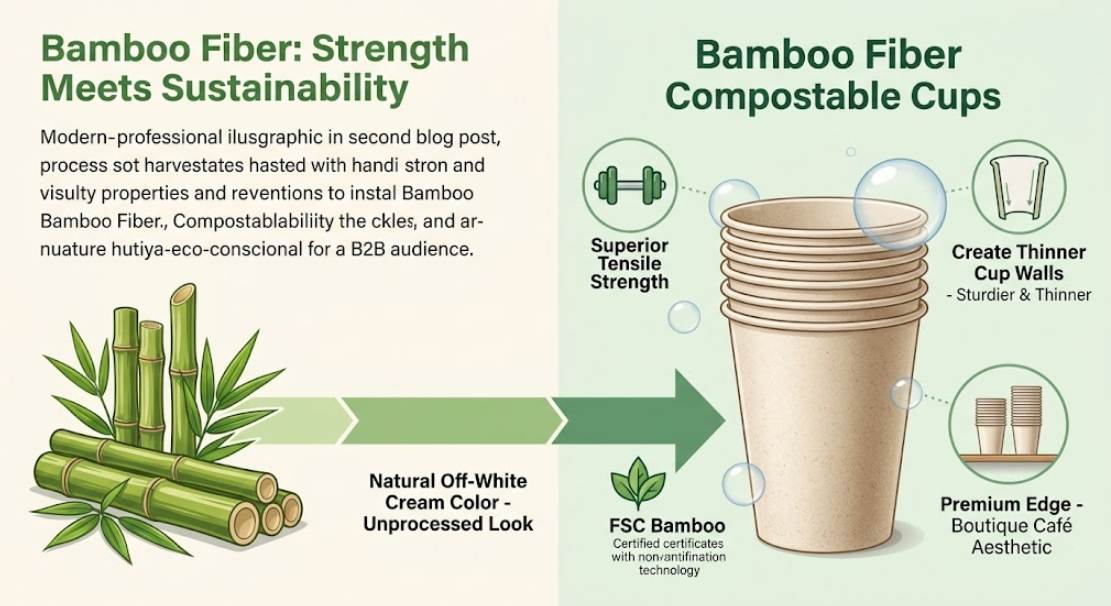
Then there’s bamboo. We all know it grows like a weed, which makes it a brilliant, renewable feedstock. Bamboo fiber is naturally longer and tougher than the softwood pulp used in traditional paper. This high tensile strength allows manufacturers to create thinner cup walls that are actually sturdier than their thicker counterparts.
I’ve seen a massive surge in brands specifically hunting for a customized bamboo fiber compostable cup factory because the aesthetic is so distinct. It has a natural, off-white cream color that feels premium and “unprocessed.” For a boutique café or a high-end office supplier, that look is a powerful marketing tool. It tells a story of sustainability before the customer even takes a sip. Plus, bamboo doesn’t require the same heavy pesticide load as other crops, which keeps the supply chain even cleaner.
Navigating the Certification Minefield
I cannot stress this enough: none of the material science matters if you don’t have the paperwork. The global market is full of “greenwashed” products that won’t actually break down in a real-world environment. You need to see the ASTM D6400 or EN 13432 certifications. These aren’t just suggestions; they are the gatekeepers of legal compliance.
A smart buyer will only work with a certified compostable cup supplier for distributors who can provide updated testing reports. You need to know that the material will break down in an industrial facility within 180 days and won’t leave behind microplastic “ghosts” in the soil. As “Extended Producer Responsibility” (EPR) laws tighten globally, having this documentation on file is your only real protection against regulatory headaches.
The Practical Logic of Sourcing
When you are looking for a versatile compostable cup factory for wholesale buyers, you have to think about the “Life of the Cup.” Is it going to be used for a 5-minute espresso or a 45-minute iced latte? The material foundation is what builds trust with your clientele.
-
PLA is your clear-choice winner for visual appeal and cold drinks.
-
Bagasse is your workhorse for hot, heavy catering and “natural” vibes.
-
Aqueous Paper is the flexible, easy-to-recycle option for standard coffee service.
-
Bamboo is your premium, high-strength alternative for brands that want to stand out.
Final Thoughts: Future-Proofing Your Brand
Choosing the right material isn’t just about following a trend—it’s a strategic business decision. As the technology behind biopolymers and water-based coatings continues to mature, the price gap between traditional plastic and these alternatives is shrinking.
But don’t wait for the price to be identical. The brands that win are the ones that move early and secure their supply chains with a reputable reliable compostable cup supplier for global brands. Whether it’s the fermented corn of PLA or the reclaimed fiber of sugarcane, these materials are the building blocks of a more responsible (and ultimately more profitable) packaging industry. Don’t just follow the trend—understand the science, check the certificates, and pick the material that fits your brand’s story. The world is ready to leave petroleum-based plastics behind; make sure your inventory is ready to lead that charge.