
For overseas buyers, sourcing plastic egg trays from China is rarely a simple comparison of prices or cavity counts. On paper, many suppliers appear interchangeable. In practice, differences only become visible after trays are exposed to real transport conditions, repeated stacking, or prolonged storage.
As export volumes increase and distribution routes become longer, packaging decisions are increasingly shaped by operational risk rather than unit cost alone. Trays that perform adequately in short domestic transport may fail when subjected to vibration, pallet pressure, or temperature variation. For this reason, experienced buyers tend to evaluate suppliers based on how their products behave in real circulation, not just how they look in catalogs.
The suppliers discussed below represent different sourcing profiles commonly encountered in China’s plastic egg tray market. They are not listed as a ranking, but as reference points reflecting how buyers typically segment suppliers during evaluation.
Leon Farming (Shandong Leon)

Leon Farming is frequently reviewed by buyers seeking standardized, retail-oriented egg trays with minimal design variation.
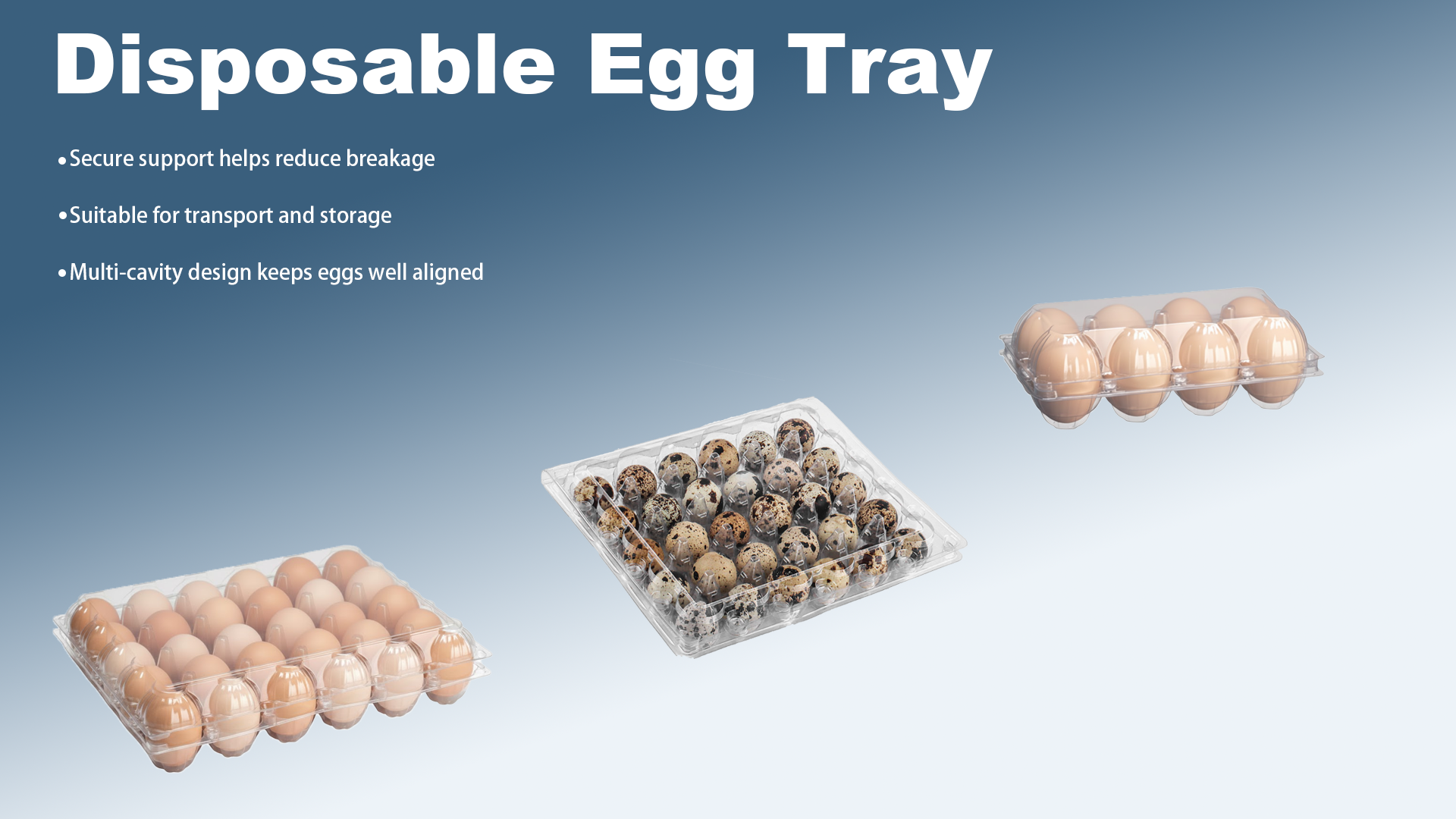
Its core offerings focus on commonly used cavity formats, including 25-, 30-, 36-, and 42-egg trays, as well as dense configurations designed for quail eggs. These products are typically chosen for environments where operational predictability matters more than customization.
Feedback from buyers often highlights consistent cavity depth and stable tray geometry, which helps reduce shifting during stacking and pallet transport. Transparent versions are often selected for supermarket distribution, where visual inspection and shelf presentation remain relevant.
Leon’s trays are generally positioned as dependable, mass-market solutions rather than application-specific designs.
Zhucheng Zhongxing Livestock Machinery Co., Ltd.
Zhucheng Zhongxing is often evaluated in projects involving automated egg handling rather than manual packing.
Buyers operating grading, flipping, or conveying systems tend to prioritize tray compatibility with machinery. Zhongxing’s standard cavity options, ranging from 30 to 60 eggs per tray, are designed to integrate smoothly into such workflows.
Material selection plays a role here. Virgin PP options are commonly specified for durability and hygiene, especially where trays are reused or exposed to mechanical stress. In sourcing discussions, visual appearance is secondary; performance within automated systems is the primary decision factor.
This supplier is typically considered by processors running stable, high-volume operations.
Zhejiang Hengsite Plastic Co., Ltd.
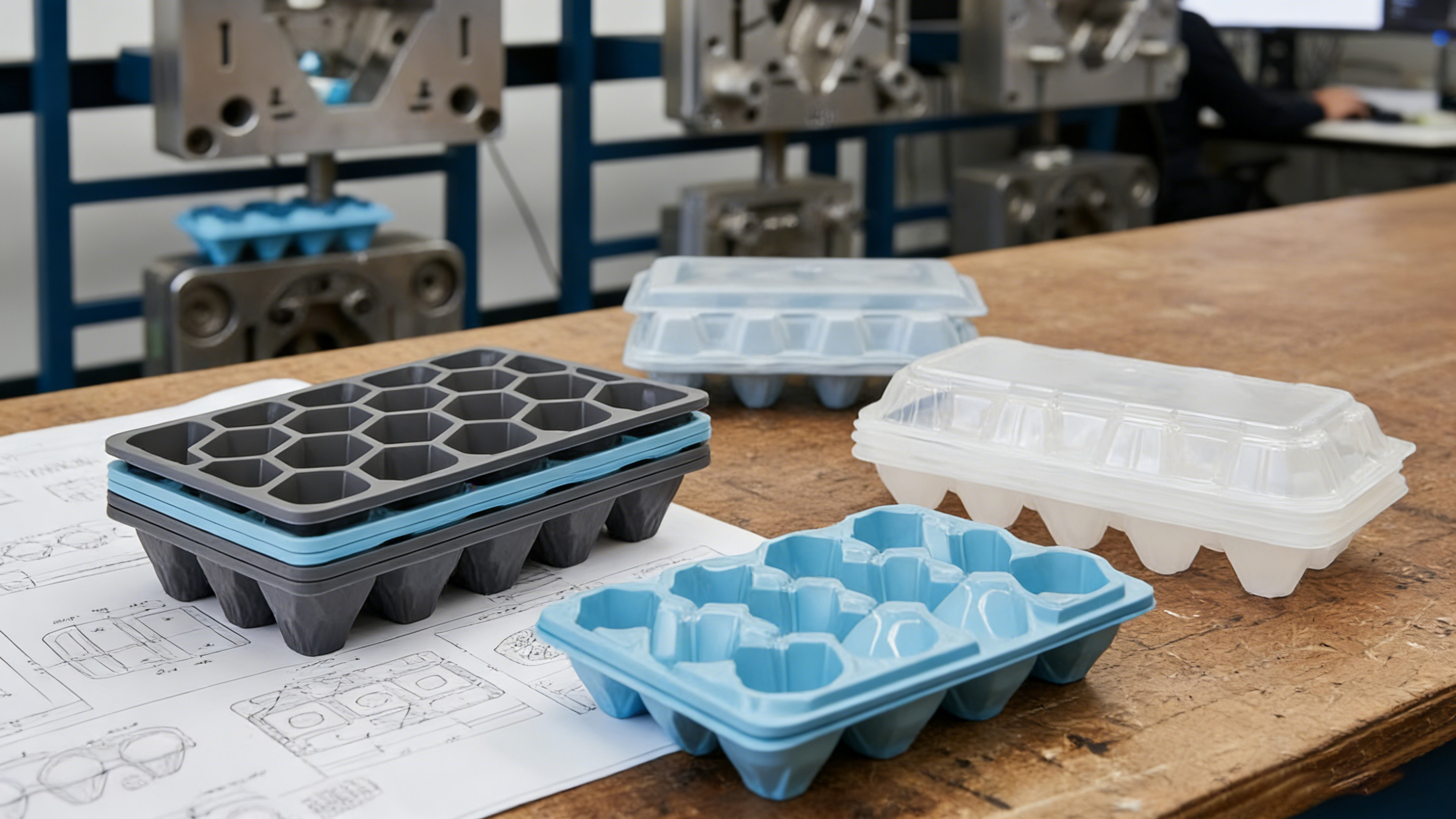
Hengsite is most often shortlisted when buyers require design flexibility rather than off-the-shelf products.
Instead of relying solely on standard molds, the company supports OEM development processes, including prototyping and tooling adjustments. Buyers can modify tray dimensions, cavity layouts, colors, and markings to meet specific operational or branding needs.
This approach generally involves longer lead times during the initial phase, but it allows closer alignment between packaging design and downstream handling requirements. Hengsite is often evaluated by private-label programs or regional distributors managing differentiated product lines.
JHPKG (Xiantao Junhui Plastic Products Co., Ltd.)

JHPKG tends to attract buyers looking to consolidate sourcing across multiple disposable packaging categories.
In addition to plastic egg trays, the company produces containers, cups, lids, and bowls. For procurement teams managing diverse SKUs, this integrated production model can simplify coordination and reduce supplier overlap.
Egg tray designs emphasize cavity stability and stacking reliability rather than aesthetic features. Export-focused production systems and standardized inspection procedures support batch consistency, which is particularly valued by overseas buyers placing repeat orders.
JHPKG is often evaluated based on operational reliability rather than niche specialization.
Suzhou Highbright Enterprise Limited
Highbright is commonly reviewed in sourcing projects linked to retail infrastructure.
Its egg trays are part of a broader product ecosystem that includes supermarket equipment and logistics solutions. Tray designs are optimized for handling efficiency in retail backrooms and distribution centers, with less emphasis on customization.
Buyers supplying chain retailers often consider Highbright when packaging must integrate smoothly with standardized retail operations rather than farm-level handling.
Qingdao Guanyu Plastic Co., Ltd.
Qingdao Guanyu typically appears in cost-focused sourcing comparisons.
Its trays are often produced using recycled PP blends and are positioned for short- to medium-distance transport. While these products may not be intended for repeated industrial reuse, they are frequently selected for regional distribution where price sensitivity outweighs extended durability.
Guanyu is usually evaluated alongside other entry-level suppliers during early-stage sourcing or market testing phases.
Foshan Nanhai Xinyuan Plastic Products Factory
Xinyuan is often considered by buyers prioritizing storage efficiency.
Tray designs focus on maximizing pallet density and minimizing wasted space, which can be advantageous in warehouses with limited capacity. Structural layouts aim to reduce lateral movement during stacking, helping maintain stability under load.
This supplier is generally shortlisted when logistics constraints play a central role in packaging decisions.
Taizhou Huangyan Kelong Plastic Factory
Kelong operates with a mold-driven manufacturing approach, influencing how its egg trays are developed.
Rather than selecting from a fixed catalog, buyers often begin with tooling discussions, allowing for precise control over cavity geometry and tray rigidity. This approach suits specialty egg sizes or applications with strict performance requirements.
However, the development process requires clearer specifications and longer preparation cycles, making Kelong more suitable for planned, long-term programs.
Ningbo Beilun Xinhe Plastic Co., Ltd.
Xinhe is frequently included in export-oriented sourcing evaluations.
Its trays are produced in standardized formats with an emphasis on batch consistency and repeatability. Material formulations are adjusted based on transport distance and stacking demands, typically refined during sampling rather than marketing stages.
Xinhe is often selected when buyers prioritize production discipline over frequent design changes.
Guangdong Yasheng Plastic Products Co., Ltd.
Yasheng is usually considered for mixed-use distribution environments.
Its egg trays are designed to function across manual and semi-automated handling scenarios. While not highly specialized, this adaptability makes them suitable for distributors supplying diverse customer segments.
In sourcing discussions, Yasheng is positioned as a flexible, general-purpose option.
How Buyers Actually Evaluate Plastic Egg Tray Suppliers
Experienced buyers rarely rely on a single factor. Instead, supplier selection tends to revolve around several practical considerations:
-
Whether material selection aligns with handling intensity and reuse expectations
-
How cavity configuration matches transport methods and egg size variability
-
The supplier’s ability to maintain consistency across repeated production runs
-
The trade-off between MOQ requirements and unit cost at different volumes
Long-term sourcing success often depends on how well a supplier understands the buyer’s circulation environment, not just the initial order specifications.
Closing Perspective
China’s plastic egg tray market offers a wide range of sourcing options, but meaningful differences only emerge through structured evaluation and real-world testing.
Rather than seeking a universally “best” supplier, buyers are better served by matching manufacturing approaches to operational needs. When packaging performance aligns with logistics realities, cost efficiency and supply stability tend to follow naturally.